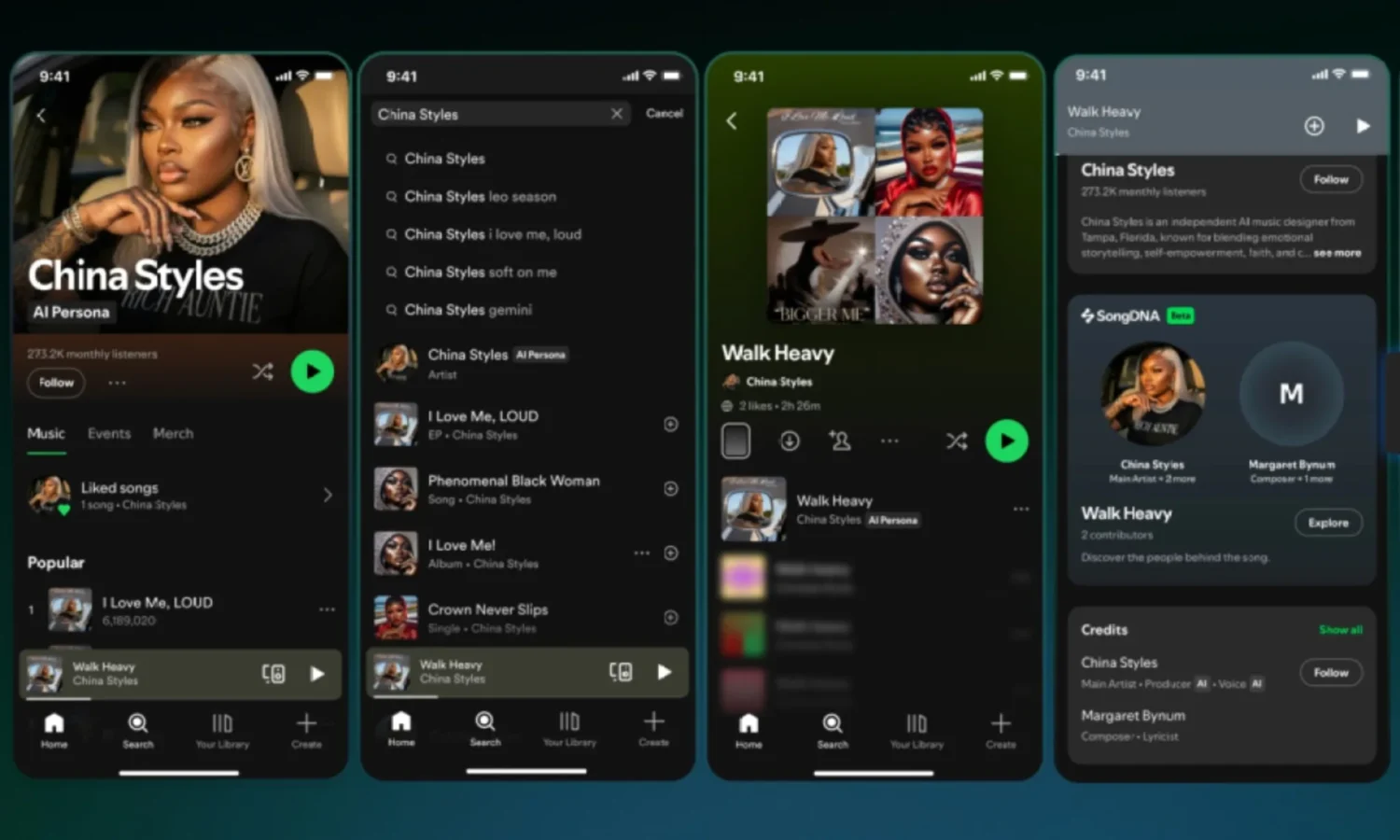
Spotify is preparing to make synthetic artist identities harder to miss.
A new AI Persona badge will reportedly appear on artist profiles built around AI-generated identities, giving listeners a visible signal before they press play. Digital Trends reports that the badge is expected to arrive in mid-September and will be used to flag profiles where the artist persona itself is AI-generated.
That distinction matters. This is not just about whether a track used AI somewhere in the production process. It is about whether the identity being presented to listeners , the artist, image, name, and implied creative presence , is synthetic. Spotify is not treating that as a tiny metadata footnote. It is turning it into a visible trust cue on the profile.
From AI Music To AI Identity
The AI Persona badge is a small interface change with a very current problem behind it. Streaming platforms are no longer just hosting songs made by people using tools. They are also dealing with artists that may be partly or entirely constructed as AI-native acts.
According to the report, the badge is designed for artist profiles built around AI-generated identities. That means the signal sits at the profile level, not only at the track level. It also means Spotify is drawing a line between AI as a creative tool and AI as a public-facing identity.
For listeners, the practical effect is simple: the platform gives you context before the relationship starts. A synthetic act can still be discovered, streamed, followed, and potentially become part of someone’s listening habits. But the listener is no longer asked to figure out the nature of the artist by reading between the lines.
That is the real product move here. Spotify is not removing the ambiguity by banning the format. It is making the ambiguity visible.
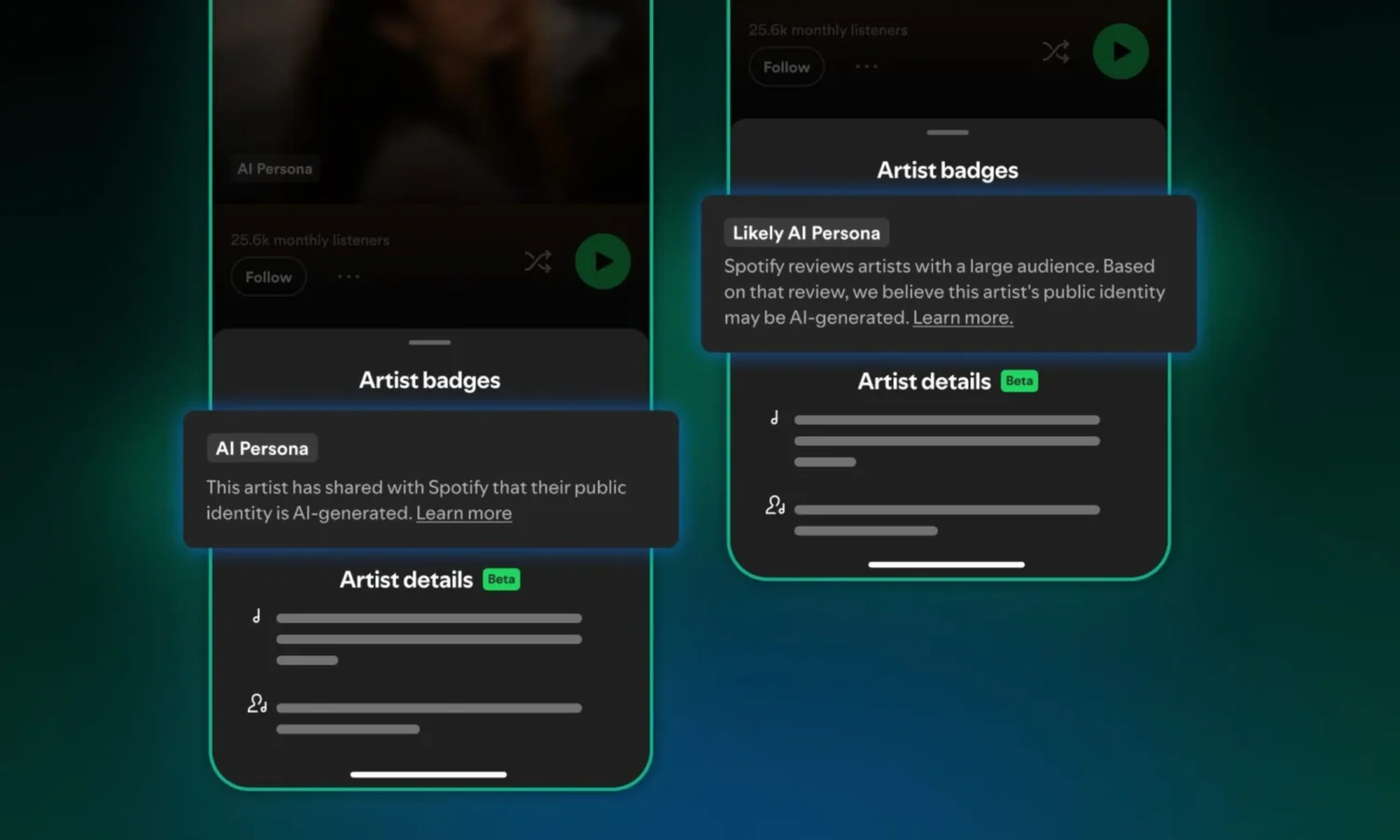
The Trust Layer Becomes Part Of The Product
AI labeling is quickly becoming one of the most important interface decisions platforms have to make. The label cannot tell people whether something is good, whether it is original, or whether it deserves attention. But it can tell them what kind of relationship they are entering into.
That is especially important in music, where artist identity has always carried emotional weight. Fans do not just stream sound files. They attach meaning to voices, stories, images, scenes, and perceived authenticity. If the artist persona is generated, Spotify has to decide whether that fact stays hidden in the background or becomes part of the listening experience.
The badge suggests Spotify wants disclosure to happen at the point of discovery, not after backlash, confusion, or fan investigation. It also gives the platform a middle path: AI-created artists can exist, but they do not get to appear exactly the same as human artists without context.
For labels, creators, and marketers experimenting with synthetic talent, that changes the brief. The question is no longer simply whether an AI act can pass. It is whether the concept still works when the platform tells people what it is.
If synthetic artists are going to share the same shelves as human ones, Spotify wants the identity question answered before the play button is pressed.
Also Read:
WhatsApp Web Finally Gets Voice And Video Calls
WhatsApp’s New Features Are About Real-Life Habits
Threads Joins Meta’s Parental Supervision Stack