


Seagate is trying to make the old hard-drive-versus-SSD trade-off less visible. The company’s FireCuda Forge is an external storage system that reportedly uses machine learning to move frequently accessed data between a high-capacity hard drive and a faster NVMe SSD.
The product is designed to appear to a computer as one drive. Behind that simple interface, Seagate’s Alkemi intelligent storage platform watches how data is being used and shifts files between the two storage types as workloads change. The promise is straightforward: hard-drive capacity for the bulk of a library, SSD speed for the files that matter right now.
A hybrid drive that leaves the SSD to you
The FireCuda Forge is available with either an 8TB hard drive priced at $699 or a 20TB model priced at $899. Both hard drives can be replaced by the user. The important catch is that the NVMe SSD is not included, so the final cost depends on the flash drive the buyer supplies.
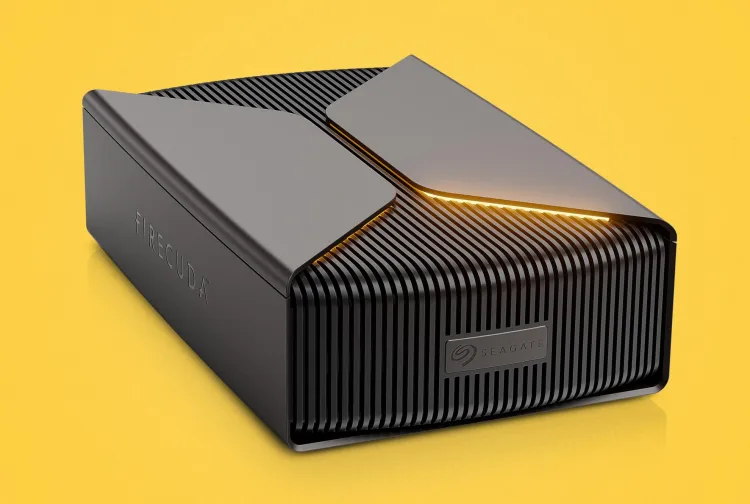
That modular approach is the product’s most interesting choice. Earlier hybrid drives generally decided the flash configuration for the customer. The Forge instead turns the storage setup into something users can tune, at least in theory, around their own capacity and performance needs.
Seagate says the system works differently from a traditional NAS cache. Rather than simply keeping a temporary copy of popular files on flash storage, Alkemi dynamically reorganizes data across the two drives based on the current workload. The computer still sees one connected volume, while the system decides where files should live.
The real shift is storage becoming adaptive
The reported read speed reaches up to 2,500MB/s, with write speeds topping out at 2,000MB/s on systems running at least Windows 11 or macOS 26. Those numbers make the Forge sound closer to a performance system than a conventional desktop hard drive, but the missing SSD and current memory costs complicate the value proposition.
The bigger idea is less about replacing the hard drive than hiding the compromise between cheap capacity and fast access. Users do not want to think about which files belong on which device. They want storage that notices what they are doing and rearranges itself accordingly.
That is a familiar direction in consumer technology: more of the system’s work moves from manual configuration into an automated layer. If Alkemi performs reliably, the FireCuda Forge could make hybrid storage feel less like a DIY setup and more like an adaptive service. But because the buyer still supplies the most important performance component, Seagate is asking customers to pay for the intelligence while assembling part of the solution themselves.