Luxury fashion’s hospitality habit just gained another address. Karl Lagerfeld has opened its first café in Amsterdam, and the move says more about modern brand-building than it does about coffee.
The new space sits next to the House’s global headquarters, placing it less like a random lifestyle extension and more like a public-facing doorway into the brand’s world. The idea is simple: take a daily ritual, design it with enough brand codes to make it instantly recognizable, and make it easy to photograph, browse, and linger.
A café built like a brand world
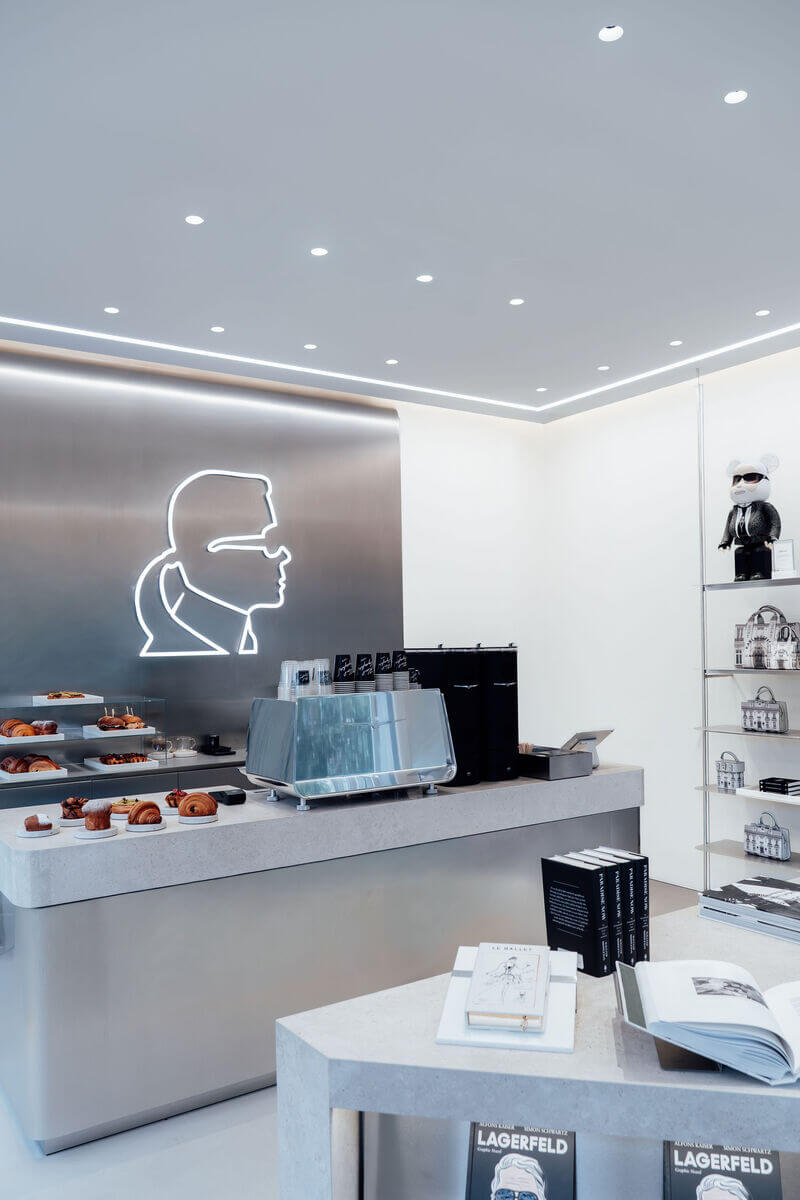
The Amsterdam café leans hard into Karl Lagerfeld’s monochrome visual language. Fucking Young! describes an interior shaped by brushed steel, polished stone, raw concrete, and mirror-like surfaces , sharp, graphic, and closer to a concept store or art space than a neighborhood coffee stop.
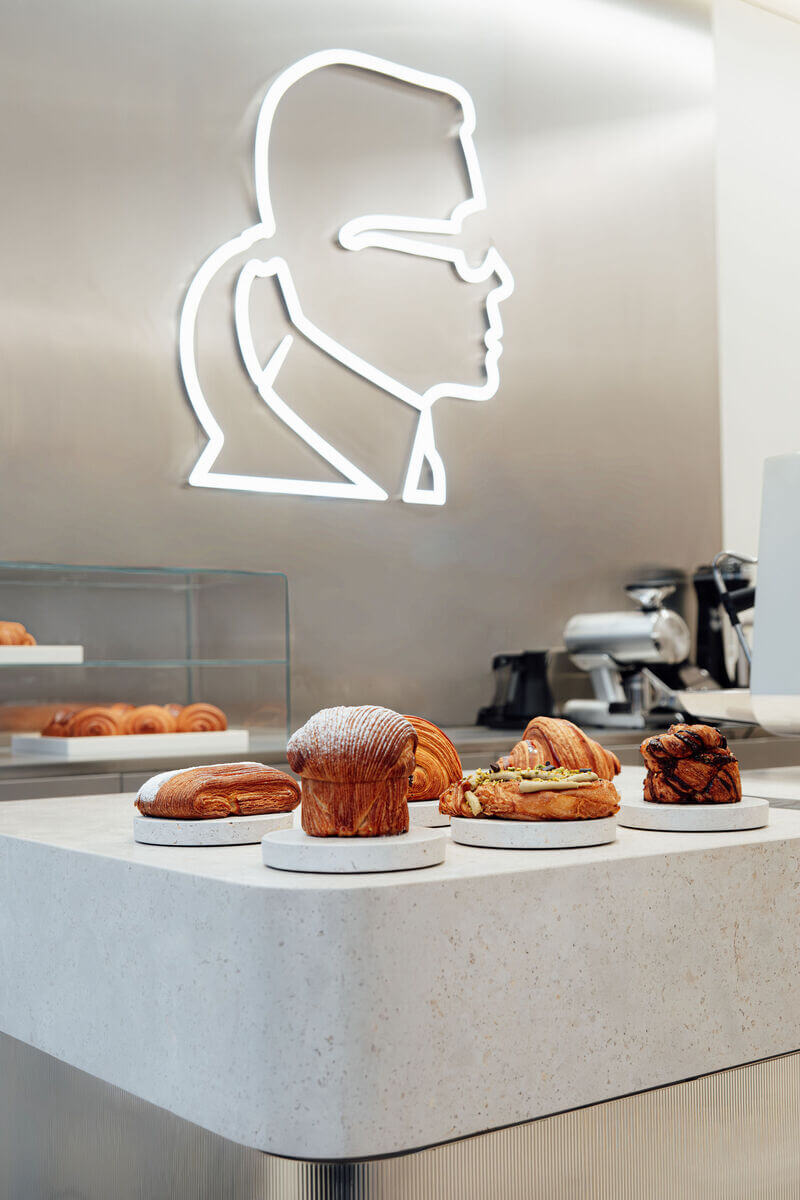
The menu has been developed with Amsterdam pastry atelier Pantopia, founded by Youssef Zyat, with specialty coffee and seasonal pastries designed to sit comfortably inside the same polished environment. That matters because the food is not just filling a hospitality function. It is part of the visual system.
The retail layer is also built in. Visitors can browse books, collectible objects, accessories, and the crisp white shirt that became one of Lagerfeld’s most recognizable signatures. Nearby, an adjacent showroom will host a dedicated Karl Lagerfeld pop-up through mid-September, with seasonal collections and timeless essentials.
Even the early celebrity signal is on-brand. Paris Hilton, a brand ambassador, has already visited while in Amsterdam for Pride celebrations. For a café designed to become a check-in spot, that kind of moment is not incidental. It helps establish the place as somewhere to be seen, not just somewhere to sit.
The flagship is getting softer
Fashion cafés work because they reduce the pressure of the boutique. A person who may not walk into a store ready to buy a shirt can still order coffee, look around, take a photo, touch the brand, and stay longer than they planned. That is the retail behavior this kind of space is built around. Coffee itself is getting a culture rebrand.
We are seeing the same appetite for reshaping everyday rituals across brand culture, from McDonald’s imagining a drive-thru lane for people who can’t decide to fashion houses turning a flat white into a branded environment. The point is not to make every brand open a café. The point is that small, familiar moments are becoming easier to own than big, interruptive campaigns.
For Karl Lagerfeld, the Amsterdam café makes the brand more inhabitable. It turns design codes into an experience people can enter casually, share socially, and revisit without the friction of a purchase. Coffee is the hook. The real product is time spent inside the brand.
Also Read:
McDonald’s Imagines a Drive-Thru Lane for People Who Can’t Decide
Capsule Coffee Is Having Its Streetwear Moment
Martha Stewart’s Hint Turns Homeownership Into An AI Interface