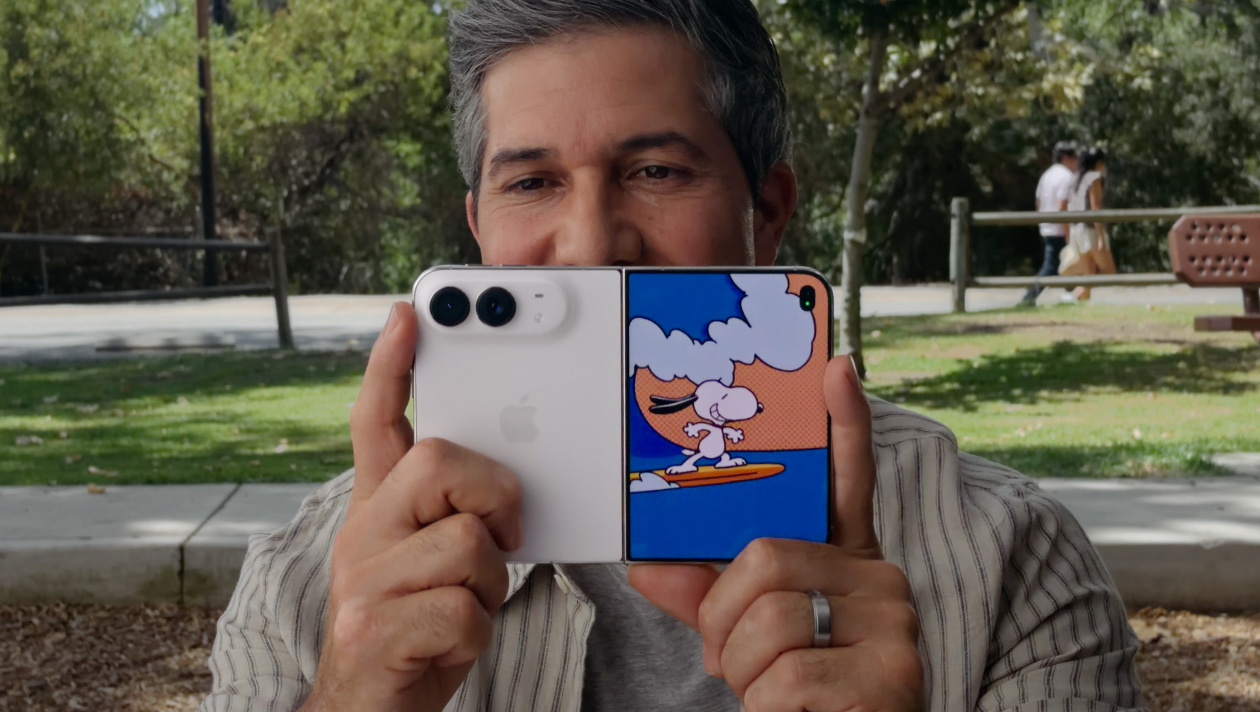
Apple did not invent the foldable phone. It may have just made the hinge feel like part of the operating system.
The company has unveiled the iPhone Duo, its first foldable iPhone and its most significant change to the device’s physical form in almost 20 years.
Closed, it behaves like a compact phone with a 5.4-inch outer display. Open it and the device becomes a 7.6-inch workspace, entertainment screen or multitasking surface. Leave it partially folded and it can support itself for calls, photography, workouts and video.
The iPhone Duo starts at $1,999 in the US, with preorders opening October 16 ahead of its October 23 release.
The price makes it a luxury product. The interface makes it a much bigger story.
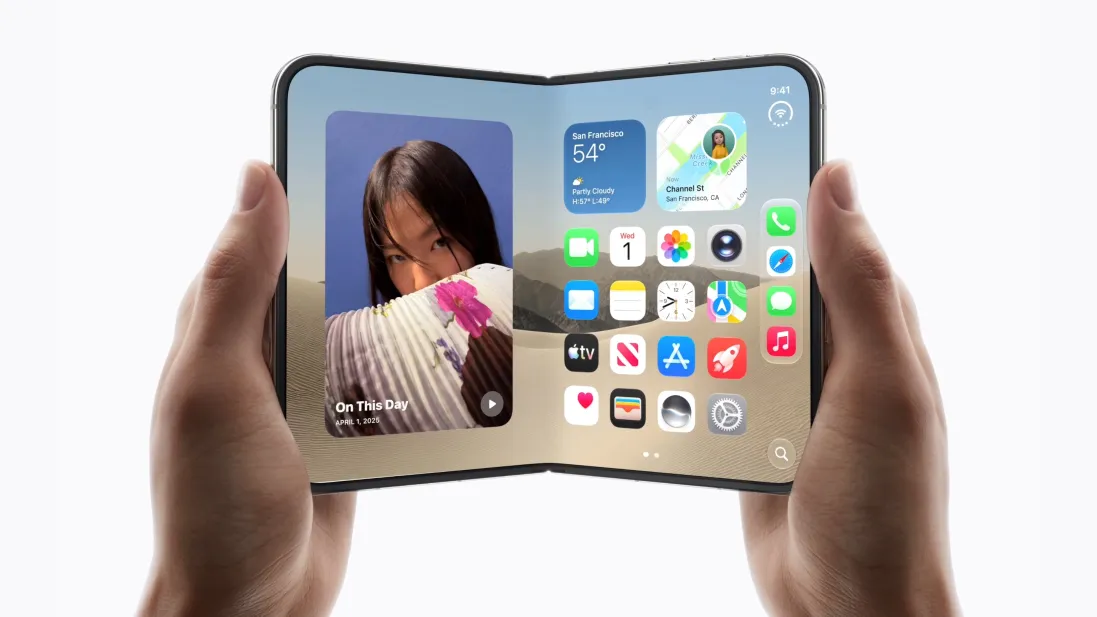
The Hinge Is Now An Input
For most of its history, the iPhone has asked software to fit inside a fixed rectangle. Duo gives iOS a changing physical environment.
When the phone is closed, controls move into positions that are easier to reach. Open it horizontally and two apps can run side by side using Split View. Hold it vertically and users get a wider keyboard, more scrolling space and the option to pin a video above another app.
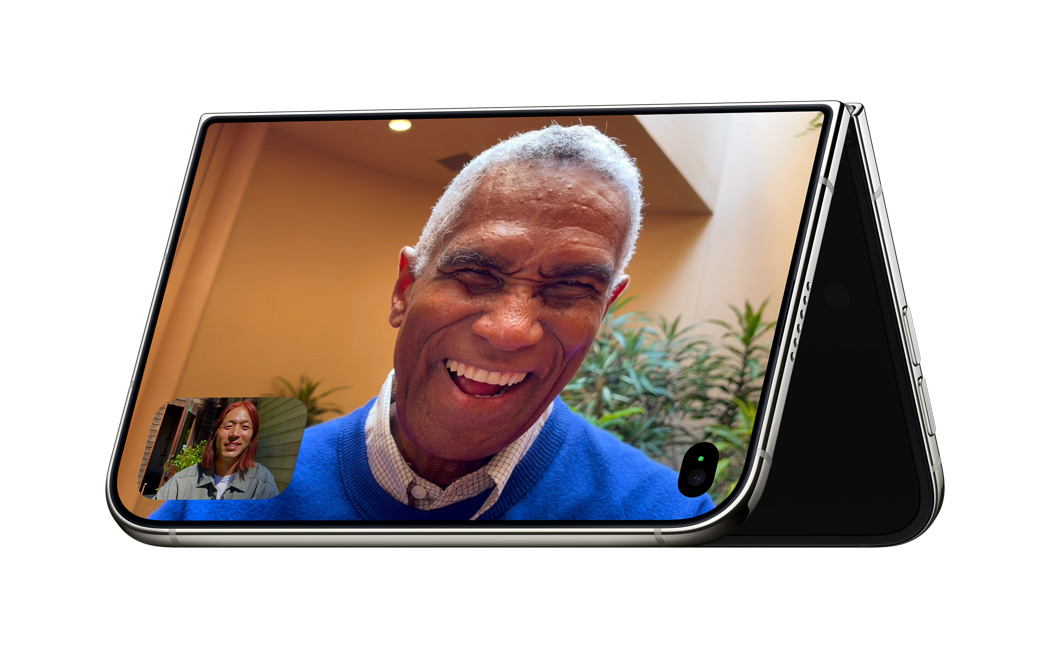
Partially fold the device into what Apple calls its Seated position and the upper screen becomes the display while the lower half holds playback controls. Turn it into an inverted V and the outer screen can show movies, widgets, photos or a StandBy clock.
According to Apple, iOS 27 transitions between these displays, orientations and positions without requiring users to select a mode manually.
The device does not merely have a flexible screen. It has physical states, and each state tells the software how it should behave.
The hinge is not just hardware. It is an input.
The Second Screen Becomes A Social Surface
Some of Apple’s smartest ideas appear inside the camera.
Duo Preview lets the person being photographed see the live composition on the outer display. Kid Cue plays animations on that screen to encourage children to look toward the camera. Duo FaceTime allows people standing nearby to see a call without crowding around the main display.
Smart Take goes further by detecting when everyone appears ready and capturing the photograph automatically, removing the traditional sprint back from a timer.
These are not simply extra features attached to a second screen. They recognize that photography is often a shared activity involving people on both sides of the phone.
Apple is effectively turning the back of the device into a participant.

Apple Wants A Foldable That Does Not Feel Experimental
Apple is arriving years after Samsung and other Android manufacturers began selling foldables. That gives the company less credit for invention, but considerably more time to study what has prevented the category from becoming mainstream.
The crease remains one of the most visible problems.
Apple says the Duo’s inner display uses ten ultrathin layers, custom adhesives and a nano-texture finish to produce a surface that feels remarkably smooth and flat. The phone also has a Grade 5 titanium frame and hinge cover, Ceramic Shield on the exterior and IP68 water and dust resistance.
The company has clearly designed its story around removing the compromises people associate with foldables. Independent testing will determine whether the screen and hinge live up to those claims.
There are still tradeoffs. Duo replaces Face ID with Touch ID inside the side button. The US model is also eSIM-only.
A $1,999 Bet On A New Kind Of iPhone
The base iPhone Duo includes 256GB of storage and comes in Night Sky or Star White. Configurations extend to 2TB, taking the price as high as $3,199.
Inside is Apple’s A20 Pro processor, supported by vapor-chamber cooling and a dual-battery system. Apple claims up to 31 hours of video playback using the inner display and 44 hours through the outer one.
But this first generation does not need to become the bestselling iPhone to matter.
Its job is to establish a new set of behaviors and give developers a reason to design around a device that changes shape. An app can now decide what to show when the phone opens, how controls move when it bends and what information belongs on the screen facing the other person.
That turns folding from a hardware specification into a platform decision.
Apple Just Made Foldables An iOS Category
Foldables have spent years occupying an unusual position: technologically impressive, highly visible and still relatively niche.
The arrival of an iPhone changes the category’s cultural status. Consumers who would never consider switching to an Android foldable can now encounter the format inside an ecosystem they already understand. Developers, accessory companies and creators suddenly have an Apple-sized incentive to explore what the form can do.
Apple’s advantage has rarely been arriving first. It is turning unfamiliar technology into a collection of behaviors people can immediately recognize.
Phone when closed.
Workspace when open.
Stand when folded.
That may be the iPhone Duo’s most important achievement.
Apple has not simply made an iPhone that bends. It has made the shape of the iPhone part of iOS.
Also read:
Apple Watch Is About To Remember Your Conversations For You
Apple’s September Event: Thinness, Glass, And The Future Of The iPhone
Apple Upgrade Makes Leasing The New Default For Apple Devices