


Google is making the shopping cart less like a final checkout step and more like an ongoing decision-making space. Its new Universal Cart is now available in the U.S. across Google Search and the Gemini app, giving shoppers one place to save products, track changes, uncover savings, and complete purchases across multiple retailers.
That makes the launch more important than another seasonal shopping utility. In Google’s announcement, Universal Cart is presented as a practical application of AI: not an agent making every purchase independently, but a system that stays active while the shopper compares, waits, changes their mind, and eventually decides.
The cart is becoming a persistent shopping memory
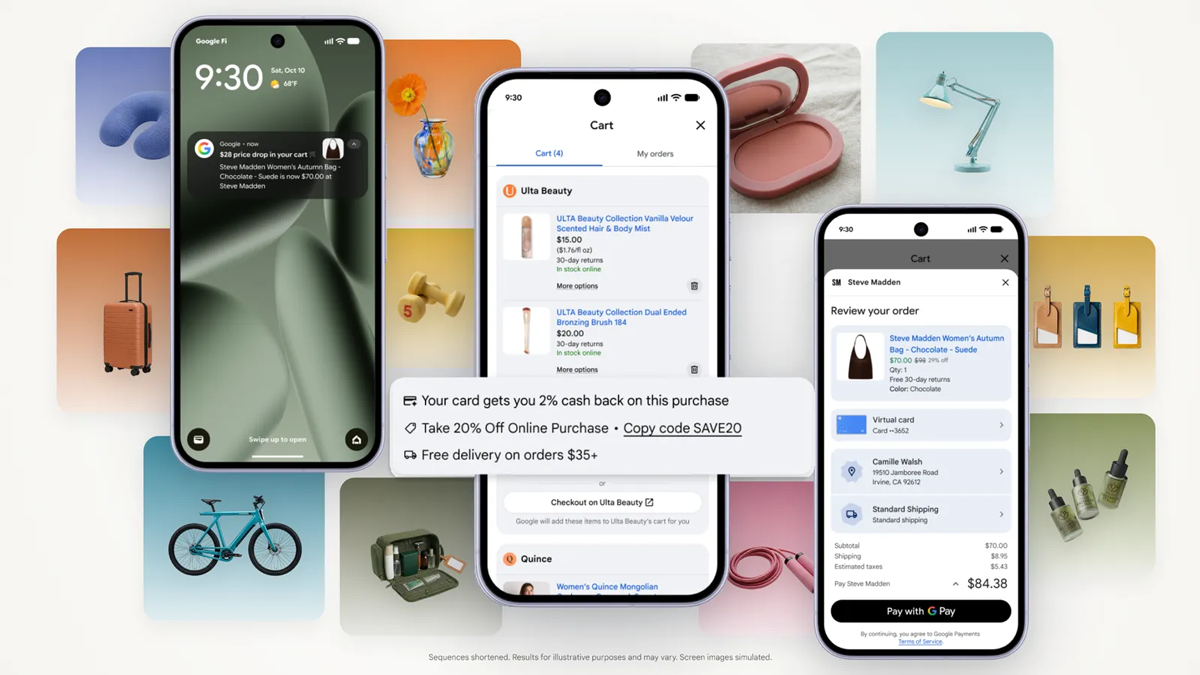
The first shift is organizational. Universal Cart lets people save products from different retailers while moving between Google surfaces. A shopper might save a Steve Madden handbag in AI Mode in Search, add a Quince sweater later through Gemini, and keep both items available when they return.
That is a small but meaningful change in how shopping is represented. The product is no longer tied to one retailer or one browsing session. It becomes a persistent list of intentions, even when the shopper is still researching and has no immediate plan to buy.
Google says the cart is connected to more than 60 billion continually refreshed product listings in its Shopping Graph. That allows it to monitor price and inventory changes across the saved list, including price drops and products returning to stock. The value is not simply that Google remembers what someone clicked. It can keep watching the commercial conditions around that decision.
This is where the cart begins to look less like storage and more like lightweight assistance. The shopper still chooses what matters, but the system handles some of the repetitive checking that usually requires open browser tabs, screenshots, saved links, or repeated searches.
Google is inserting itself between consideration and checkout
Universal Cart also reaches into the parts of shopping that usually happen after product discovery. Google says the system can surface relevant promo codes and use information from Google Wallet to help shoppers choose between payment methods based on card benefits and points.
That creates a more consequential role for Google. Search has traditionally helped people find products, while the retailer owned the product page, the cart, and the transaction. Universal Cart places Google closer to the moment when a shopper decides which offer is worth taking.
Checkout remains deliberately flexible. Shoppers can use Google Pay with participating retailers, or transfer their items to the merchant’s own cart and finish on the retailer’s site. Google lists Nike, Sephora, Target, Ulta Beauty, Walmart, Wayfair, and many Shopify merchants among the supported shopping experiences. The merchant remains the seller of record, provides confirmation and customer support, and retains the customer relationship at the transaction level.
That arrangement helps explain the product’s positioning. Google is not trying to replace every retailer’s checkout immediately. It is trying to become the layer that organizes shopping before the transaction and makes the final handoff feel less disruptive.
For brands, that means product visibility may increasingly depend on how well an item travels through AI-assisted comparison, price monitoring, promotion discovery, and payment recommendations. A retailer can still own the sale, but Google may influence the shortlist, the timing, and the perceived value before the customer arrives.
The strategic consequence is clear: Google is turning shopping intent into something that can persist across interfaces and remain active in the background. Universal Cart is not an autonomous shopper. It is a controlled middle layer between browsing and buying, where AI helps manage the messy period in which consumers are interested, uncertain, price-sensitive, and not yet ready to convert.
That direction connects with a broader platform shift toward systems that make user activity more visible and useful beyond the original interaction. WeRSM has examined a similar movement in AI Search turning social activity into brand visibility, where activity becomes a signal that can shape discovery beyond the place it was created.
Universal Cart applies that logic to commerce. The brands most exposed will not necessarily be the ones with the loudest product launch. They will be the ones whose products remain competitive when an AI-guided system is quietly comparing price, stock, incentives, payment benefits, and checkout friction on the shopper’s behalf.