


Google’s homepage may be getting its biggest behavioral nudge in years: before you search, try asking AI.
Google is testing a new AI-first homepage layout in which the classic Search button takes a back seat to three AI-first shortcuts. The test was reportedly spotted across Chrome, Edge, and Perplexity’s Comet browser, which suggests this is not simply a Chrome-only surface experiment.
Google has not announced the change, and there is no official help page or product post confirming it. So this should be treated as a sighting, not a rollout. But even as a test, the direction is loud: Google is experimenting with making AI feel like the default entry point to the web, not an optional layer you discover after typing a query.
The homepage is becoming an AI prompt
For decades, Google’s homepage has been almost aggressively simple: logo, search field, buttons. That simplicity trained the internet to think in keywords. You arrive with intent, you type the thing, and Google returns links.
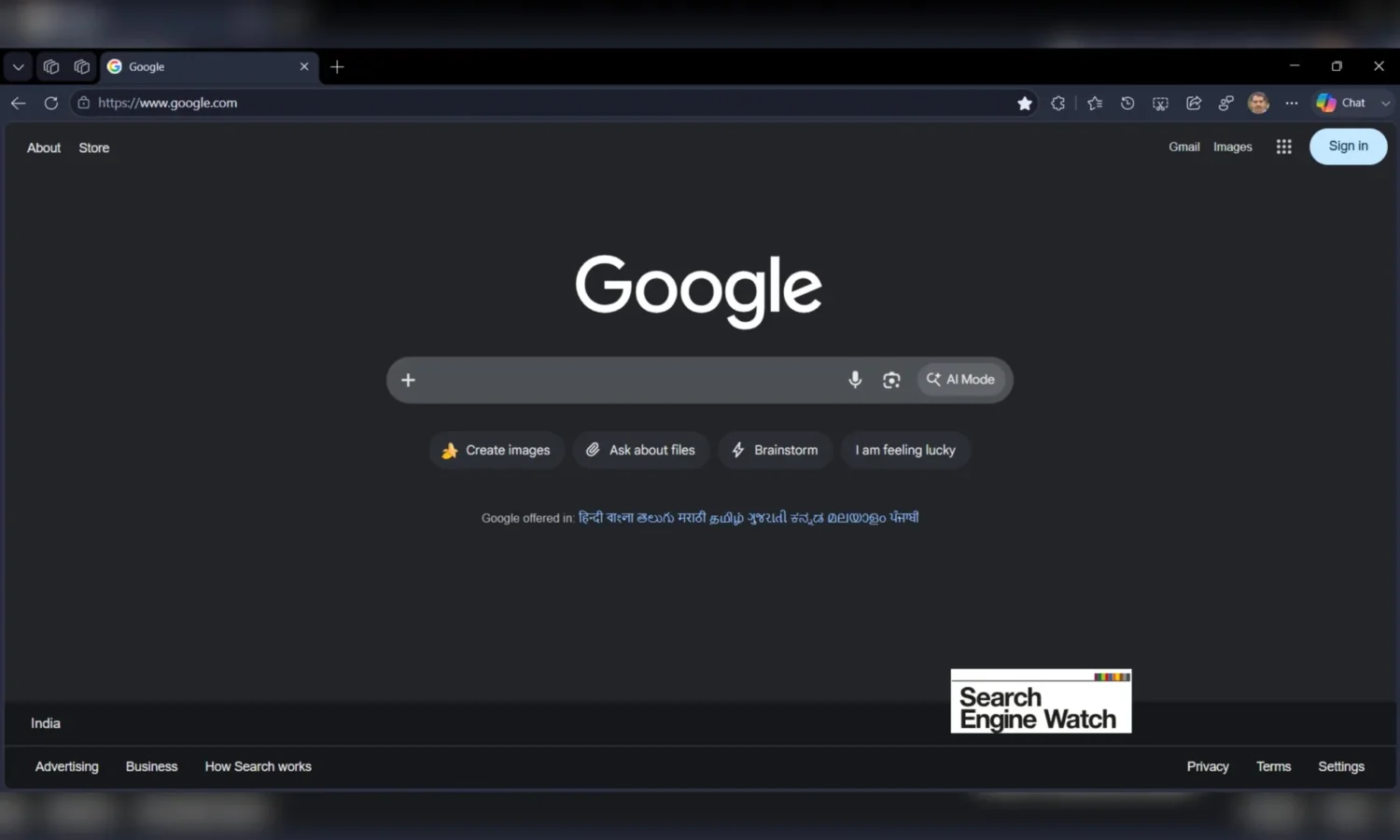
The reported test changes the first cue. Instead of treating AI as something that appears after a search, the homepage places AI-first actions before the old muscle memory. The most important detail is not that the Search button is still there or gone in one specific version of the test. It is that Google appears willing to make classic search visually less dominant on its most symbolic surface.
That matters because interface hierarchy teaches behavior. If the first thing users see is a set of AI shortcuts, Google is not just adding another product feature. It is asking people to reframe what a search session is. Less typing a query and choosing from links. More starting with a task, a question, or a conversational intent and letting the system shape the path.
This is the same pressure Google has already been applying elsewhere in Search through AI Overviews and AI Mode. The homepage test would bring that shift one step earlier: before results, before links, before the familiar act of pressing Search.
The strategic risk is the habit Google built
The tension is obvious. Google became the front door to the internet because the search box felt neutral, fast, and universal. If the homepage starts to look more like an AI assistant, Google may improve utility for complex tasks, but it also changes the emotional contract of the product.
Search was a tool you controlled. AI search feels more like a system that interprets what you meant, summarizes what matters, and often decides which sources deserve attention. That is powerful, but it also raises the stakes for trust, publishers, SEO, and brand visibility. If users begin sessions inside AI-first shortcuts, the first competitive battle is no longer just ranking on a results page. It is being understood, selected, and surfaced by the AI layer before the traditional page of links even appears.
For marketers, this is not a reason to panic over one reported test. It is a reminder that the old search journey is being compressed at the interface level. The homepage is where habits are created. If Google turns that surface into an AI prompt, discovery starts changing before the user has even searched.