


Calendly does not want to stop at getting people into meetings. It now wants to own what happens once the meeting starts, and what work follows after it ends.
The scheduling company is entering the AI meeting note-taker race. Calendly is adding a note-taking product that can join meetings, record audio and video, transcribe the conversation, generate a summary and action items, and draft follow-up emails.
That already sounds familiar. Granola, Fireflies, Read AI, Otter, Fathom, and a growing list of productivity suites are all chasing the same basic promise: let AI sit in the room, capture the meeting, and turn the transcript into something useful. Calendly’s bet is that its advantage is not the transcript itself. It is the context around the meeting.
Calendly is moving from scheduling into meeting memory
According to TechCrunch, Calendly is also testing a feature that uses system audio to transcribe meetings, similar in spirit to Granola’s approach. That matters because it points to a quieter version of the meeting bot: less dependent on a visible participant joining the call, more embedded into the user’s actual work setup.
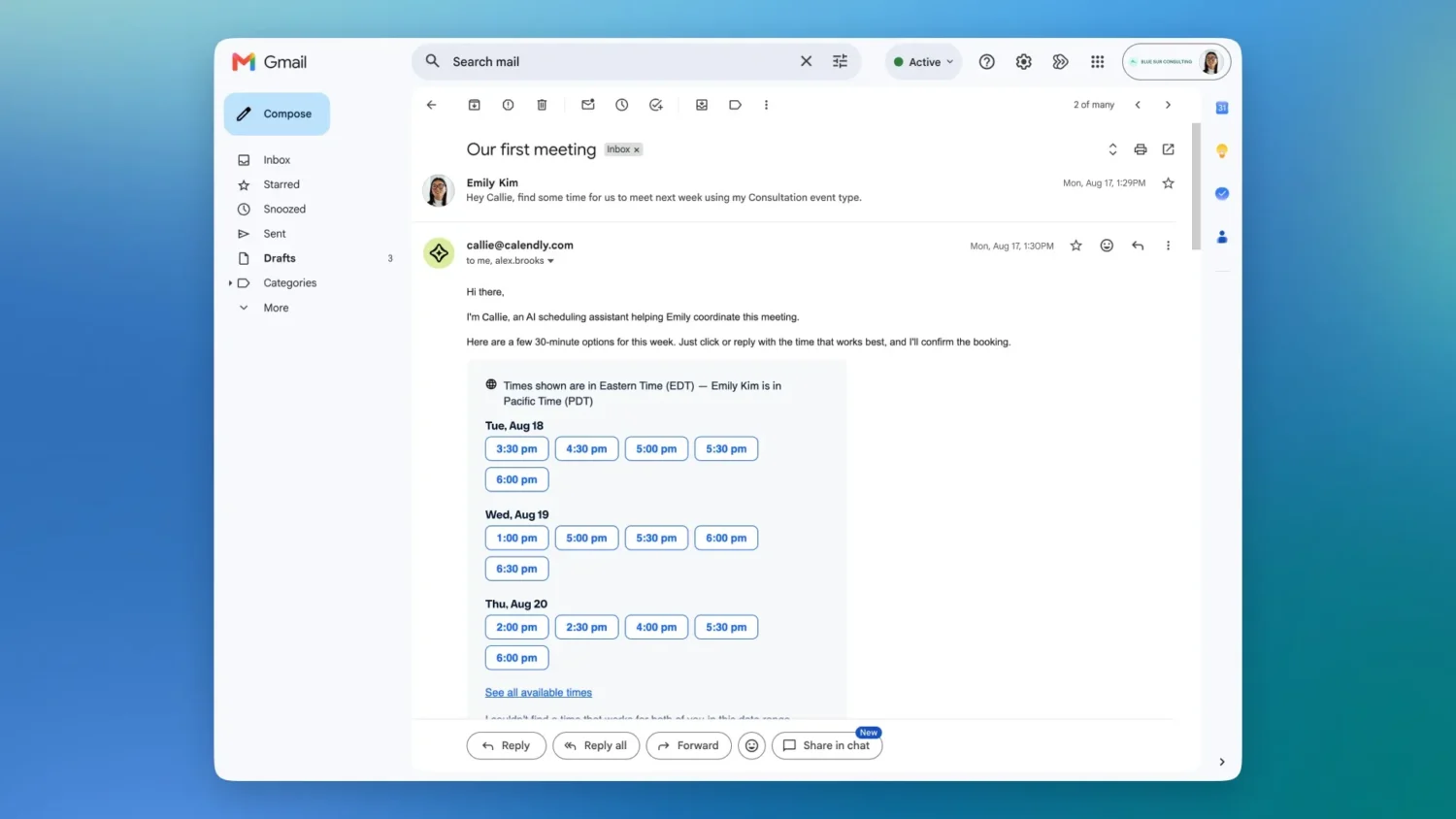
The bigger move, though, is Callie, a planned AI assistant that would tap Calendly’s existing scheduling and meeting stack. The assistant is expected to help set up meetings, check people’s availability, and surface context from previous meetings.
That is where Calendly’s position gets more interesting. A note-taker can tell you what was said. A scheduling platform knows who met, when they met, why the meeting was booked, and what the next meeting might need to be. If Calendly can connect those pieces without becoming intrusive, it starts to look less like a calendar utility and more like a workflow layer for relationship-heavy work.
Calendly CEO Tope Awotona told TechCrunch the company is focused on automating workflows for its heaviest users, especially people in outward-facing roles like sales and marketing, whose days are already packed with meetings. His point is simple: recording and transcribing are no longer enough. The real value is in what happens after the transcript exists.
The useful part is also the awkward part
That is the tension with AI meeting tools. The more useful they become, the closer they get to sensitive context: client conversations, negotiation cues, internal decisions, follow-up commitments, and the small signals people may not want turned into structured data.
This is not just a workplace software problem. It is a trust problem around AI entering shared spaces. The same social-license question showing up around always-on devices, including Meta’s smart glasses, is now moving into the calendar invite: who is recording, who knows, and who gets value from the capture?
Calendly has one obvious advantage. It already sits at the front door of the meeting. For many users, the invite, booking flow, reminders, availability, and follow-up already pass through its system. Adding AI notes and an assistant like Callie extends that relationship from coordination into memory and action.
But that also raises the bar. If every productivity company is adding a note-taker, then “we summarize your calls” quickly becomes table stakes. The winners will be the tools that can turn meeting context into next steps without making participants feel like every conversation has become raw material for automation.
For Calendly, the strategic play is clear: own the meeting lifecycle, not just the booking link. If it works, the humble scheduling page becomes the start of an AI-managed business relationship.