


Aura is trying to make the digital picture frame feel less like a sentimental gift and more like a small, private social network. That is the strategic idea behind its latest campaign, reported by Adweek, and it is more interesting than another attempt to make a familiar hardware category feel fashionable.
The product’s own history supports the repositioning. In Aura’s account of its first decade, founders Abdur Chowdhury and Eric Jensen describe the company as a response to a simple problem: photos are shared constantly, but most of them disappear into camera rolls and public feeds. Aura’s answer was to put those images somewhere visible, domestic and intentionally limited.
A private network built around a physical object
Aura says more than 10 million people now use its frames, while users shared more than one billion photos to them in 2025. Sharing is also up 40% in 2026, according to the company. Those numbers matter because they describe a behavior that sits somewhere between posting, messaging and decorating the home.
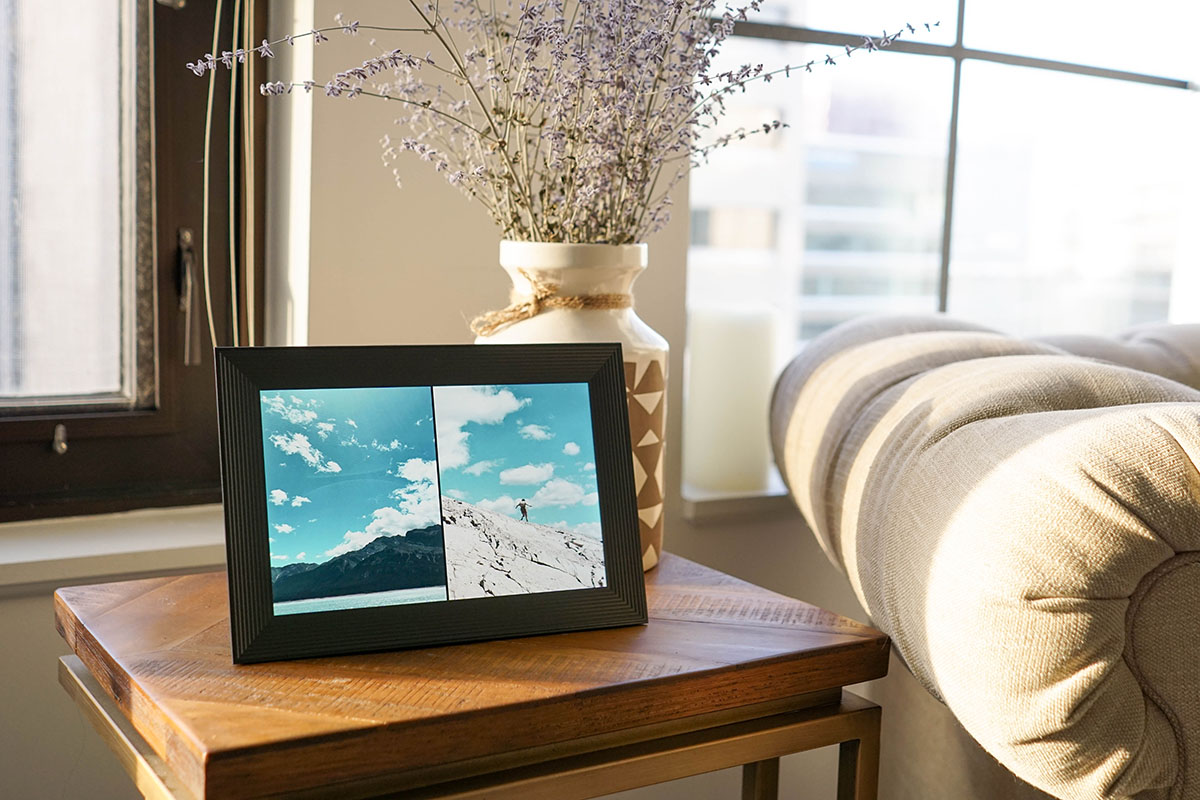
The frame is the interface, but the network is the product. Family members can contribute photos remotely through the Aura app, while the recipient experiences the result without needing to open a feed or manage a stream of notifications. Aura’s help center describes the images as visible only to a closed network of people invited by the owner.
That is a very different social design from the dominant model. There is no public audience to perform for, no follower count to grow and no algorithmic feed competing for attention. The value comes from making a small group’s shared life visible in a room.
The useful lesson is about reducing social friction
Aura’s founders came from Twitter, a platform built around public conversation and high-frequency information flow. Their product takes almost the opposite approach. It removes the pressure to post publicly and turns sharing into a background habit.
That makes Aura less interesting as a frame company than as a case study in product positioning. It found a familiar object, attached a lightweight software layer to it and used the object to make digital behavior feel physical again. The result is not another social app asking people to check in. It is a system designed to keep people connected without asking them to spend more time online.
The challenge is that the category still carries the baggage of the traditional digital frame: gifting, parents and grandparents, and a product that can feel passive once the novelty fades. Aura’s campaign is therefore doing more than broadening the audience. It is trying to change the meaning of the object from “a screen for someone else’s house” to “a shared channel for people already close to you.”
For brands, the implication is clear. The next useful social product may not look like a social product at all. It may be a household object, a private utility or an ambient interface that makes participation easier by removing the public performance layer. Aura’s bet is that connection becomes more durable when the technology asks less of people, not more.