


TikTok is making the case that live shopping in the U.K. is becoming less about watching products and more about acting on them. In its first Live Shopping Report, the platform says live shopping sales increased 55% year over year, while more than 30% of live viewers eventually bought a displayed product in-store.
Live shopping is becoming a retail behavior
The most revealing number is not the sales growth. It is the gap between digital viewing and physical purchase. TikTok says more than 30% of live viewers went on to buy a featured product in-store, suggesting that livestreams can influence shopping even when the final transaction does not happen inside the app.
That matters because it gives TikTok a broader role in the purchase journey. A live session can create interest, demonstrate a product and push someone toward a store without needing to capture every last click. The platform says more than 60% of small and medium-sized businesses also reported that one live shopping session generated more revenue than other channels typically produce in a week.
The figures are self-reported and should be read with that limitation in mind. Still, they point to a useful shift: live content is being measured less as a format for engagement and more as a route into retail behavior.
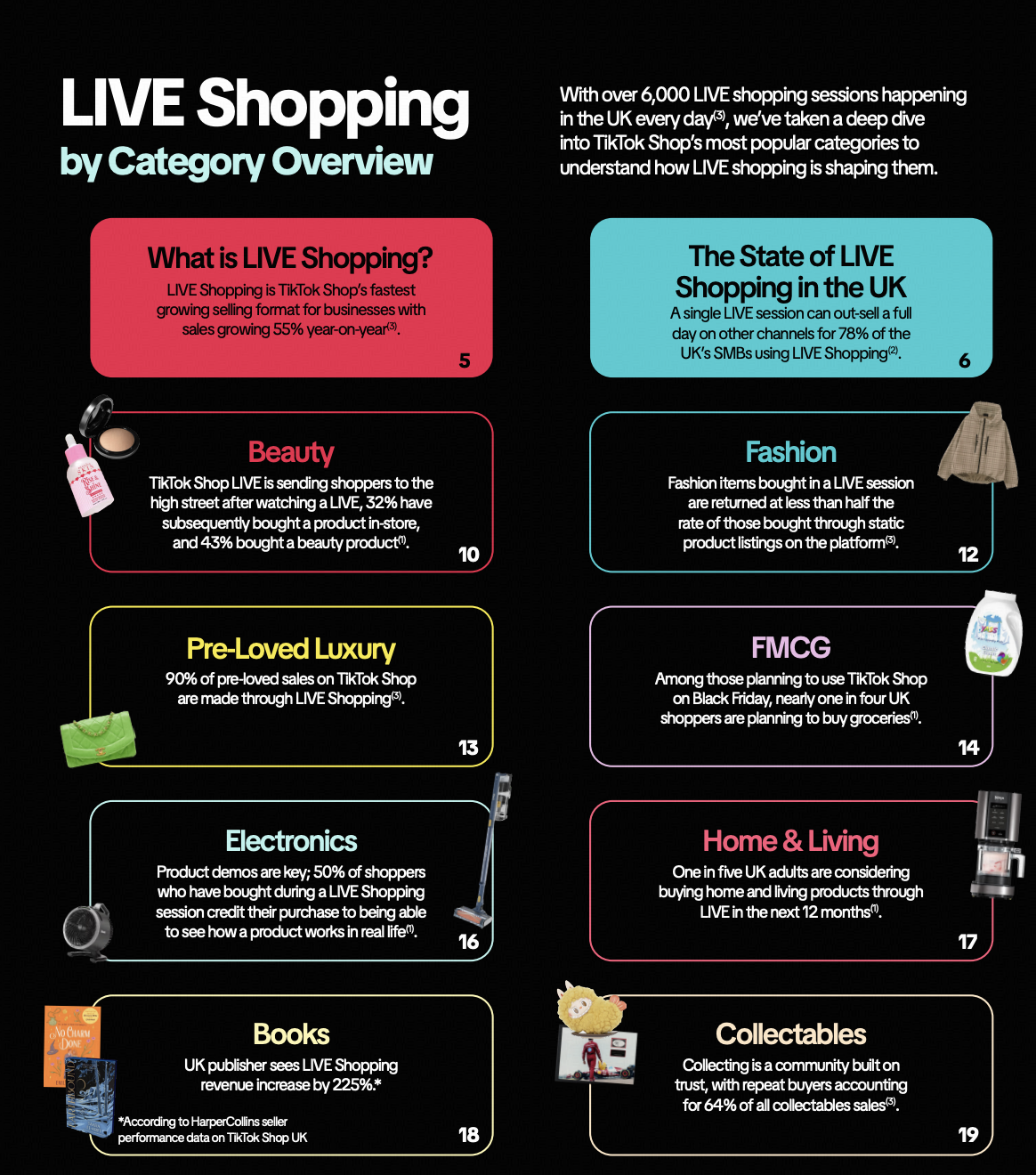
TikTok is selling the format by category
TikTok’s report highlights beauty, fashion, fast-moving consumer goods, pre-loved products, electronics, home and living, and books and collectibles as leading categories. That list shows why the platform is treating live shopping as a repeatable commercial format rather than a one-off event.
The strongest categories are products that benefit from demonstration, comparison, recommendation or real-time conversation. Beauty and fashion can be shown in use. Pre-loved products can be inspected. Collectibles can be discussed with a community that already understands their value.
TikTok also says more than half of U.K. adults are considering buying through live shopping over the next 12 months. That is an intention signal, not proof of mass adoption, but it explains the platform’s continued push to make shopping part of the viewing experience. As WeRSM has noted in its coverage of TikTok Live becoming a discovery product, the platform’s live strategy is increasingly about what viewers do around a stream, not only what they watch.
TikTok still has to convince users to combine social browsing and shopping in one app. But the direction is clear. In the U.K., live shopping is being positioned as a bridge between attention, recommendation and retail, with the transaction allowed to happen wherever the buyer is ready.