


Schools are being asked to make a surprisingly specific choice about AI: accept it as part of search, or find another way to search. DuckDuckGo is now positioning itself as the alternative for educators who want more control.
That pitch follows Google’s reported decision to let schools disable Gemini while tying the removal of other AI features to the broader Google Search experience. DuckDuckGo is pointing schools toward its documentation for changing their default search engine and inviting them to get in touch for help.
DuckDuckGo sees an opening in the control debate
The opportunity is not small. Google has previously said that roughly 50 million Chromebooks are used in schools, while Google Classroom serves more than 150 million users globally. Even a limited shift in default search behavior would put an alternative directly in front of a large education market.
DuckDuckGo’s argument is built around choice. The company offers its own AI features, including the Duck.ai chat interface and an AI search assistant, but says users can disable them in its search and browser settings. Its dedicated noai.duckduckgo.com site goes further by turning off AI-assisted answers, generated images, and AI feature suggestions.
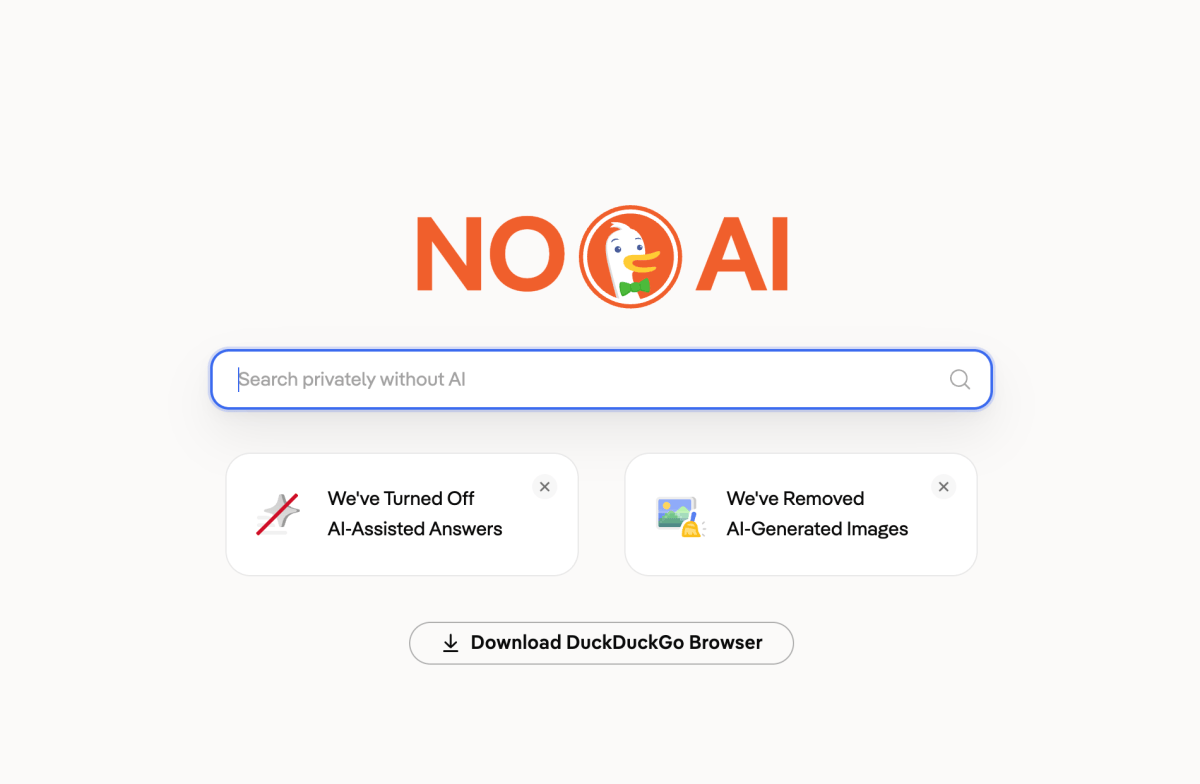
That distinction matters because the education debate is not simply pro-AI versus anti-AI. Google says Gemini, Gemini Notebook, and Search will be off by default for schools, with administrators able to enable them individually. But Search itself now includes AI Overviews and conversational AI Mode, making the boundary between traditional search and AI search increasingly difficult to draw.
The real product is an exit option
DuckDuckGo is not winning this argument by claiming to have no AI. It is winning attention by offering a clearer off switch.
TechCrunch says DuckDuckGo reported app installs were up 30% earlier this year as users rejected what it described as forced AI Search. Whether that momentum translates into school adoption remains unclear. Schools also buy into devices, administration tools, identity systems, classroom software, and support ecosystems, not just a search box.
Still, the pitch exposes a growing product expectation. When AI becomes embedded in a familiar service, users increasingly judge the platform by whether they can refuse it. For Google, that makes control a policy question. For DuckDuckGo, it becomes the product benefit itself.