


Short dramas are usually described as tiny soap operas: vertical, episodic stories built around romance, revenge, family conflict and cliffhangers. Snapchat’s latest research suggests the format is becoming more than another way to fill a feed. It is becoming a social viewing habit, with sharing and conversation built into the experience.
The research, conducted by Snap and Ipsos among 3,000 people in the U.S., U.K. and Saudi Arabia, gives Snapchat a clear commercial argument. Short dramas are not only attracting attention. They are encouraging people to recommend episodes, use branded features and pay to keep watching.
Short dramas are designed to travel
According to Snapchat’s report on the global rise of short dramas, 74% of viewers share clips with friends and family, while the same proportion discuss the series with them in person. Another 69% share a comment or reaction to their Story, and 64% use a show-branded AR Lens.
That combination matters because the format is not relying only on passive completion. Each episode can become a recommendation, a conversation starter or a piece of branded participation. The story moves through a network of people, not just through a sequence of autoplay videos.
Snapchat says more than half of its short-drama viewers watch episodes daily, and Snapchatters are 1.3 times more likely than non-Snapchat viewers to watch for more than 30 minutes in a single sitting. The platform also says 68% of Snapchatters are watching more short-drama content than they did last year, while 86% expect to continue watching.
The commercial opportunity is in the next action
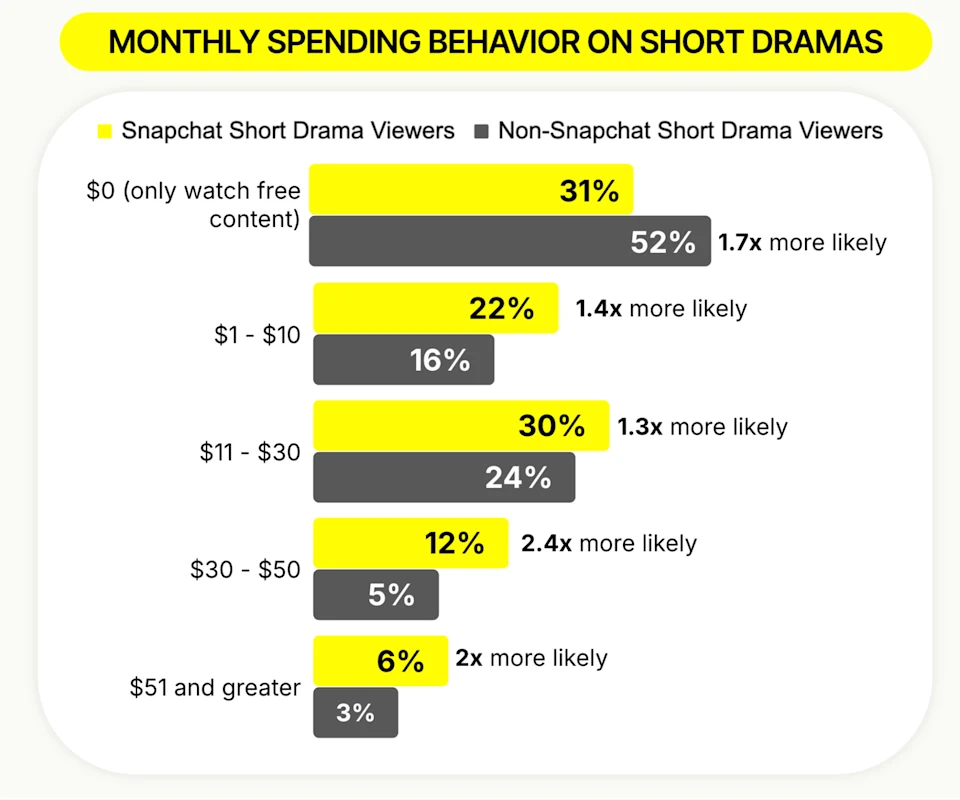
The more interesting finding is what happens after the clip. Snapchat says its users are more likely to download a dedicated short-drama app after seeing short-drama content, and are 1.4 times more likely to prefer buying in-app coins to unlock episodes. They are also 1.2 times more likely to pay for unlimited access.
That gives creators and advertisers a useful distinction. The value of the format is not simply that it is short. It is that a short episode can create enough emotional pressure to prompt the next action, whether that means sharing a clip, trying an AR Lens, downloading an app or paying for the next chapter.
For brands, the implication is not that every campaign needs its own soap opera. It is that episodic storytelling can create more opportunities for participation than a single polished video. The strongest executions will understand the genre’s mechanics, use the first seconds to establish tension and give viewers a reason to bring someone else into the story.
Short dramas are therefore less a replacement for traditional entertainment than a new promotional environment built around anticipation. Brands that enter the space will need to earn the next episode, not just interrupt the current one.
Download the full research report