


We spend a lot of time blaming scrolling for destroying our attention spans. ScrollEd is asking a more interesting question: what if the problem is not the interaction itself, but what we are scrolling through?
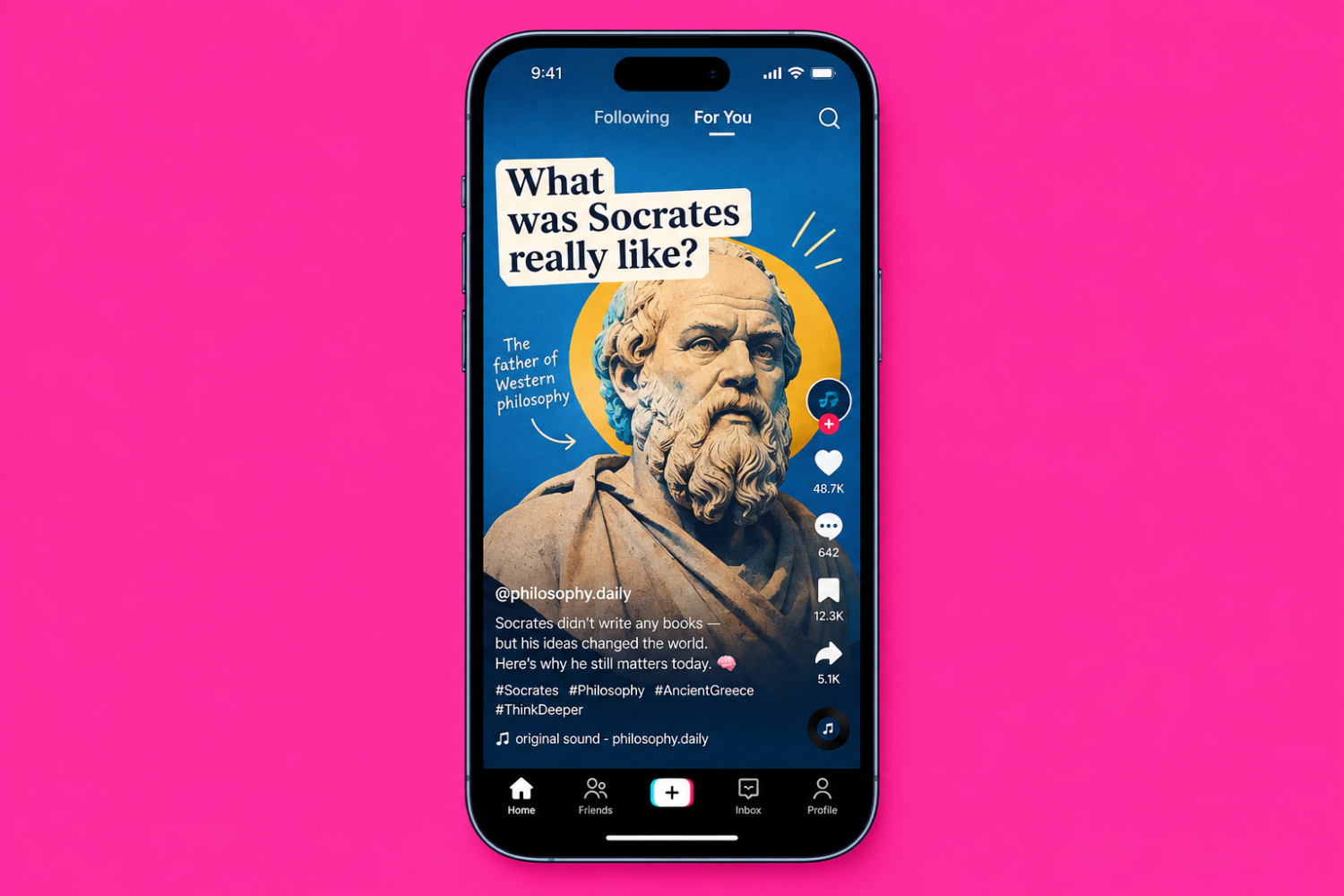
The Palo Alto startup has built an app that turns textbooks, PDFs, lecture notes and other written material into a vertical feed that looks and behaves much more like TikTok or Instagram Reels. Instead of moving through pages, users swipe through AI-generated explanations, videos, audio, text cards and quizzes, with the option to go deeper into a topic rather than simply moving on to the next one.
What If Learning Borrowed From The Feed?
ScrollEd’s premise starts with a behavior educators cannot simply wish away.
Its co-founder Utsav Gupta told TechCrunch that younger users, particularly the 18-year-olds the team has spoken with, increasingly expect short-form and vertical-feed experiences. Rather than trying to retrain that behavior before learning can happen, ScrollEd wants to use it as the interface for learning.
Upload a file and the platform breaks the material into smaller ideas, summaries, quizzes and visual learning elements. Swiping up moves to the next topic, while moving sideways lets the learner explore the current one in more depth. ScrollEd describes the process as turning a book into an AI-generated “study journey” rather than simply summarizing it.
A lot of educational technology built around short-form content assumes the answer is to make everything shorter. ScrollEd’s more interesting idea is that short-form can become the entrance rather than the destination.
TikTok Did Not Invent Curiosity
The criticism of feed-based media is usually that every swipe encourages us to abandon one idea for another. ScrollEd wants to redesign that mechanic so curiosity has somewhere to go.
Gupta argues that a short video might make someone curious, but the important part is making the next explanation or deeper layer just as easy to reach as the next piece of content. In ScrollEd, the familiar swipe is still there, but the direction of travel can lead further into the subject rather than away from it.
That is a subtle but important product decision.
TikTok and Reels became extraordinarily effective because they reduced friction between pieces of content. ScrollEd is effectively asking whether the same interface logic can reduce friction between pieces of knowledge.
Instead of fighting the muscle memory social platforms have spent years building, it borrows it.
This Is Really About Interface Literacy
There is a tendency to talk about younger audiences as if they simply lack patience for long-form information. That explanation may be too easy.
People learn how to navigate the interfaces around them. A generation raised on feeds has developed expectations around pace, navigation, feedback and control that are very different from turning 40 pages to reach the next important concept.
We already see that behavior extending well beyond entertainment. Gen Z increasingly uses social platforms for search, product discovery, news, recommendations and communication. As we have written before, social is becoming less of a channel and more of an operating system for how younger users navigate the internet.
Education was always likely to absorb some of those behaviors too.
The interesting question is whether platforms can borrow the useful mechanics of social media without inheriting all of its incentives.
ScrollEd Does Not Want To Maximize Engagement
That may be the most unusual part of the pitch.
ScrollEd says it wants to avoid designing purely around keeping people inside the app. Gupta told TechCrunch the company wants to be deliberate about how it uses short-form mechanics rather than maximizing engagement for its own sake. The ambition, he says, is ultimately to build “a social network that’s better for you.”
That is easy to say and much harder to build, particularly once growth and monetization enter the equation. But the business model at least points in a different direction: ScrollEd plans a mix of consumer subscriptions and institutional licenses for schools, corporate training programs and other organizations, rather than depending entirely on attention-driven advertising.
The company is still early. It plans to build out its consumer product, lesson library, source-checking systems and institutional pilots, while eventually developing tools that can adapt material to individual learners.
So this is not yet evidence that textbooks are about to disappear into a TikTok feed.
It is evidence that the design language of social media is escaping social media.
Maybe The Scroll Was Never The Problem
There is something almost uncomfortable about the idea of turning a textbook into a feed because it appears to surrender to the very behavior many people think education should resist.
But interfaces shape behavior, and good design has always adapted information to the way people consume it.
The book did that. The webpage did that. Search did that. Video tutorials did that.
The vertical feed may simply be another interface.
The challenge is deciding what we want it to optimize for.
Social platforms taught an entire generation to keep scrolling because there was always something else to see.
ScrollEd is betting that the same instinct can be redirected toward something worth understanding.