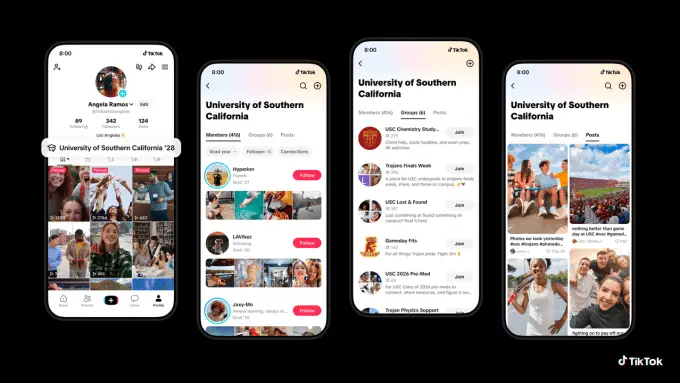
TikTok just introduced Campus Hub, a new feature designed to help college students stay connected to their university communities, especially when they’re not physically there.
Built on top of its existing campus verification system, Campus Hub adds two key layers: group chats and a dedicated campus feed.
The ambition is clear: turn TikTok from a place where students consume culture into one where they also organize their daily social lives.
A campus, inside TikTok
Through a partnership with UNiDAYS, students from more than 6,000 U.S. universities can verify their status and link their school to their profile. Once inside, they unlock a new, semi-private layer of the app.
College Groups allow verified students to create and join group chats of up to 300 people, restricted to classmates from the same university.
Think: planning meetups, staying in touch over summer, or even running club and class conversations.
College Feed is a personalized stream that surfaces content from fellow students alongside university-related posts, keeping users plugged into campus life, trends, and updates from anywhere.
TikTok isn’t just competing with social platforms anymore
On the surface, this looks like a natural extension of TikTok’s community features. But zoom out, and it’s more strategic than that.
This isn’t just about engagement, it’s about ownership of communication.
Group chats and campus-specific feeds position TikTok against platforms traditionally used for coordination and conversation, from Discord to Facebook Messenger and even Instagram.
Instead of sending a link from TikTok to a group chat elsewhere, the goal is simple: keep the entire loop inside the app.
Everything old is new again
There’s also a strong sense of déjà vu here.
Campus Hub echoes the early days of Facebook, when access was gated by “.edu” emails and the platform was built entirely around college networks.
But the difference is key: Facebook started with identity and built toward content. TikTok starts with content and is now layering identity on top.
TikTok has already won attention. Now it’s going after context.
By anchoring users to real-world communities like campuses, the platform becomes more than an algorithmic feed, it becomes infrastructure for everyday interaction.
If it works, TikTok doesn’t just entertain students. It becomes where campus life actually happens.
Also Read:
Spotify Introduces “Verified By Spotify” To Separate Human Artists From AI
Instagram Cracks Down On Content Aggregators To Boost Originality
X Launches XChat, A Stand-Alone Messaging App