


KFC wanted to participate in Sneaker Day. There was only one obvious problem: KFC does not make sneakers.
So it did something much smarter than launching another branded collaboration.
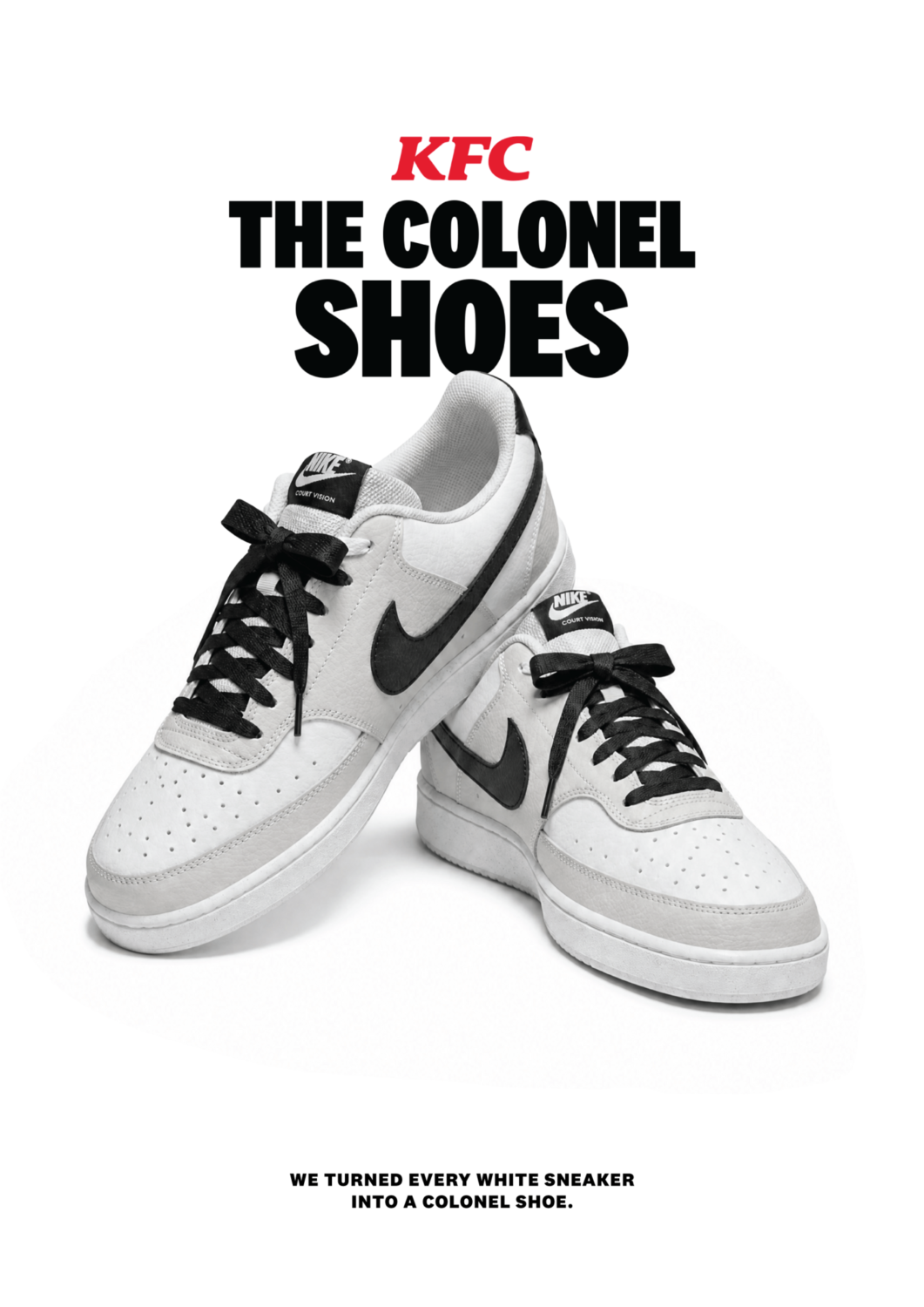
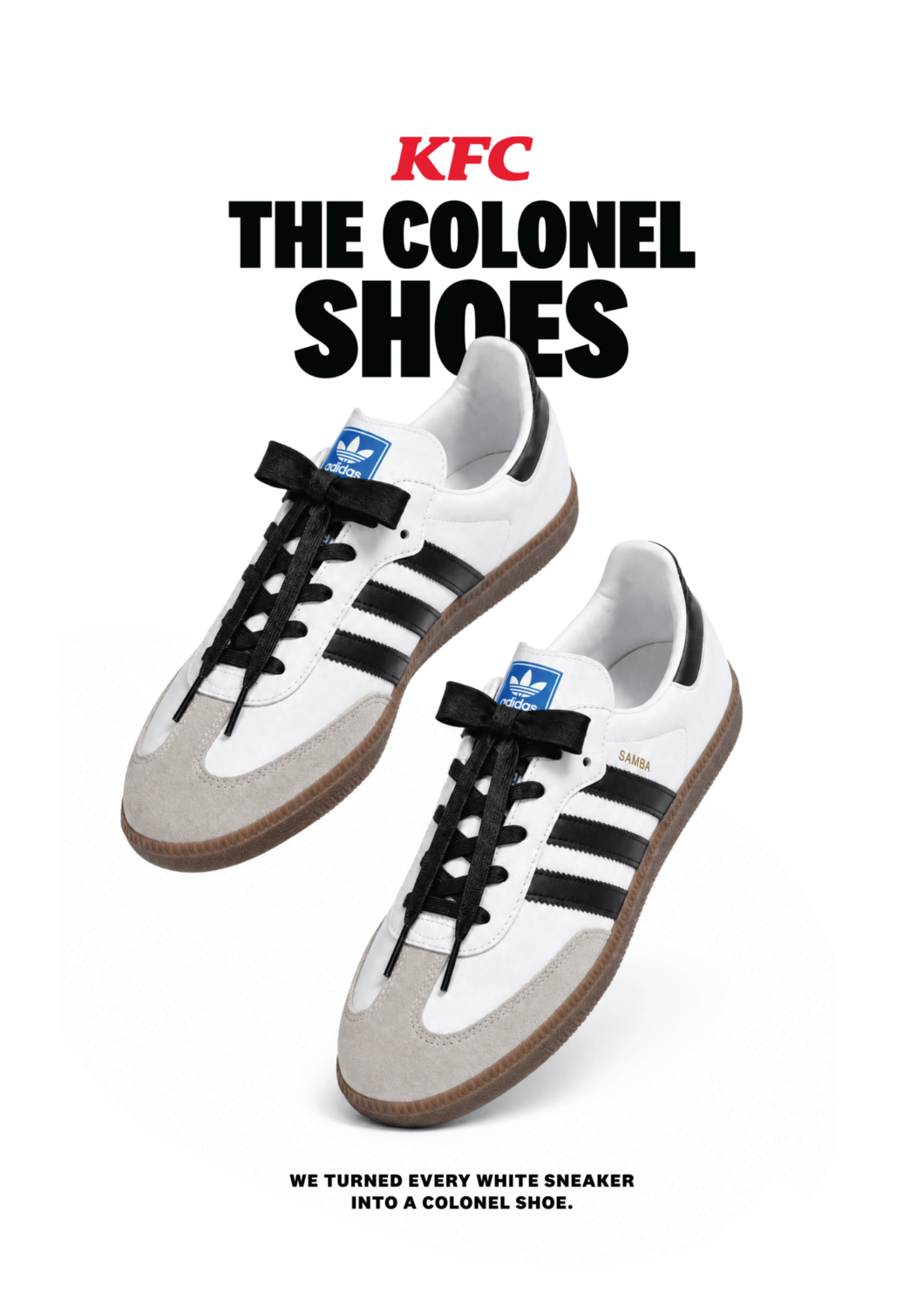
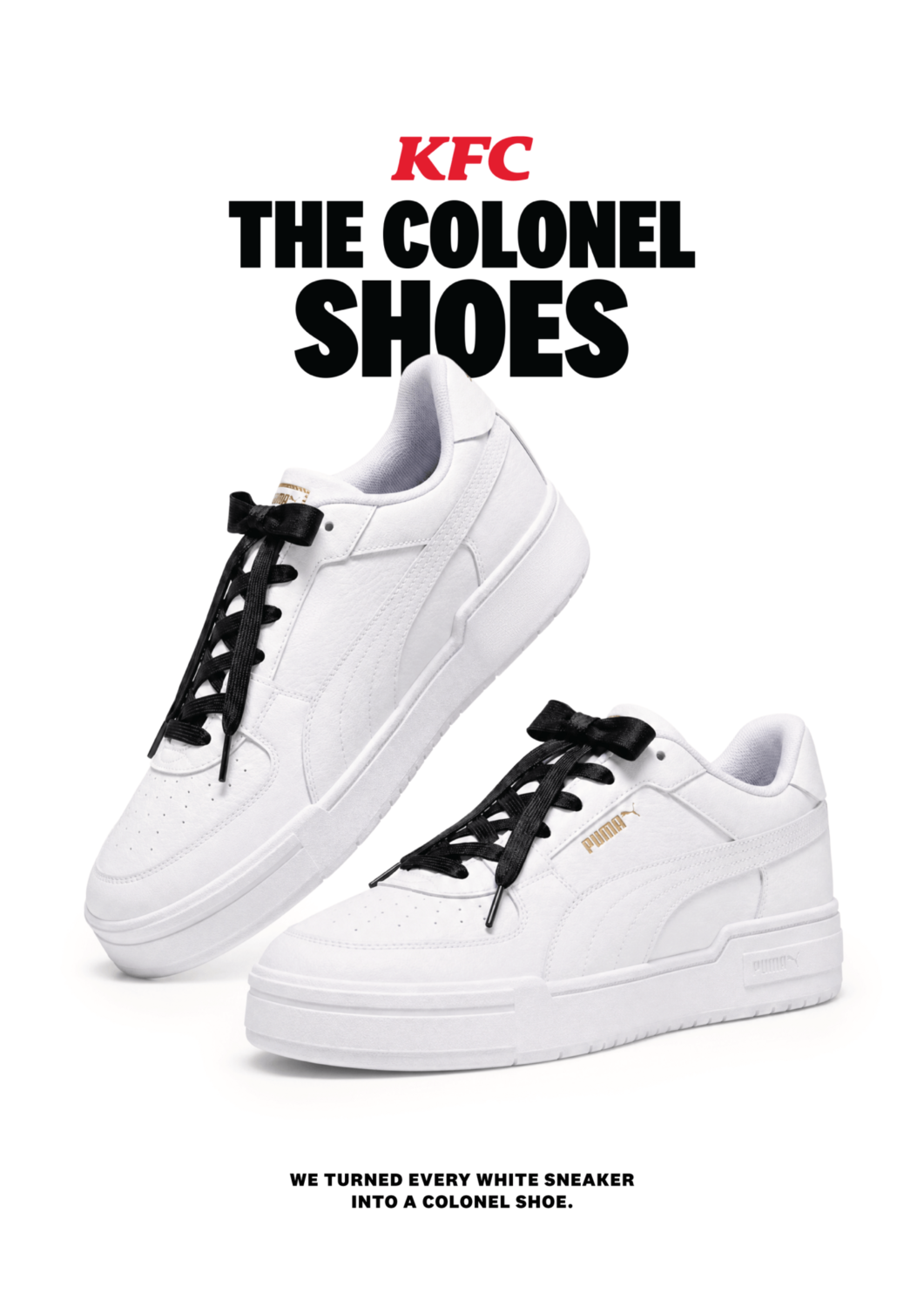
Working with Star5 Ogilvy in Panama, KFC created “The Colonel Shoes” by taking ordinary white sneakers, replacing the laces with black ones and tying them to resemble Colonel Sanders’ unmistakable bow tie. That is it. No custom silhouette. No limited-edition sole. No shoe manufacturing at all.
When A Brand Code Is Strong Enough To Become The Product
Seen from above, the black laces immediately evoke the Colonel’s bow tie against the white background of the shoe. The transformation is tiny, but the recognition is instant.
That is what makes the idea work. KFC does not need to put a giant logo on the sneaker because the bow tie already functions like one. A visual element associated with the brand for decades suddenly becomes a design system for an entirely different cultural category.
Sneaker collaborations are hardly rare anymore. Food brands, musicians, movies and almost every major cultural property have found their way onto footwear at some point. KFC sidesteps that increasingly crowded playbook by asking a better creative question: what is the smallest thing we can change to make a sneaker unmistakably ours?
The answer was a pair of shoelaces.
KFC Let Everyone Make Their Own Pair
The campaign also avoided turning the idea into an object only a handful of people could buy.
For Sneaker Day, KFC invited people in Panama to recreate the look using their own white sneakers and black laces, then share the result through Instagram’s “Add Yours” feature. Influencers and digital content helped spread the idea, while some participants could receive KFC rewards.
That participation mechanic is important because the campaign itself is inherently reproducible. People do not need to win a raffle, queue outside a store or pay resale prices to join in. If they own white sneakers and can find black laces, they can make their own Colonel Shoes.
In that sense, KFC created something closer to an open-source sneaker collaboration than a traditional merch drop.
The Best Brand Assets Travel
This is also another example of KFC understanding that its visual identity can live well beyond a bucket of chicken.
Earlier this year, the brand turned the texture of its crispy coating into clothing in Brazil. It has turned chicken legs into football talent with Roberto Carlos in Mexico, and built entire campaigns around the Colonel himself, urban myths and recognizable pieces of brand history.
The common thread is not simply humor. It is the ability to identify an existing brand asset and move it somewhere unexpected.
With The Colonel Shoes, that asset happens to be one of the simplest elements KFC owns: a black bow tie.
And that might be the bigger creative lesson here.
Brands often assume entering culture means creating something new: a collaboration, a product, a collection, a celebrity partnership. Sometimes the stronger move is to look at what people already associate with you and ask how far that code can travel.
KFC did not need to make a sneaker.
It just needed us to see the Colonel in one.