


Instagram is starting to draw a harder line around synthetic people on the platform.
A new report says Instagram is taking steps against AI creator accounts that present themselves as human, adding a clearer “AI-generated profile” label and limiting the reach of fake-human accounts that fail to self-label.
That matters because the problem is no longer just AI content appearing in the feed. It is AI identity. The platform is now dealing with accounts designed to behave like influencers, build audiences, and attract engagement while blurring whether there is a real person behind the profile.
From AI Content To AI Identity
The reported change targets what can be described as fake AI-influencer accounts that have become harder to spot. Accounts like Aitana Lopez, the virtual model cited in the report, would receive a new “AI-generated profile” label, making the synthetic nature of the account visible at the profile level.
That is a meaningful shift. Instagram has spent the past few years trying to label AI-made media, but a post-level label only solves part of the problem. A synthetic creator account can still build familiarity, social proof, and parasocial attention over time. By moving the disclosure closer to the identity layer, Instagram is effectively saying the account itself is part of the content.
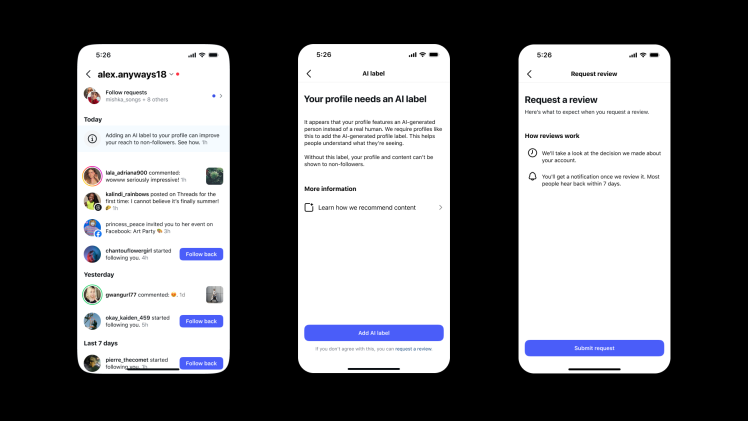
The enforcement detail is important too: accounts that pretend to be human and fail to self-label will reportedly have their reach limited. That turns disclosure from a nice-to-have transparency cue into a distribution condition. If a synthetic profile wants access to the social graph, it may have to be honest about what it is.
For creators, that sets up a clearer line between using AI as a tool and using AI to impersonate a person. For audiences, it gives a stronger signal before they decide whether to follow, trust, message, or engage with an account. And for Instagram, it is a way to keep AI experimentation on the platform without letting the feed become a masquerade.
The Platform Trust Problem Is Getting More Personal
The bigger issue is that synthetic media is moving from obvious novelty into everyday social performance. AI creators can post selfies, write captions, respond in character, and accumulate followers using the same mechanics that made human influencers valuable. The more convincing they become, the less useful the old assumption becomes: that a profile photo, a bio, and a posting rhythm point to a real person.
Instagram’s reported response does not ban AI personas. It tries to make them legible. That is the platform compromise we are likely to see more often: synthetic accounts can exist, but they need clearer labeling, and failing to disclose may carry ranking consequences.
There is still friction here. Labels only work if people notice them, understand them, and care. Reach limits only matter if enforcement is consistent. And synthetic identity will keep getting harder to detect as tools improve. But the direction is clear: platforms are beginning to treat AI disclosure as a trust feature, not just a policy footnote.
For brands and marketers, the immediate lesson is simple. If AI characters, virtual ambassadors, or synthetic creators are part of the plan, disclosure cannot be bolted on at the end. On social platforms, transparency is becoming part of distribution. The next advantage may not go to the most realistic AI persona, but to the one audiences can understand without feeling tricked.