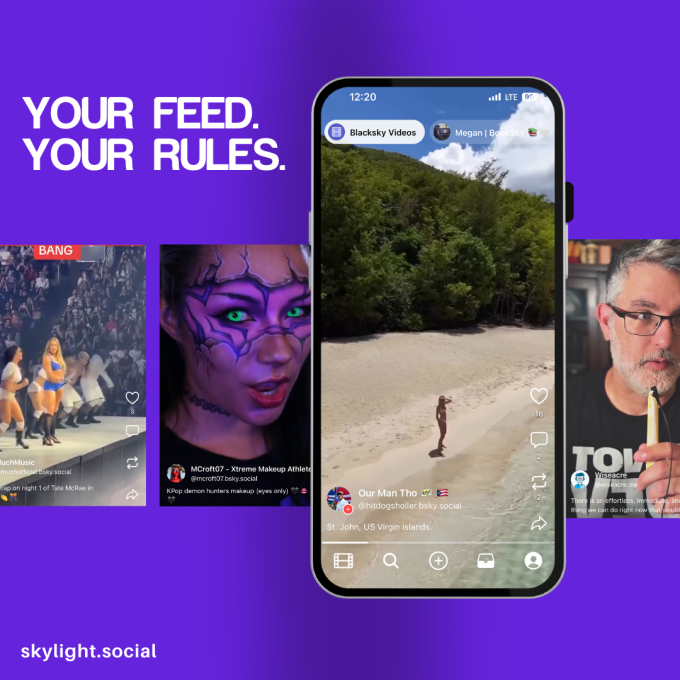
Skylight, a TikTok-style short-form video app built on open-source technology, is seeing a sharp rise in adoption following renewed concerns around TikTok’s U.S. ownership structure and privacy practices. The startup says it has now crossed 380,000 users, with momentum accelerating over the past weekend.
Launched in 2025 and backed by Mark Cuban and other investors, Skylight positions itself as a creator-first alternative, one that trades opaque algorithms for openness, portability, and user control.
Built on the same tech as Bluesky
Skylight runs on the AT Protocol, the same decentralized infrastructure that powers Bluesky, which now counts more than 42 million users. That means Skylight isn’t just another standalone app, it’s part of a broader attempt to rethink how social platforms work under the hood.
The app supports vertical video, built-in editing tools, profiles, likes, comments, sharing, and a standout feature: custom feeds created by community curators rather than dictated by a single centralized algorithm. Thanks to its AT Protocol integration, Skylight can also stream videos directly from Bluesky, giving creators access to a wider ecosystem from day one.
Usage spikes across the board
According to co-founder and CTO Reed Harmeyer, Skylight’s growth metrics jumped dramatically over the past few days:
- 1.4 million videos played in a single day, up 3× in 24 hours
- Signups up more than 150%
- Returning users up over 50%
- Average videos watched up 40%
- Posts created up more than 100%
- 150,000+ videos uploaded directly to the platform
For a young social app, those are not “curiosity numbers.” They suggest real experimentation, and early habit-forming behavior.
TikTok’s U.S. deal reignites trust issues
The surge comes in the wake of TikTok’s announcement that it had established TikTok USDS Joint Venture LLC, a move designed to comply with an executive order tied to U.S. national security concerns. Under the new structure, TikTok’s Chinese parent ByteDance will hold less than 20% ownership.
The decision follows years of geopolitical tension between the U.S. and China, with critics arguing TikTok poses risks through data collection and algorithmic influence. But this time, the backlash isn’t just about China, it’s about who replaces it.
Some users expressed concern over the role of American investors and their proximity to Donald Trump, while others reacted to an updated privacy policy that explicitly allows GPS tracking and references immigration-related data. (While not new language, its resurfacing sparked fresh alarm.) The result: a wave of posts encouraging users to delete the app, and quietly look elsewhere.
Open standards as a cultural counter-move
Skylight CEO Tori White believes the platform’s appeal lies less in protest and more in principle.
“We’ve seen what happens when one person dictates what’s pushed into people’s feeds. Not only does it harm a creator’s connection with their followers, but the entire health of the platform.”
Instead of promises, Skylight leans on infrastructure. By building on open standards, the company argues that creator and user control isn’t a policy choice, it’s baked into the tech itself.
Of course, perspective matters. TikTok still commands roughly 200 million monthly active users in the U.S. alone. Skylight remains a fraction of that scale. Whether Skylight becomes a long-term player or a signal flare for decentralized social video, its sudden growth highlights something bigger: creators and users are paying closer attention to how platforms are built, not just how entertaining they are.
Also Read:
YouTube Will Let Creators Make Shorts With Their Own AI Likeness
TikTok Quietly Launches A Micro-Drama App Called PineDrama
You Might Soon Be Able to Play Mini Games Inside Threads DMs