


OpenAI just gave its AI agents a face. And a job that never ends.
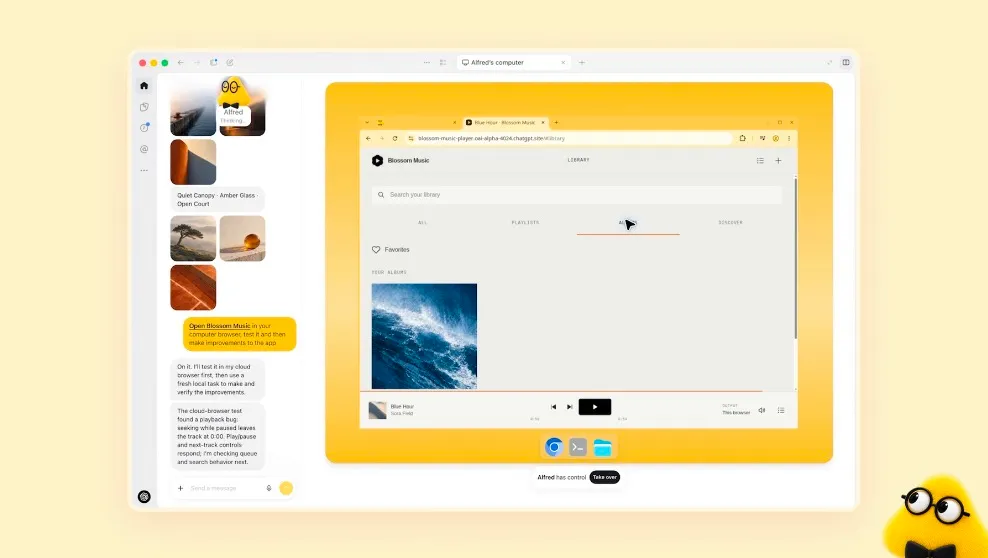
Announced at DevDay, Dots are colorful, cartoon-like AI assistants designed to work continuously on your behalf. Powered by GPT-6 Astra, they can operate their own cloud computers, connect to more than 4,000 apps and learn your preferences over time.
The timing is interesting. Just weeks after Meta launched Muse, OpenAI is introducing its own take on an always-on personal agent. The next AI battle is no longer simply about who has the smartest model. It’s about who becomes your everyday assistant.
An AI That Keeps Working After You Leave
Unlike a traditional chatbot, a Dot doesn’t need you to initiate every task.
OpenAI envisions agents that can monitor customer feedback, prepare software fixes, update research or manage ongoing projects. For creators, a Dot could turn incoming interview transcripts into suggested clips, show notes and social content, adapting its work based on feedback.
Users can interact with their Dot through ChatGPT, Slack and Microsoft Teams, with text messaging planned. Each agent has its own cloud computer and can continue working across several assignments without requiring constant direction.
Dots are rolling out to eligible Pro and Business Premium subscribers, with Enterprise access available through an administrator-enabled beta.
Why Does An AI Agent Need To Be Cute?
Perhaps the most interesting part of the launch isn’t technological.
It’s the packaging.
OpenAI has given Dots friendly cartoon identities that users can name and personalize. Meta took a similar approach with Muse, suggesting both companies recognize the same challenge: getting people comfortable with software that does much more than answer questions.
A familiar character could make delegating work to an autonomous system feel more natural. But friendly design doesn’t eliminate the need for trust. OpenAI says users can control access, monitor activity and establish approval requirements for sensitive actions.
The character makes the relationship approachable. Reliability will determine whether people actually embrace it.
The Real Competition Is For Your Daily Routine
OpenAI and Meta are approaching the same opportunity from different directions.
Meta brings enormous distribution through WhatsApp and its social platforms. OpenAI brings an established AI ecosystem and increasingly sophisticated tools for developers, businesses and individual users.
Both want their agents to move beyond individual prompts and become deeply integrated into people’s lives.
And there’s a significant business opportunity in that relationship. An assistant that understands your projects, remembers your preferences and works across your applications becomes considerably harder to replace than a chatbot you occasionally consult.
For now, Dots are a promising product rather than proof that fully autonomous assistants have arrived. Their effectiveness will depend on how reliably they complete real tasks and how much responsibility users are comfortable delegating.
But the direction is becoming clear.
The AI industry spent years competing to give us better answers.
Now it wants to take care of the work itself.