Liquid Death and Garage Beer have found an abundant new resource for cooling AI data centers: human urine.
Not really. The lawyers would like that made very clear.
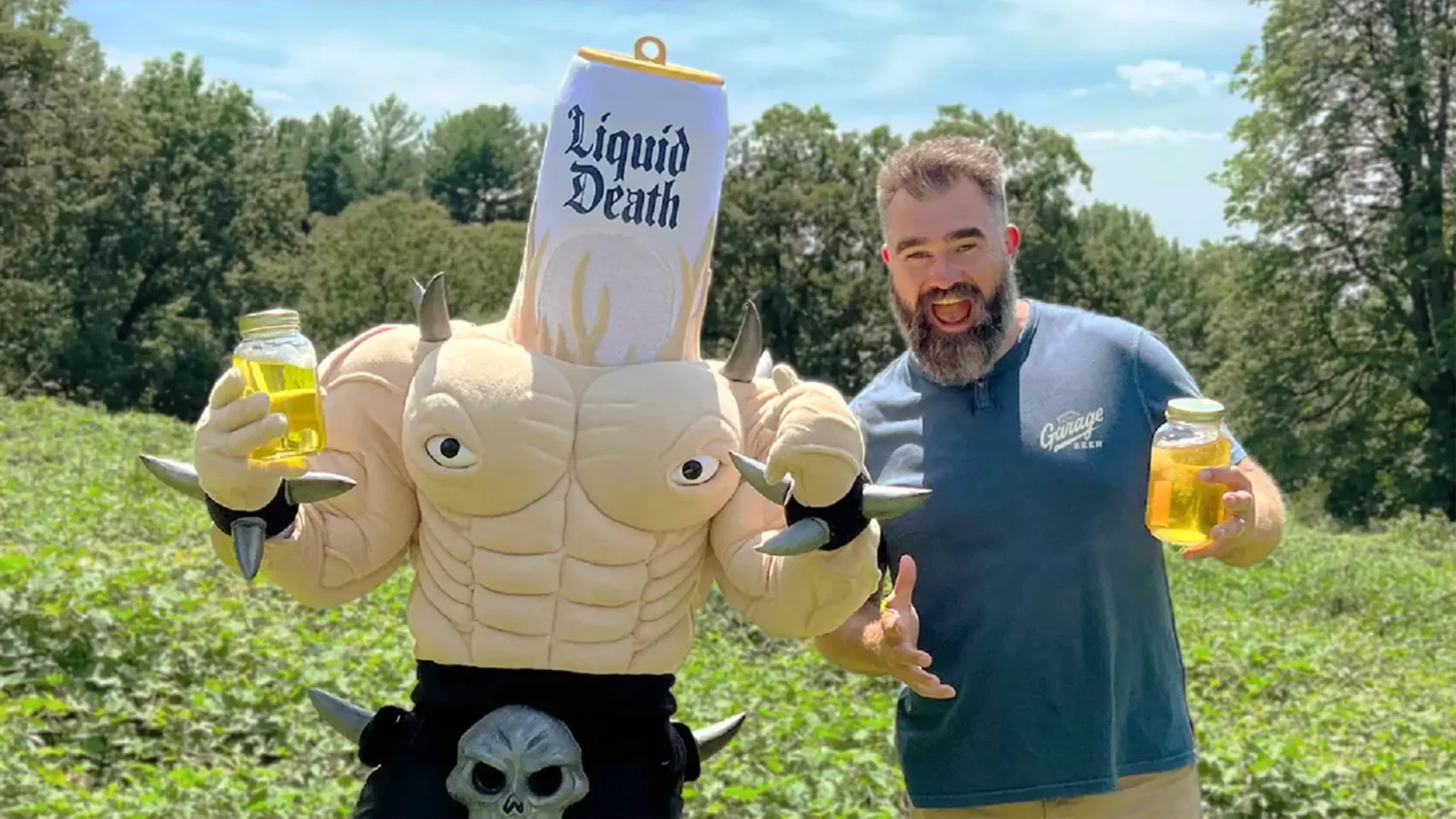
But that is the wonderfully ridiculous premise behind “We Want Your Pee,” a new campaign starring former NFL player and Garage Beer co-owner Jason Kelce.
The 90-second musical film opens with Kelce apparently relieving himself into a glass jar while explaining that AI data centers can consume enormous amounts of water to prevent their servers from overheating.
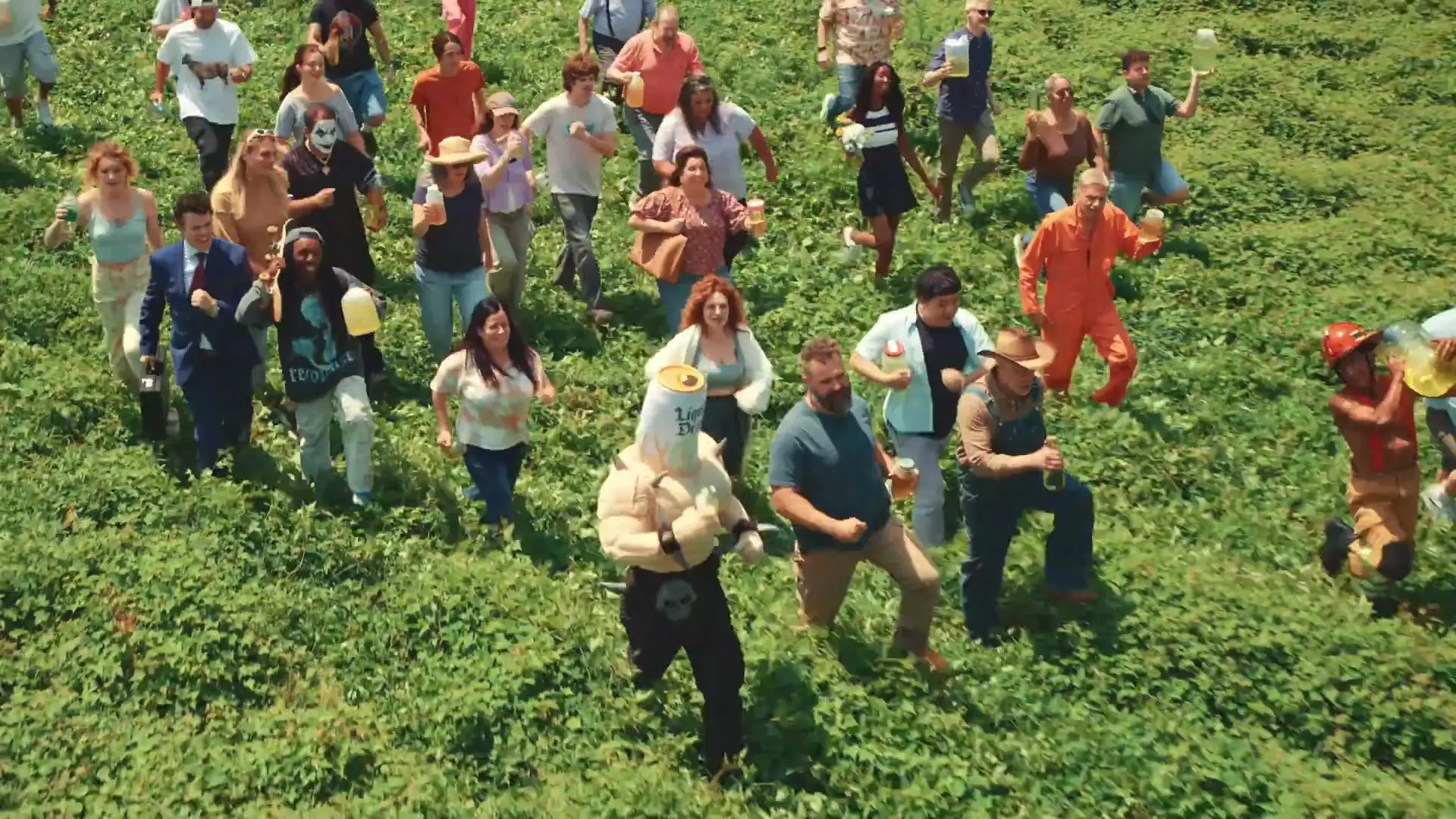
He then heads into a field, where he is joined by Liquid Death’s Murder Man mascot and a growing crowd of people carrying containers of yellow liquid. Together, they break into a grand benefit anthem asking Americans to donate their pee to help save humanity.
A Benefit Anthem Nobody Asked For
The song deliberately borrows from the earnest charity anthems and mass-participation events of the 1980s. Think Live Aid or Hands Across America, but with a chorus about peeing on computers.
It is crude, incredibly catchy and almost impossible to explain without making someone want to watch it.
Behind the joke is a real and increasingly contentious issue. Water use varies considerably between facilities and cooling systems, but the Environmental and Energy Study Institute estimates that some large data centers can consume as much as five million gallons of water per day.
Public resistance is also growing. A Gallup survey published in May found that 71% of Americans oppose the construction of an AI data center in their local area, with 48% strongly opposed.
Liquid Death and Garage Beer have taken that serious infrastructure debate and translated it into the one language both brands understand perfectly: completely unnecessary chaos.
Yes, There Is An Official Urine Jar
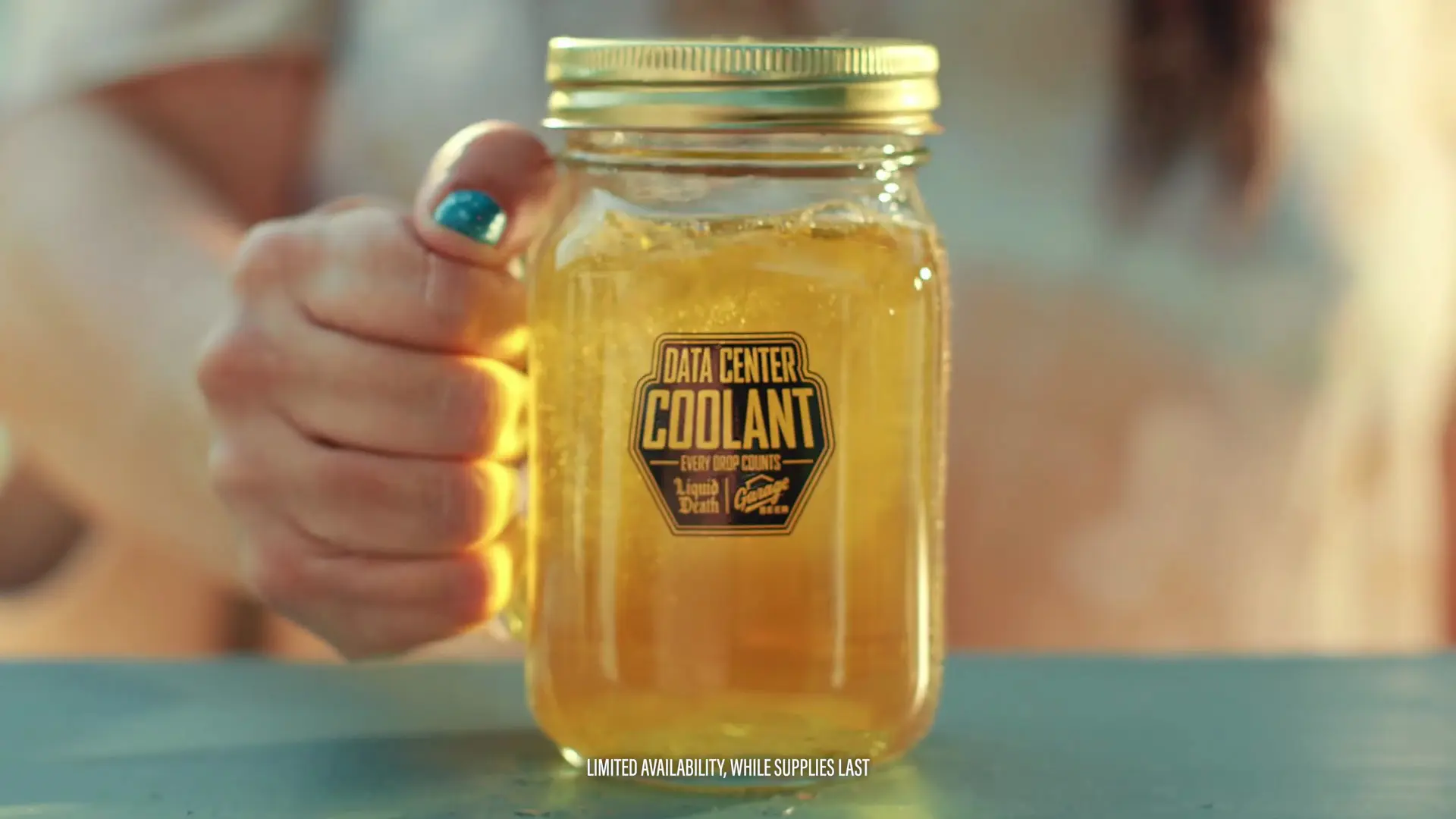
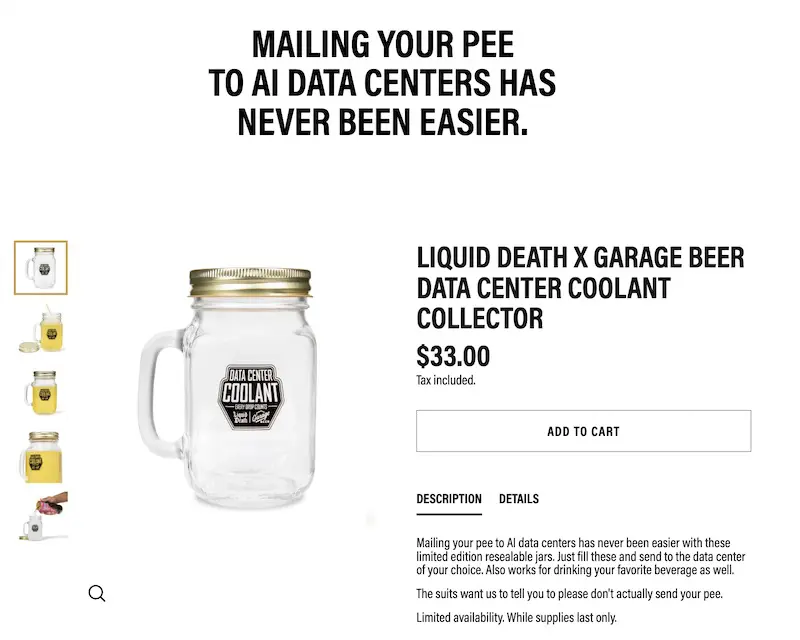
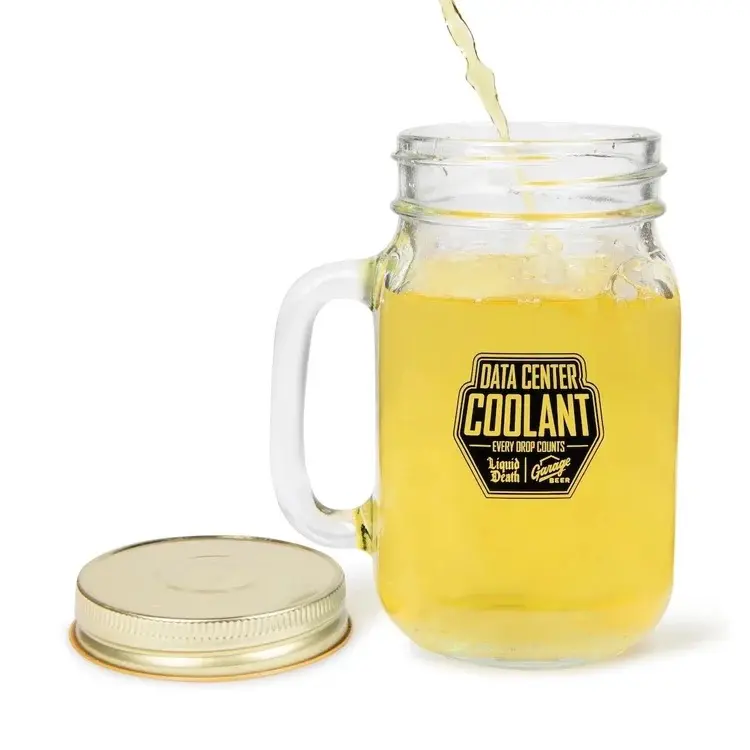
The campaign extends beyond the film with a limited-edition Data Center Coolant Collector, a branded, resealable mason jar priced at $18.
According to the product description, customers can fill the jar and send it to the AI data center of their choice. It can also, perhaps more realistically, be used to drink their favorite beverage.
The campaign’s fine print repeatedly asks people not to actually mail their bodily fluids anywhere.
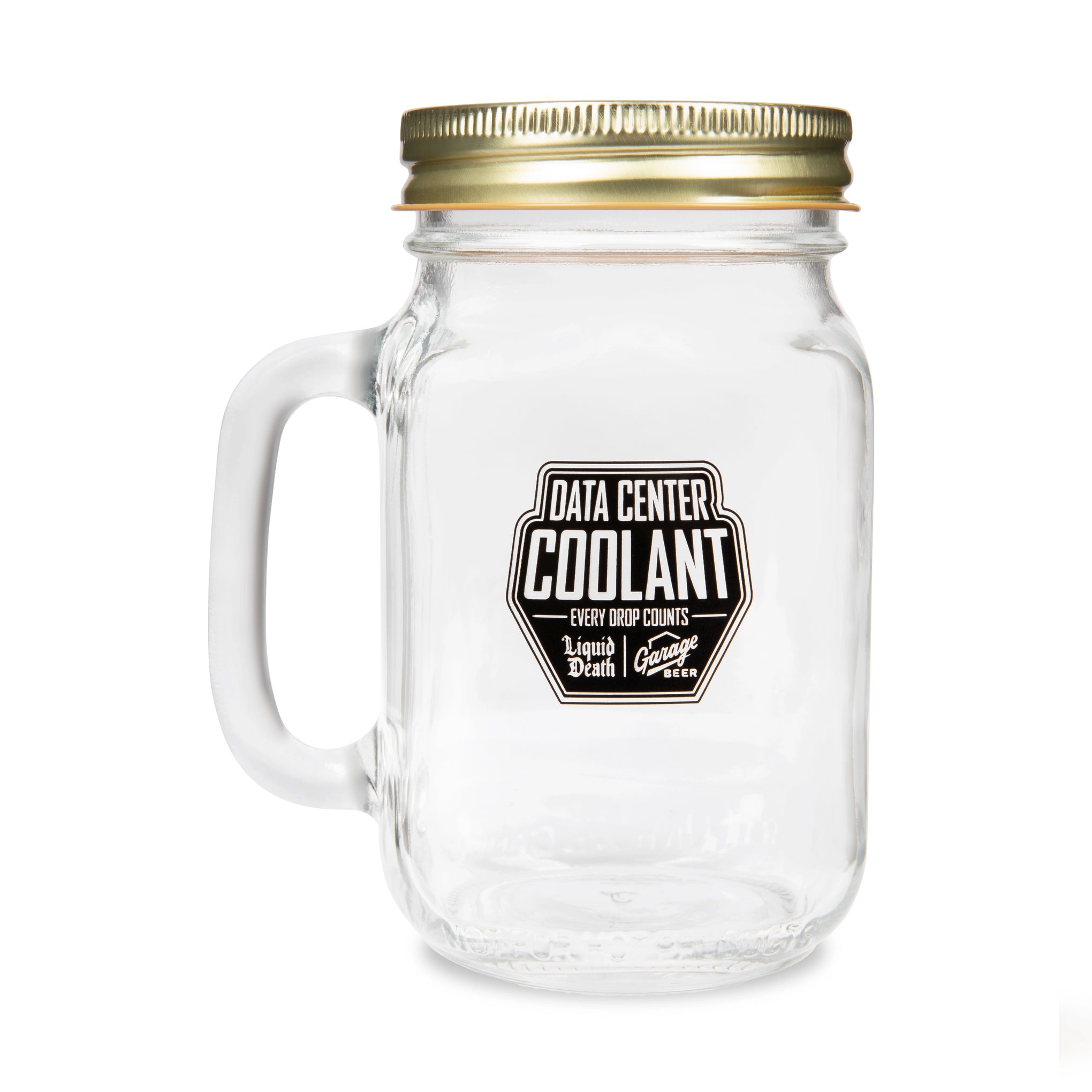
The collector does more than extend the joke. It turns the campaign’s central idea into something physical, purchasable and collectible.
Instead of watching the punchline and moving on, fans can own a piece of it.
The Product Is Part Of The Joke
The campaign works because Liquid Death and Garage Beer are not simply attaching their logos to a cultural issue.
Their products have a role inside the absurd solution.
Drink the water.
Drink the beer.
Produce the alternative coolant.
Save the world.
It is ridiculous, but the logic is complete.
The collaboration also feels natural because the two brands share more than a retail audience. They share a worldview.
Both use comedy, internet culture and deliberately unsophisticated entertainment to make everyday beverages feel culturally distinctive. Jason Kelce brings the same accessible, slightly chaotic energy, making him more than a celebrity pasted onto the campaign.
Liquid Death Has Built A System For Being Ridiculous
The most interesting strategic detail may sit behind the camera.
According to Marketing Dive, Liquid Death develops creative through a writer’s room that includes external comedians and writers. Comedian Sabrina Jalees originally proposed the data center idea before it evolved into this collaboration.
That matters because Liquid Death’s distinctive voice is not simply a paragraph inside a brand guideline.
It is a creative operating system.
The company has built a repeatable process for generating the kind of humor its audience expects, then found a partner capable of participating without diluting it.
Created by Liquid Death’s internal agency, LD Death Machine, with music composed by Butter, “We Want Your Pee” does not solve the environmental impact of AI infrastructure.
It does make an increasingly important issue exceptionally difficult to scroll past.
And that may be the smartest part of the entire campaign. The shock is not random. The product, partners, cultural tension and brand voices all lead to the same ridiculous place.
This is a joke that only these brands could plausibly make together.
Also read:
Spotify And Liquid Death Launch A Funeral Urn That Plays Your Playlist In The Afterlife
Guinness Turns Beer Mats Into Selfie Frames For Match Day
Corona Turns Sunset Shadows Into Giant Bottles On City Streets