It’s a problem as old as fries themselves: where do you put the ketchup when you’re eating on the go? On a flimsy napkin that tears, in a tiny cup that tips over, or straight onto the fries, with predictable consequences.
After more than 75 years without meaningful change, Heinz has decided to tackle this everyday annoyance with disarming simplicity.
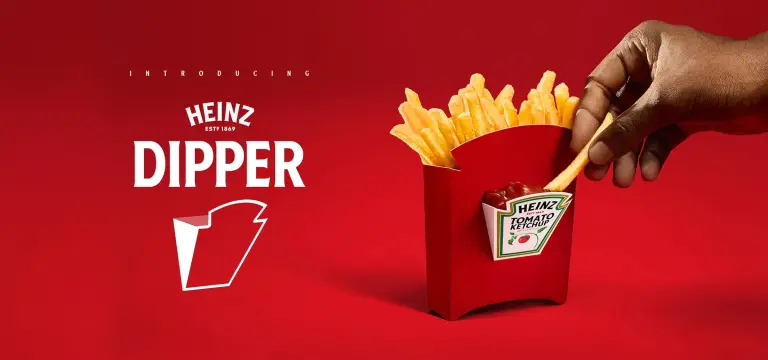
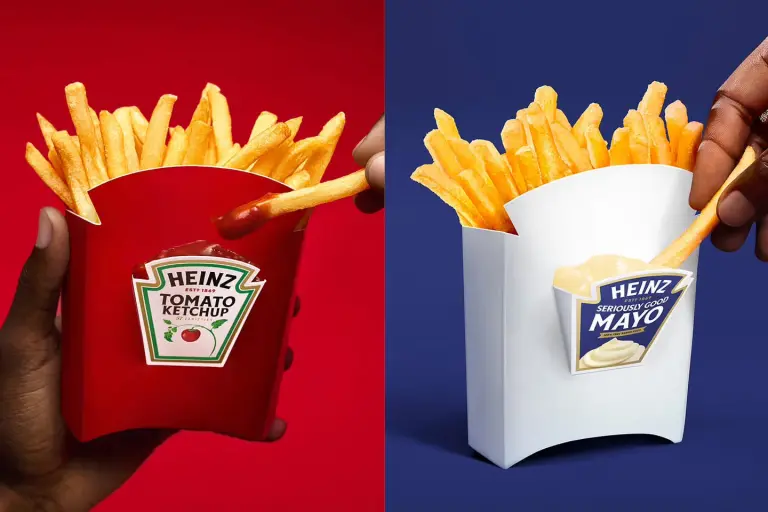
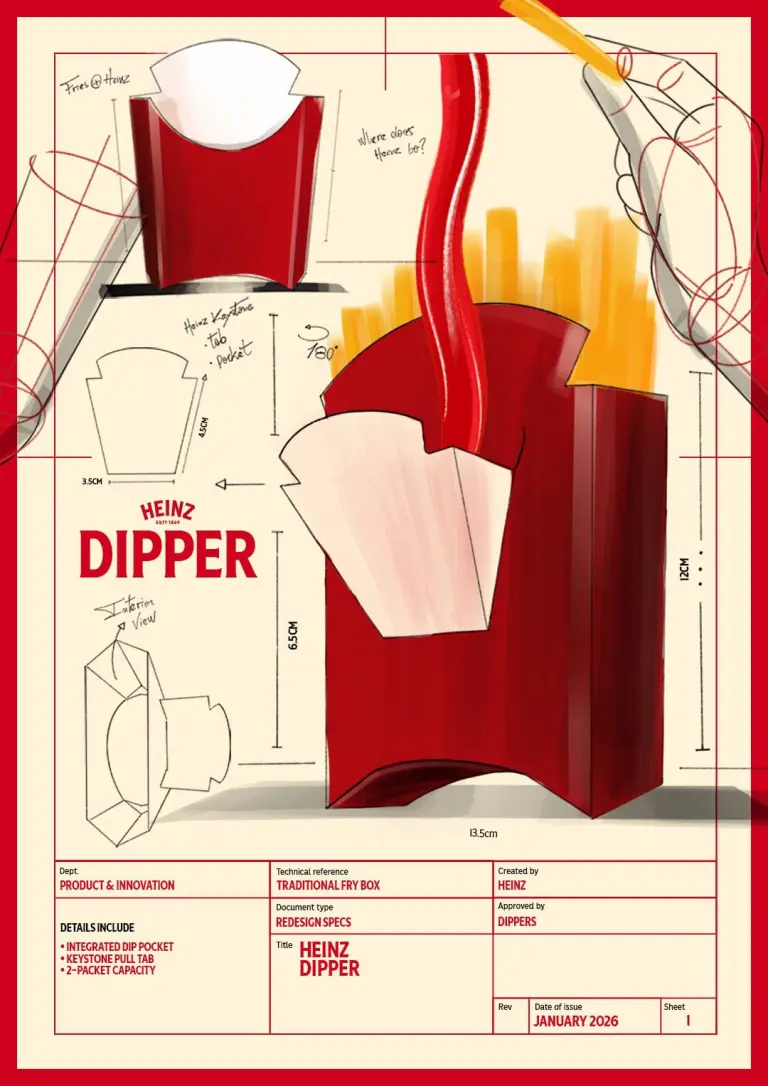
Enter The Heinz Dipper. The brand reimagines its iconic red-and-yellow fries box as a functional object designed for real-life use. A discreet integrated pocket lets you pour in ketchup, mayo, or any sauce, no extra containers, no new gestures, no added waste.
Developed with agency Rethink, the innovation hinges on a clever twist on something that already exists. Heinz’s signature keystone logo shape is literally transformed into a functional sauce compartment. What was once pure branding becomes a practical tool.
The move is minimal, almost invisible. The box keeps its iconic silhouette, the fries stay upright, but the packaging finally works for the consumer. It’s the kind of idea that instantly feels like it should have always existed.
The Heinz Dipper arrives at a very specific moment. Today, the vast majority of fries are eaten outside restaurants, on the street, in cars, or in stadium seats. Food has become mobile, but packaging has largely remained stuck in a sit-down world. By integrating sauce directly into the fries box, Heinz removes a major friction point. No more juggling multiple items, no more skipping ketchup to avoid a mess. The packaging finally adapts to how people actually eat.
What makes the activation especially effective is how closely it aligns with Heinz’s DNA. The brand isn’t launching a new product, it’s improving the experience around its most iconic one. Packaging becomes a medium, a narrative device that reinforces the idea that Heinz obsesses over how people enjoy its ketchup.
Rolling out across 11 countries starting January 13, The Heinz Dipper turns a small everyday detail into a global conversation. Proof that innovation doesn’t always mean doing more, sometimes it’s about doing better.
Also Read:
This Indian Drink Just Dropped a Completely Absurd Campaign, and It’s Brilliant
Heineken Hijacks the London Underground to Celebrate Dry January
Heinz Turns Its Iconic Ketchup Packet Into a Suitcase With Herschel