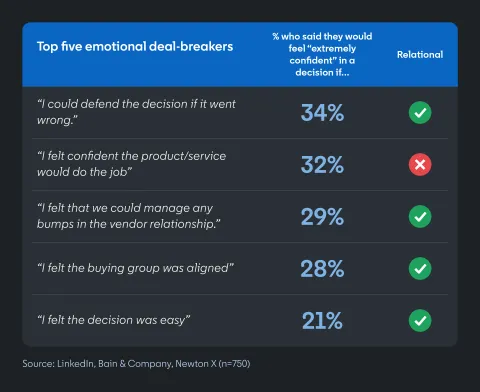
B2B marketing has spent years trying to prove that a product works. LinkedIn’s latest reported research suggests that proof is only the entry ticket. Once buyers believe a solution can do the job, the harder question becomes whether they can defend choosing it if the outcome goes wrong.
That shifts the job of B2B marketing from demonstrating superiority to reducing perceived decision risk.
Buyers want a decision they can stand behind
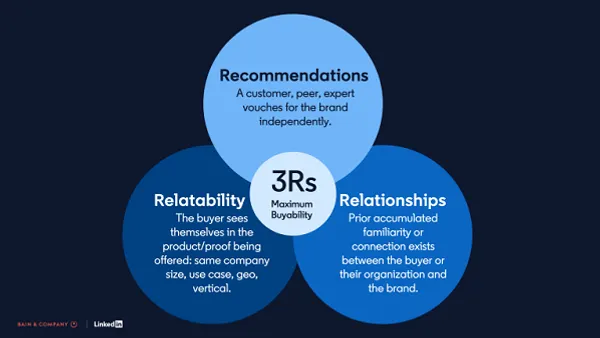
LinkedIn conducted the research with WARC and Lions Advisory by examining 700 B2B case studies. The analysis compared campaigns with multiple signals of “buyability” against those with fewer or none.
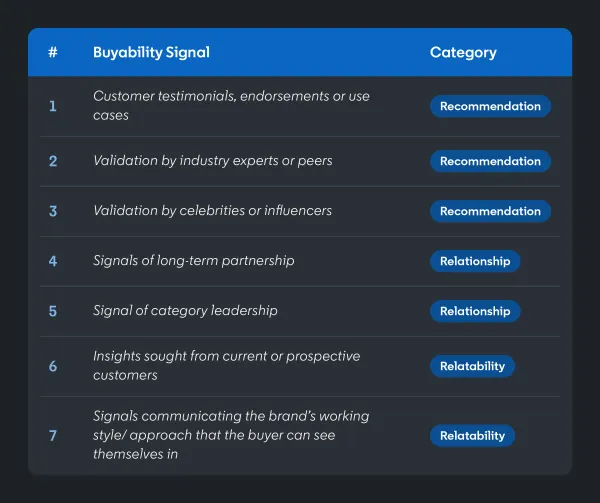
High-buyability campaigns included at least three signals such as customer testimonials, peer validation and evidence of industry leadership. The reported results found that these campaigns outperformed lower-buyability initiatives across commercial and brand measures. They were also 1.7 times more likely to be classified as “Strategic Assets” on the WARC B2B Effectiveness Ladder, the highest level associated with sustained commercial growth.
The most revealing detail is that customer-centric insights appeared in 83% of high-buyability campaigns. Those campaigns were also four times more likely to feature customer testimonials.
That does not mean product capability has become irrelevant. Mimi Turner, LinkedIn’s global head of thought leadership strategy for its B2B Institute, said confidence in capability remains important. But once baseline requirements are met, the deciding factor becomes whether the choice can be successfully defended.
The testimonial is doing more than building trust
This is a more specific role for social proof than the usual “customers trust customers” argument. In a complex purchase, a testimonial gives the buyer a story to carry into the meeting, the procurement review and the post-purchase conversation. It turns an abstract promise into a decision that has already worked for someone recognisable.
LinkedIn reportedly tested that approach in a ServiceNow campaign built around buyability signals. The campaign delivered a 10-times increase in consideration, a 13-times increase in unaided brand awareness over three years, and 23% subscription-revenue growth over the same period.
The findings also explain why influence in B2B is increasingly about behavior, not just reach. A respected customer, peer or industry voice can make a decision feel safer because they provide context for how the product fits into a real organisation. That is the same shift already visible in influencer deals, where credibility increasingly depends on what a person helps an audience understand, not simply how many people they can reach.
For B2B marketers, the implication is practical: stop treating testimonials as decorative proof added near the end of a campaign. The strongest work builds the buyer’s defence into the creative idea from the beginning. The winning product may still be the one with the best functionality, but the winning campaign increasingly makes that choice easiest to explain.
Also Read: