LinkedIn is putting more trust information directly into the moments when users decide whether to connect, reply, or share contact details. Its new profile and safety features are designed to make authenticity part of the interaction itself, rather than something users have to investigate after the fact.
In its trust and safety announcement, LinkedIn outlined three connected moves: a new “About this profile” panel, an AI-based system for detecting synthetic profile photos, and warnings for certain suspicious messages.
LinkedIn is turning profiles into trust dashboards
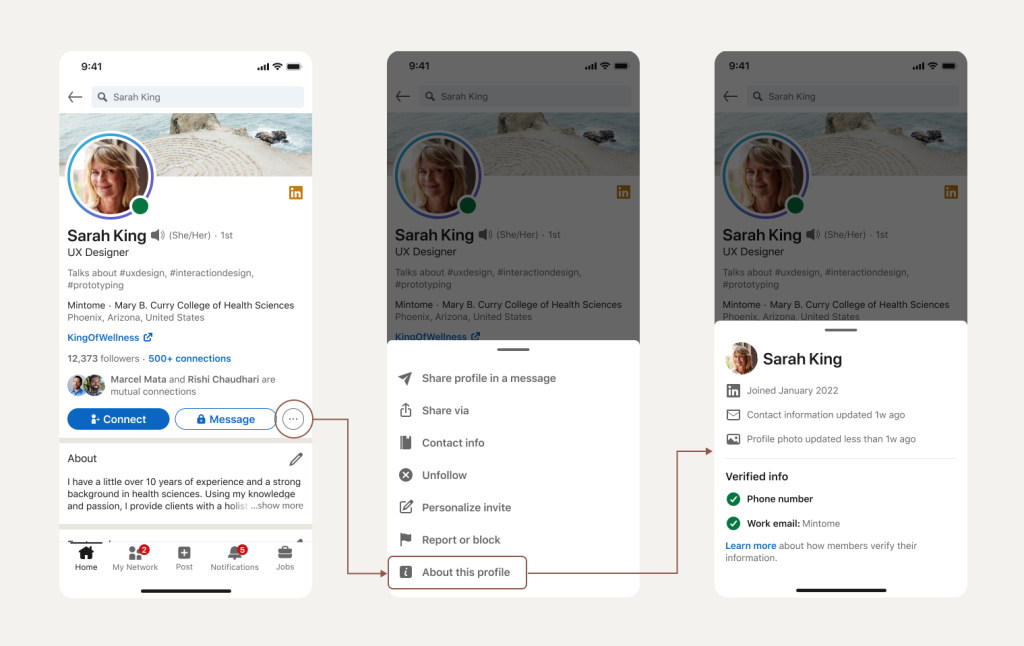
“About this profile” gives users more context about the person on the other side of a connection request or message. It shows when the profile was created, when it was last updated, and whether the member has verified a phone number or work email.
That information is deliberately basic. LinkedIn is not promising that a verified email makes someone trustworthy, or that an older profile cannot be abused. It is giving users more signals before they accept an invitation, respond to an opportunity, or move a conversation elsewhere.
The placement matters. LinkedIn said the feature would appear on member profiles first, then expand into invitations and messages. Trust is therefore moving closer to the decision point. Users do not need to open a separate safety page or conduct their own background check before taking the next step.
For brands, recruiters, creators, and professionals, this changes the value of a profile from a static identity card into a record that is constantly being evaluated. The profile still has to communicate expertise and credibility, but it also has to survive lightweight scrutiny.
The platform is combining visible signals with invisible enforcement
The public-facing profile panel is only one side of the system. LinkedIn also described a deep-learning model that checks uploaded profile photos for signs that they were generated by AI. The company said the model looks for subtle artifacts associated with synthetic image generation and does not use facial recognition or biometric analysis.
That distinction is important because the platform is trying to solve two problems at once. It wants to catch fake accounts before they reach members, while avoiding the implication that it is identifying people through their faces. The system is focused on the image as a signal of account risk, not on confirming a person’s identity through biometrics.
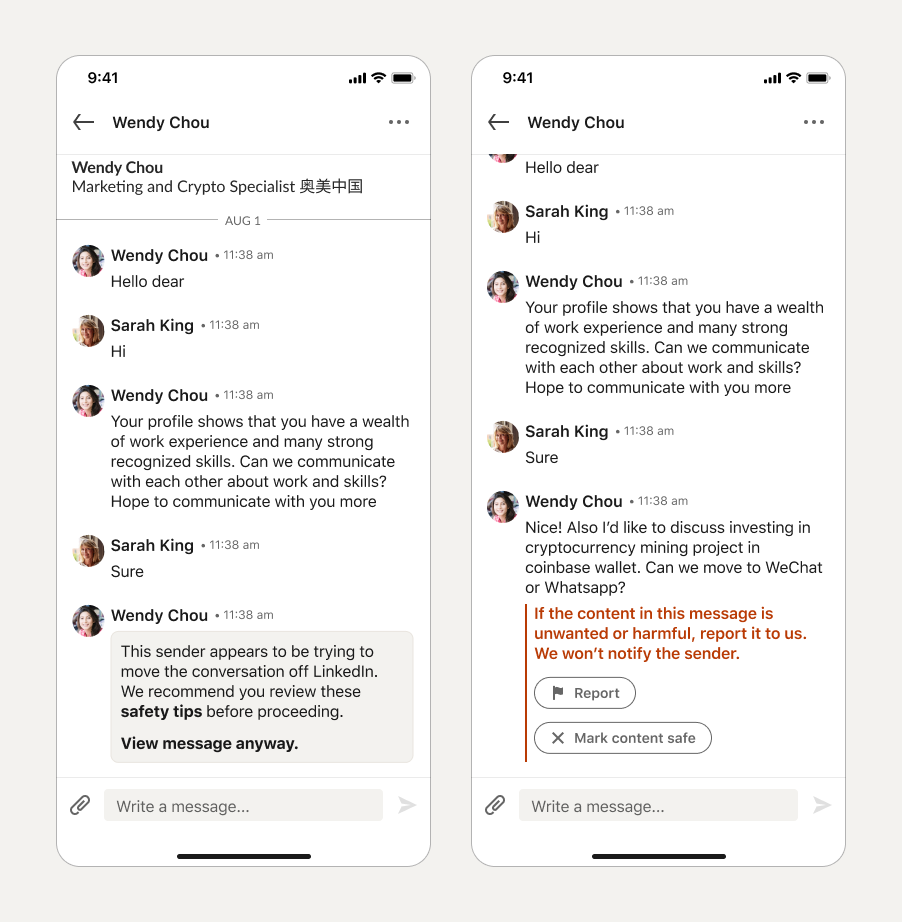
LinkedIn is also adding warnings to some messages containing high-risk content. Messages that encourage users to move a conversation to another platform may trigger a warning because that behavior can be associated with scams. Users can report the message without notifying the sender.
Together, these features show a broader platform pattern: trust and safety is becoming a layered interface. Some controls operate quietly in the background, such as automated image analysis. Others are visible at the moment of choice, such as profile history and message warnings.
That combination is more useful than either approach alone. Automated enforcement can remove suspicious accounts before they create harm, but it cannot explain every decision to users. Visible signals give people context, but they cannot reliably detect coordinated abuse at scale. LinkedIn’s direction is clear: professional identity is becoming something the platform must continuously validate, explain, and defend.
The strategic consequence is that authenticity is no longer just a reputation issue for individual users. It is becoming a product feature, a moderation system, and a conversion condition for every professional interaction. The platforms that make those signals useful without making every conversation feel like a security check will have the advantage.
Also Read: