


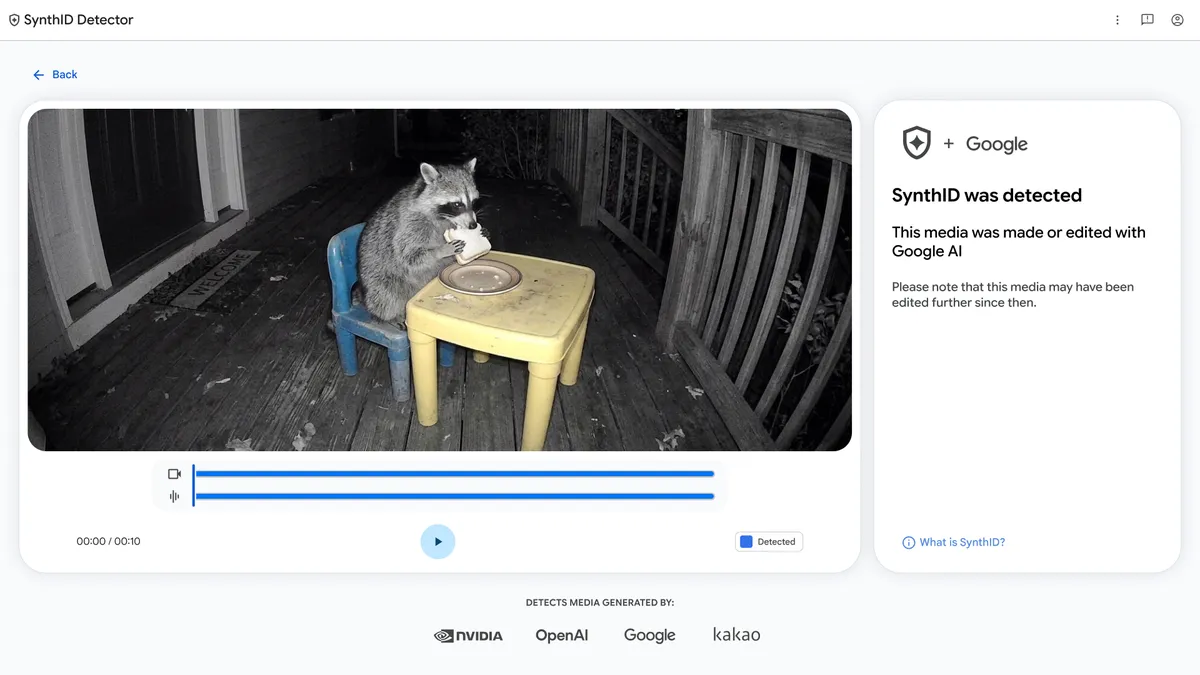
AI verification is moving out of the newsroom and into the hands of everyone who uses the internet. Google is opening its SynthID Detector globally in English, giving people a direct way to check whether an image, video or audio file carries an AI watermark.
That sounds like a small product expansion. It is actually a meaningful shift in how platforms are asking people to interpret synthetic media. Instead of treating provenance as invisible infrastructure, Google is turning it into a user-facing behavior.
Verification becomes part of the interface
Google says SynthID has already watermarked more than 180 billion images and videos, along with 240,000 years of audio content. The company first introduced a limited version of the detector for media professionals last year. The new version expands access beyond specialist users.
The detector can identify content made with Google’s AI tools and, increasingly, systems from partner companies. Google names OpenAI, NVIDIA and Kakao as current partners, with Apple expected to join. That list matters because the trust problem is no longer limited to one model or one platform. People encounter AI-generated media across feeds, group chats, search results and campaign work, often without knowing where it came from.
Google also says its verification features in Search, Gemini and Chrome now handle more than one million requests each day. The company is therefore building two layers at once: automatic context inside its products, and a standalone tool for users who want to investigate something themselves.
The bigger change is behavioral
SynthID does not turn the internet into a perfectly labeled archive. It is designed to detect watermarks associated with participating AI systems, which means an unmarked file should not automatically be treated as human-made. Content can also travel through tools and platforms that do not preserve the same provenance signals.
That limitation is important because verification tools can easily create false confidence. A positive result can provide useful evidence. A negative result does not settle the question.
Still, the direction is clear. Google wants checking the origin of media to become as normal as checking a source, opening a profile or inspecting an ad disclosure. That is consistent with the wider movement of AI into everyday creative and commercial workflows, including systems that can turn a business URL into an entire ad campaign, as X is now exploring.
For creators and brands, provenance will increasingly become part of the asset itself. The question will not only be whether a piece of content performs, but whether audiences, platforms and partners can understand how it was made. Google’s move makes that expectation more visible, even if the technology is not yet a universal answer.