Thirteen years ago, Jean-Claude Van Damme performed an extraordinary split between two reversing Volvo trucks. It became one of the most recognizable automotive commercials ever made, turning a demonstration of steering precision into a global advertising phenomenon.
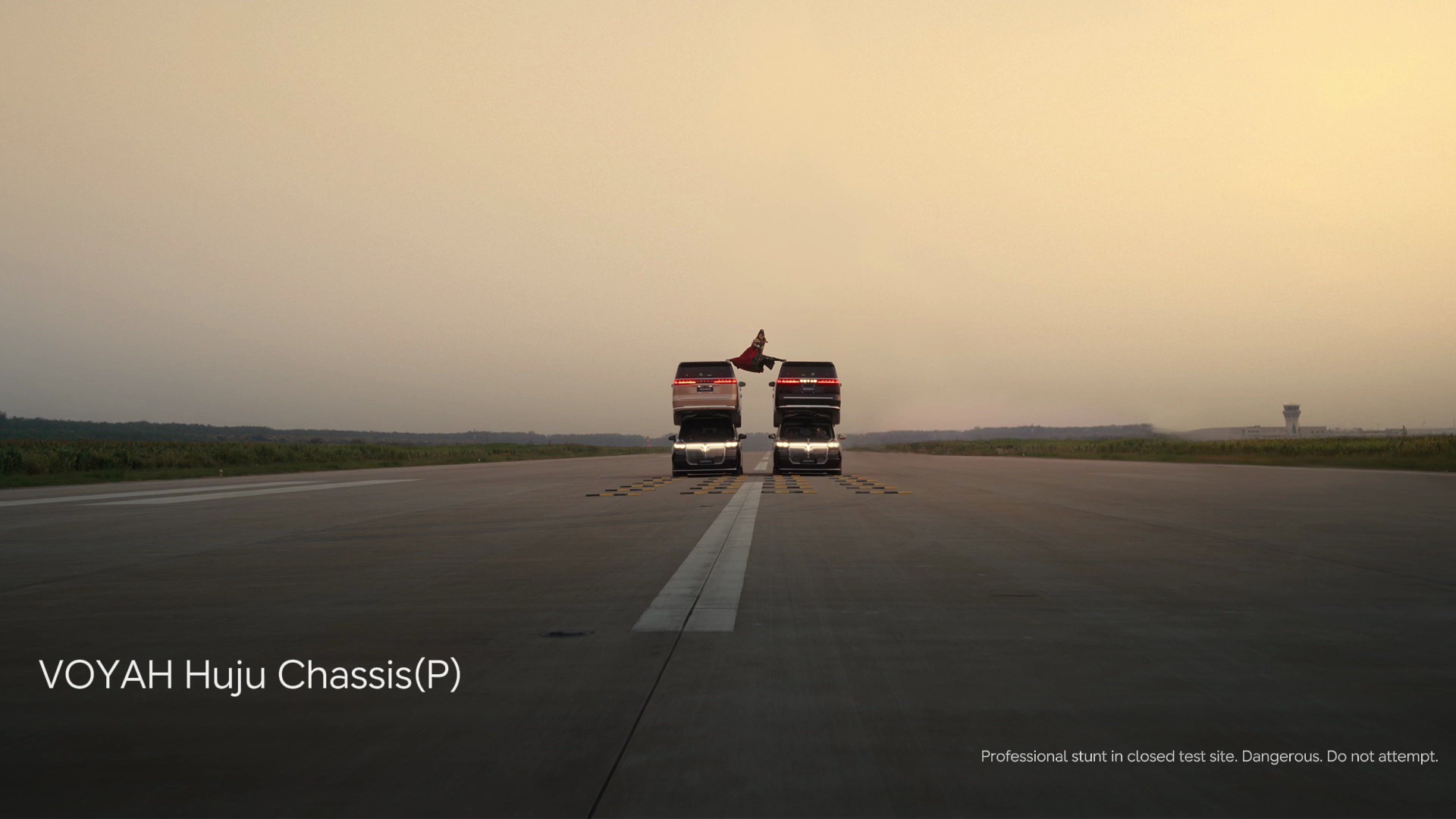
Now, Chinese automaker Voyah has decided to recreate it. Except two vehicles apparently weren’t enough. For the launch of its new Dream 9, the brand stacked four moving vehicles into two columns and suspended a martial-arts performer between them.
And in a remarkable coincidence, another Chinese automaker had almost exactly the same idea on the very same day.
Voyah Takes The Epic Split To Another Level
Unveiled during the launch of the Voyah Dream 9, the new film is an unmistakable tribute to Volvo Trucks’ legendary 2013 commercial.
The original featured Van Damme performing his signature split between two reversing trucks as they gradually moved apart. The extraordinary demonstration was designed to showcase Volvo Dynamic Steering, transforming a relatively technical engineering feature into a spectacular piece of entertainment.
Voyah has retained the basic concept while dramatically increasing the complexity.
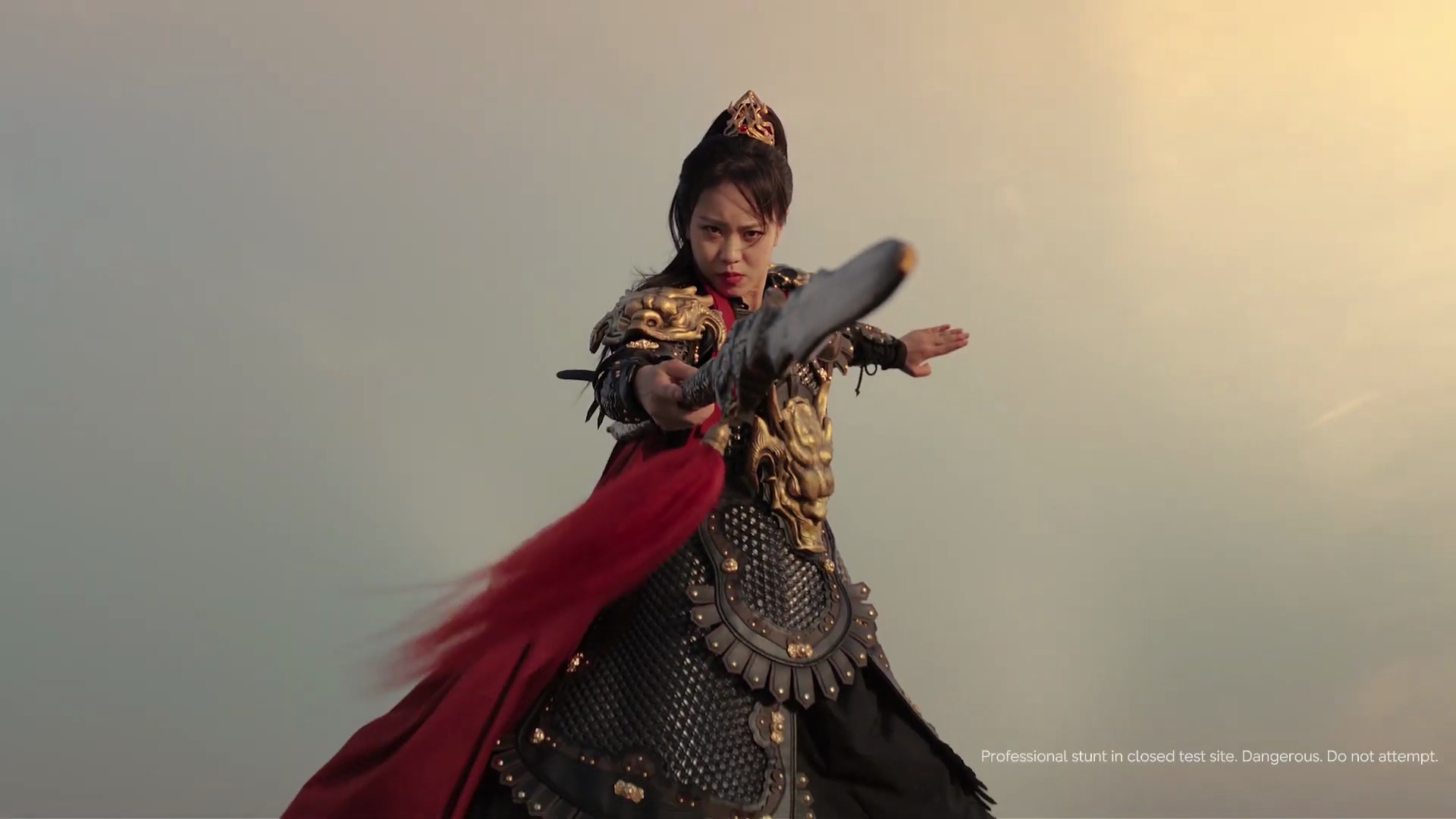
Two Dream 9 minivans drive alongside each other, each carrying another Dream 9 on its roof. A female performer, dressed as a traditional Chinese warrior and carrying a spear, performs a suspended split between the vehicles on the upper level.
Against a sunset backdrop, with dramatic music and visual references to Chinese martial-arts cinema, the result looks more like an action-movie sequence than a conventional automotive advertisement.
Turning Engineering Into Entertainment
As spectacular as the stunt appears, it serves a specific commercial purpose.
Voyah is using the performance to demonstrate the structural strength and suspension technology of its flagship minivan. The company highlights a steel-and-aluminum body incorporating ultra-high-strength steel rated at up to 2,200 MPa, alongside three-chamber air suspension and electronically controlled dual-valve dampers.
The four-car formation is designed to make those otherwise invisible engineering features tangible.
Instead of asking viewers to interpret technical specifications, Voyah presents a dramatic visual demonstration of the vehicle’s claimed strength and stability. The stunt illustrates performance under extreme, controlled conditions rather than proving everyday driving or crash-safety outcomes.
It’s precisely the creative principle that made Volvo’s original campaign so successful. A complicated engineering benefit becomes something anyone can understand simply by watching.
But Voyah wasn’t the only Chinese manufacturer borrowing the idea.
Apparently, Everyone Remembered The Same Volvo Commercial
On September 22, the same day Voyah unveiled its four-car performance, Chinese automaker Li Auto released its own interpretation of The Epic Split.
Its campaign features Chinese martial-arts actor Xie Miao standing between two moving Li Auto L9 Livis vehicles. Rather than performing a split, the actor practices Tai Chi while the vehicles travel across an uneven, specially constructed road.
The creative execution demonstrates the vehicle’s active suspension system, emphasizing its ability to maintain stability despite challenging road conditions.
Li Auto subsequently released behind-the-scenes footage addressing questions about whether the performance had been generated using AI. The company openly acknowledged that its commercial paid tribute to Volvo’s original.
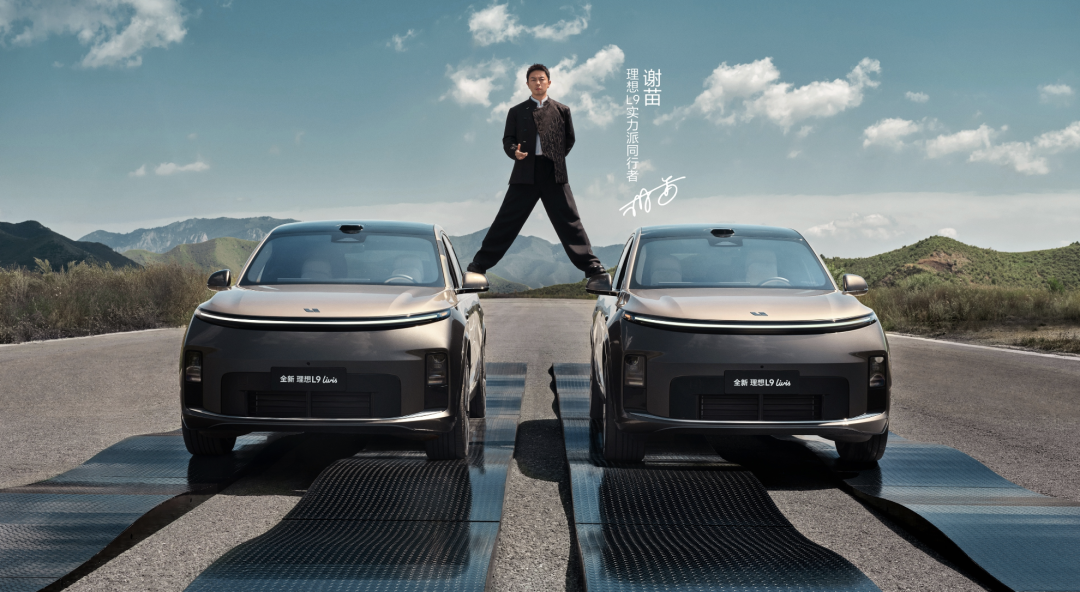
Two Chinese manufacturers, two different engineering propositions and two interpretations of the same advertising classic, released within hours of each other.
You almost have to feel sorry for whichever creative team presented its idea second.
When An Advertisement Becomes Cultural Property
There is something fascinating about two competing manufacturers independently returning to the same creative reference thirteen years after its original release.
Volvo’s Epic Split was created by Forsman & Bodenfors and directed by Andreas Nilsson. The film became a defining example of product demonstration as entertainment, with Volvo reporting more than 73 million YouTube views by the time its campaign collected multiple awards at Cannes Lions in 2014.
But the real measure of its impact may be what is happening now.
Volvo created an advertising execution so memorable that competing automotive brands are still borrowing its visual language more than a decade later. The image of a person balancing between moving vehicles has become instantly recognizable shorthand for mechanical precision and stability.
The original brand doesn’t even need to be present for the reference to work.
There is also an interesting difference between the two Chinese interpretations. Li Auto effectively updates the original concept for a new technology, while Voyah pushes its visual absurdity further.
One changes the challenge. The other doubles the spectacle.
Both depend on audiences recognizing the original idea.
Chinese Automakers Are Building A Different Kind Of Visibility
For Voyah, this is part of a broader creative approach.
In August, the Dongfeng-owned premium automotive brand recreated another memorable automotive advertising concept: Mercedes-Benz’s famous tunnel-loop stunt featuring Michael Schumacher.
Voyah sent its electric Passion S around the inside of a closed tunnel in Wuhan, completing a full 360-degree maneuver. The company released footage of the attempt, including an unsuccessful run, to demonstrate that the performance had been physically executed rather than digitally generated.
The approach is becoming recognizable. Take an iconic piece of European automotive advertising, reinterpret it through contemporary Chinese engineering and use the resulting spectacle to attract attention.
For relatively unfamiliar brands attempting to establish themselves in the premium automotive market, these recognizable creative references offer a shortcut into an existing cultural conversation.
Of course, there is a creative risk in repeatedly revisiting someone else’s advertising. The more familiar the original execution, the harder it becomes to establish an independent identity.
However, Voyah’s interpretation adds another layer to the story by combining the existing reference with Chinese cinematic traditions and a more elaborate physical demonstration.
The Real Winner Might Still Be Volvo
There is an amusing strategic consequence to all of this.
Voyah and Li Auto are using one of Volvo’s most recognizable advertising ideas to promote their own engineering capabilities. Yet every comparison, reaction and conversation about their films also brings renewed attention to Volvo’s original campaign.
Thirteen years later, a commercial created to sell trucks is still influencing how other manufacturers communicate automotive technology.
It demonstrates what can happen when an advertising idea becomes larger than the campaign that introduced it.
The strongest creative work doesn’t necessarily stop generating value when the media budget runs out. It can become a reference point, influence an entire category and remain recognizable long after the product being advertised has evolved.
Voyah added two more vehicles. Li Auto introduced Tai Chi.
And somehow, both campaigns remind us just how extraordinary Volvo’s original idea really was.
Also Read: