


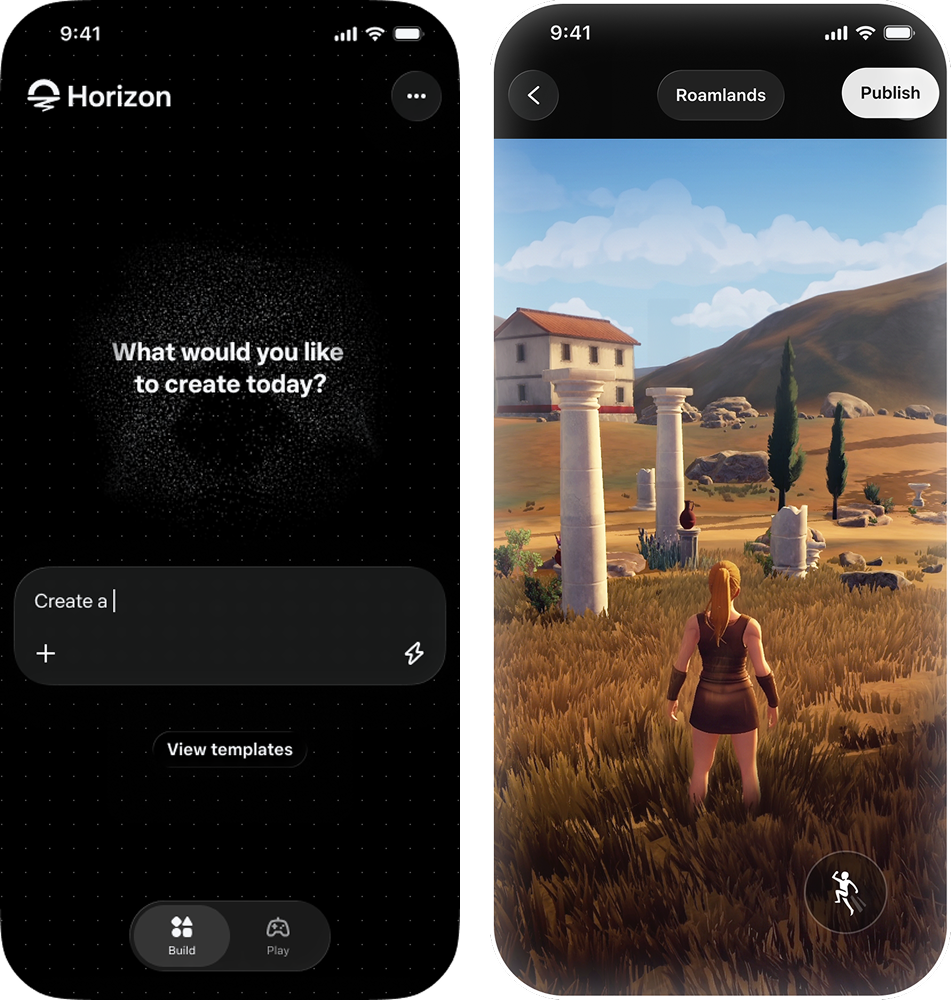
Meta is putting AI game creation directly into the flow of social media. Its new Horizon Create mobile app lets people describe a game in natural language, generate a playable version, test it and refine it from their phone. Horizon Studio offers the same foundation in a browser with more detailed visual controls.
The bigger move is not simply that Meta wants more people making games. It wants those games to be discovered and played where people already spend time.
From prompt to playable game
Meta says both tools can turn an idea into a complete 2D or 3D mobile game, including progression systems, difficulty balancing, art direction and multiplayer features. Horizon Create is designed around the phone: creators can start with a prompt or template, make changes by describing them and run several projects at once. Horizon Studio adds scene editing, asset controls and script parameters for people who want more precision.
The two tools share a backend, so a project can move between mobile and browser without losing its assets, systems or iteration history. That makes the pitch less about generating a disposable prototype and more about lowering the barrier to maintaining a playable project.
The real product is distribution
The most important detail is where these games can go. Meta says games published through Horizon Create and Horizon Studio will be eligible for distribution across Facebook, Instagram and Horizon. A person scrolling through Instagram could tap a game clip and enter a multiplayer session without downloading another app or leaving the feed. The game becomes part of the social discovery loop rather than a separate destination.
Meta also says reach will depend on performance. Games that are engaging, stable, culturally relevant and able to bring players back will receive more discovery, while weaker experiences will be deprioritized. That turns AI creation into only the first step. The harder problem remains making something people want to play twice.
Meta is also carrying over content-safety systems, pre-publication review, automated age ratings and age-appropriate access controls from Horizon. Those safeguards matter because a platform that makes creation almost frictionless will also need to moderate a much larger volume of user-generated experiences.
The strategic shift is clear: Meta is trying to make game creation as immediate as posting, then make the feed the game store. The test will be whether faster production creates genuinely social experiences, or simply floods Facebook and Instagram with games that are easy to make and easier to abandon.