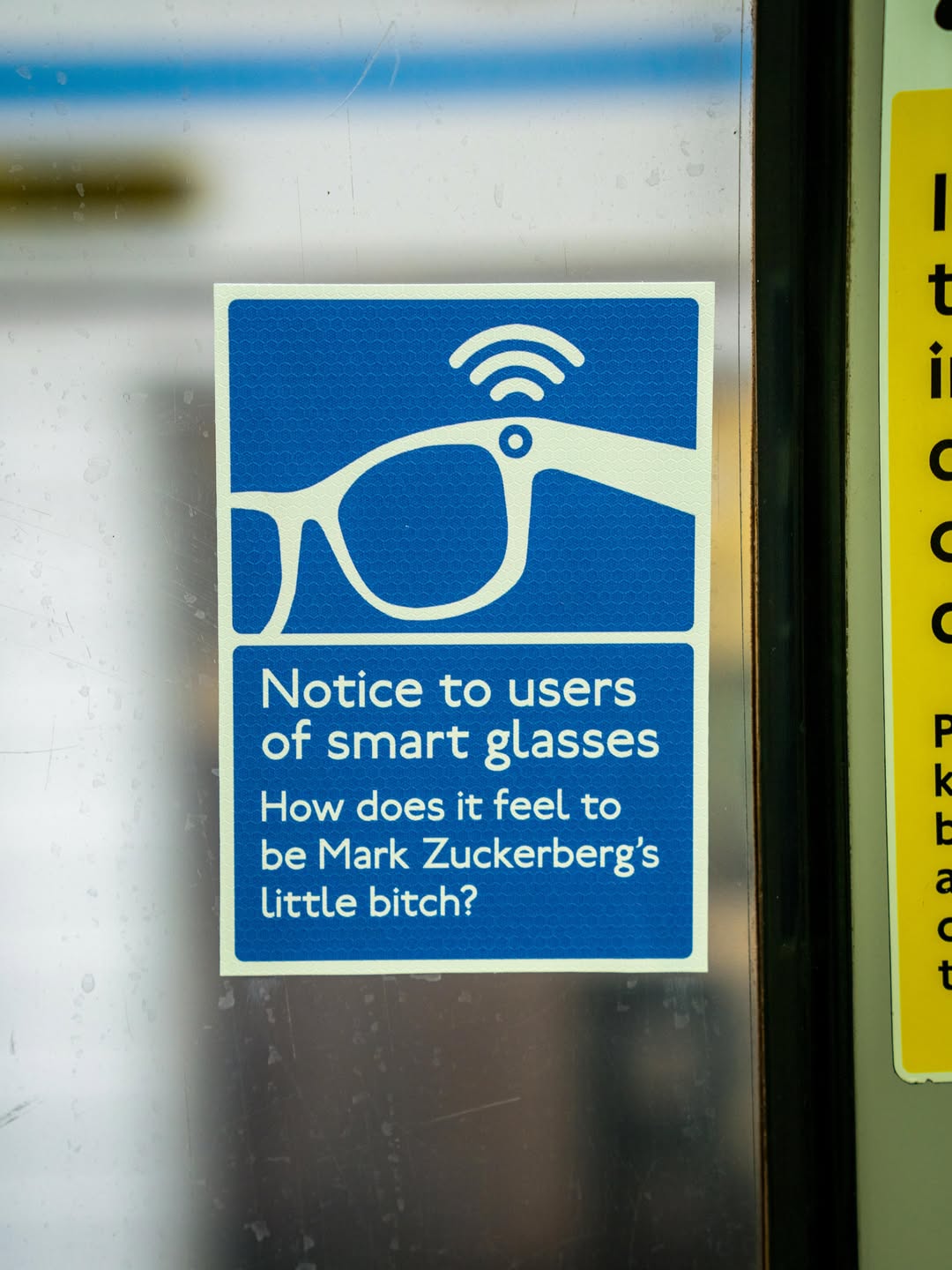
Meta designed its smart glasses to blend into everyday life. A guerrilla campaign on the London Underground is using that achievement against them.
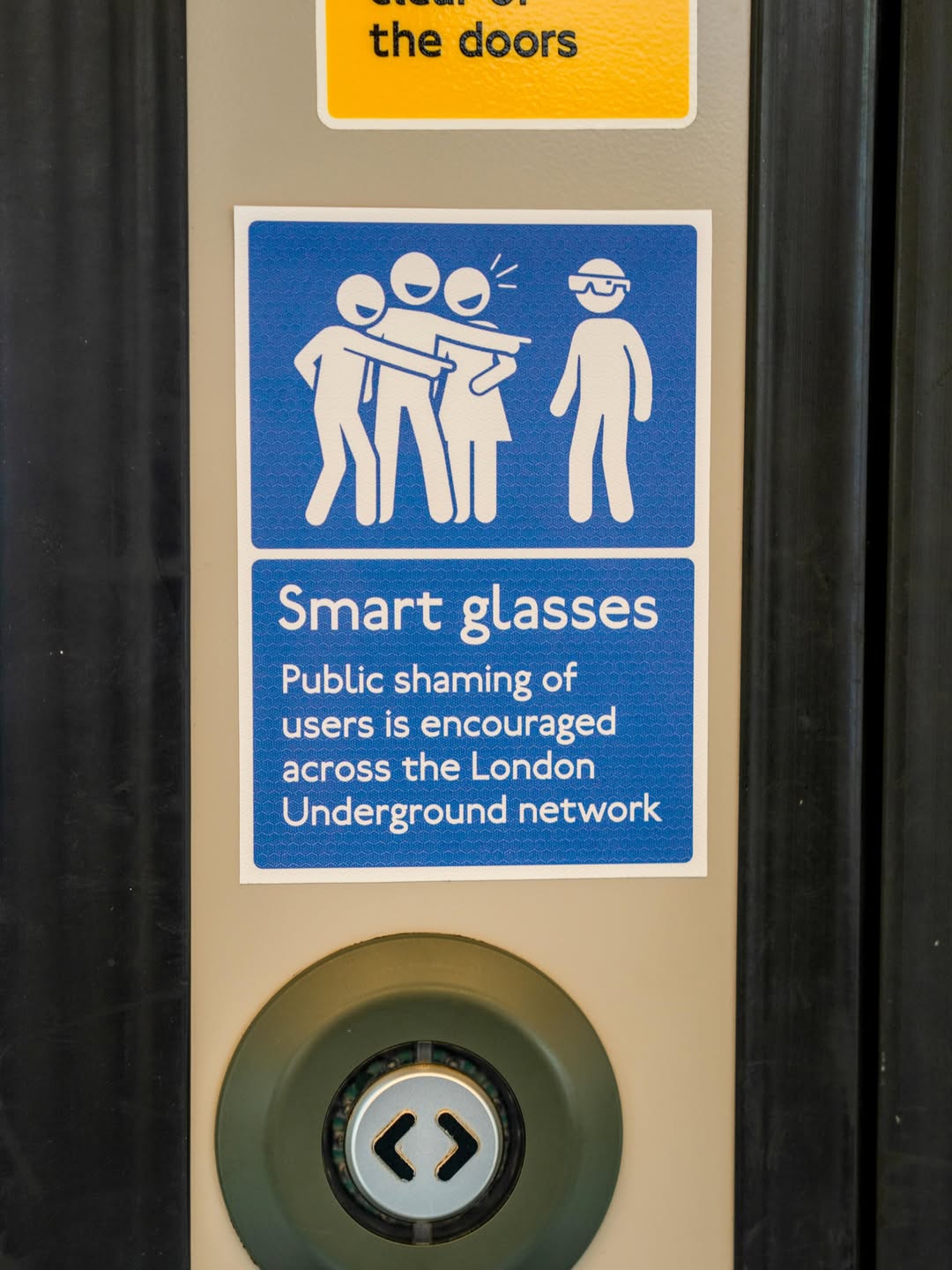
Activist group Everyone Hates Elon has placed unauthorized stickers inside Tube carriages that imitate Transport for London safety notices. Using TfL’s familiar blue-and-white design language, the posters warn passengers about the cameras built into Meta’s glasses and the possibility of being recorded without consent.
The notices are not official TfL communications. Their resemblance to real transport signage is precisely what makes them effective.
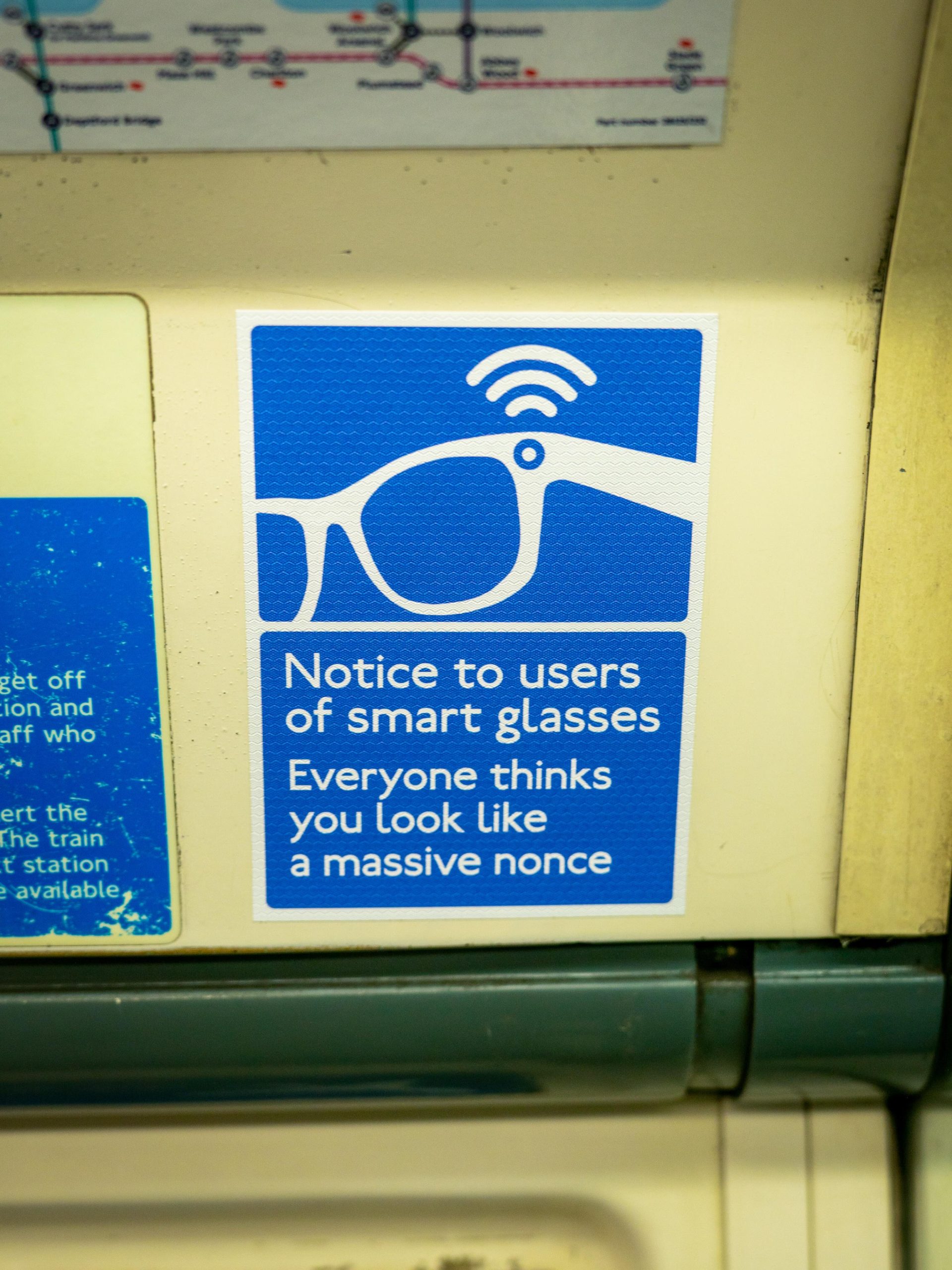
One poster claims that the public shaming of smart-glasses users is encouraged across the Underground network. Others use deliberately crude language to characterize people wearing the devices.
The campaign does not attempt to explain privacy settings, technical specifications or data policies. Instead, it turns recording into a question of public etiquette.
On a crowded train, everyone is sharing a carriage. They have not necessarily agreed to become part of someone else’s content.
The Design Is The Accusation
The commercial appeal of Meta’s smart glasses depends partly on how little they resemble a conventional camera. They look like familiar eyewear, allowing someone to take photos or record video without raising a phone.
That removes one of the gestures people have learned to recognize. When someone points a smartphone across a carriage, passengers can usually tell that a camera may be active. With glasses, the wearer can continue looking and speaking normally while recording.
Ray-Ban and Meta say the glasses include a front-facing capture LED that activates when a photo or video is being taken. It is a meaningful safeguard, but it still requires everyone nearby to notice the light and understand what it means.
The activist campaign targets the difference between an indicator being present and recording being socially legible.
Activists Are Writing The Etiquette
This is not the group’s first intervention against Meta’s eyewear. Everyone Hates Elon previously installed fake bus-shelter advertisements that copied the visual language of Meta campaigns while associating the glasses with surveillance and non-consensual filming.
The Tube notices take a different approach. Instead of impersonating the brand, they impersonate the authority responsible for managing a shared public space.
That matters because smart glasses do not only need customers. They need acceptance from everyone around those customers.
The campaign’s confrontational language is also its weakness. Shaming every wearer reduces a complicated debate to a personal accusation. Smart glasses can provide valuable accessibility, navigation and hands-free communication features, and wearing them does not automatically mean someone is recording.
But the underlying concern is harder to dismiss. Cameras designed to disappear into ordinary objects create uncertainty for people who never chose to interact with the product.
Meta can improve recording indicators, physical controls and privacy protections. What it cannot do is grant consent on behalf of the room.
The camera may disappear into the frame. Social permission cannot.
Also read:
- Meta’s Smart Glasses Are Winning The Market And Losing The Room
- Meta Patent Points To A Kill Switch For AI Glasses
- Meta’s AI Glasses Are Becoming An Accessibility Interface