


The internet was supposed to break culture into smaller pieces. YouTube’s latest Trends and Culture report suggests something more complicated is happening: people may be discovering more niche communities, but they still want to feel part of a shared cultural conversation.
The report is based on an NRG survey of 939 people aged 14 to 44. Its central argument is that the mainstream has not disappeared. It has changed who gets to create it, and how people participate in it.
The mainstream now starts with participation
YouTube says 63% of respondents feel it is more true than five years ago that they watch content or follow creators everyone they know is also watching or following. That is a useful counterpoint to the idea that audiences are living in entirely separate microcultures.
The definition of “popular” is also widening. Respondents saw YouTube creators at 77% and memes at 78% when asked what many people seem to be into nowadays. Those figures put digital culture close to Hollywood celebrities at 79% and the Super Bowl at 83%.
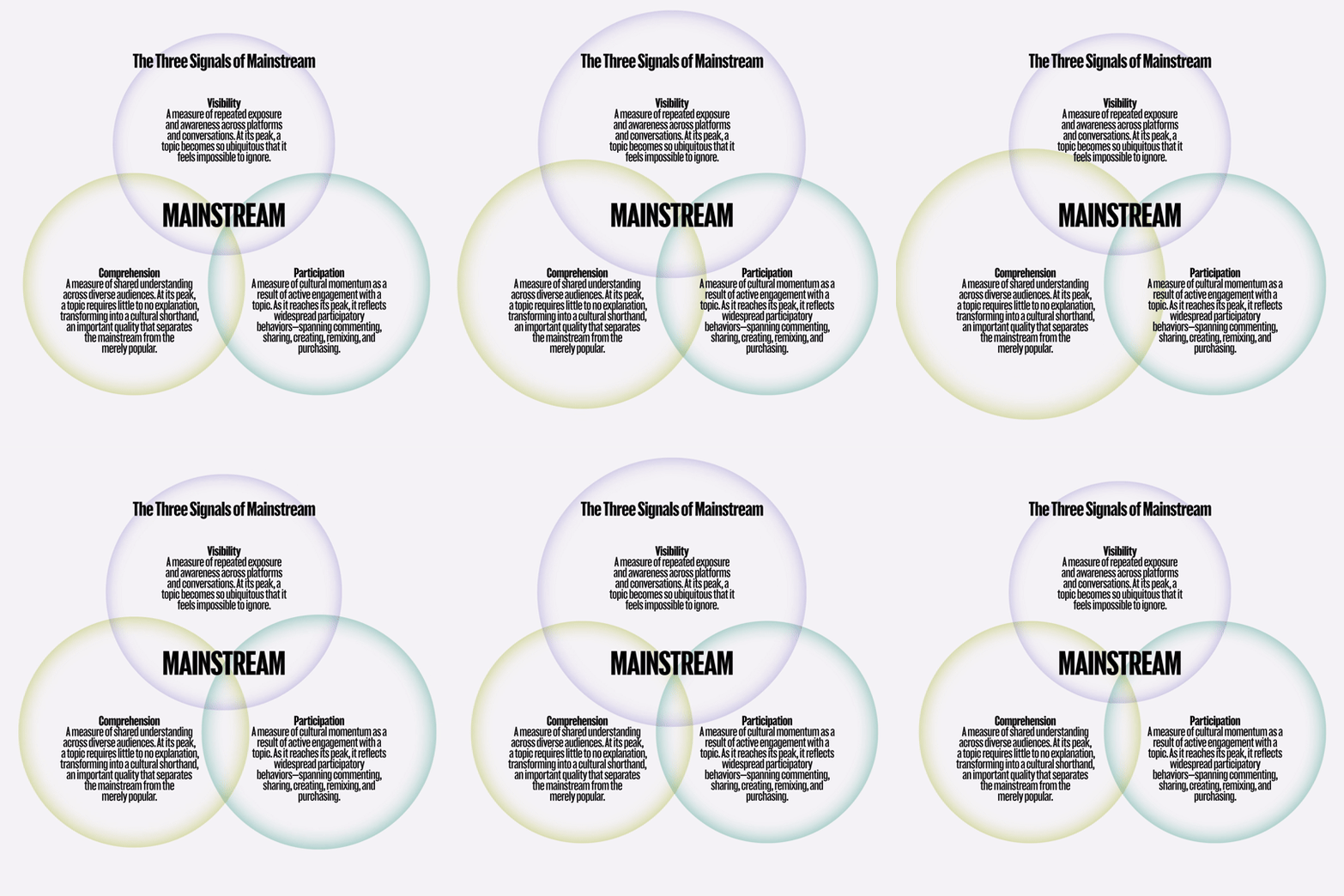
The important shift is not simply that creators are famous. It is that online culture now has a path from audience participation to broad cultural recognition. YouTube identifies participation, community, and sustained conversation as signals that an idea is moving into the mainstream.
Creators are becoming cultural starting points
The report points to the “Backrooms” film as one example. The idea began as a YouTube video, developed a fandom, and then moved toward Hollywood. Five Nights at Freddy’s and MrBeast illustrate a similar pattern: online attention and community activity can become part of a much larger cultural footprint.
YouTube also says 82% of online users aged 14 to 24 turn to the platform for content, conversation, or information about something they are fans of. Among those users, 95% consume content about that person or thing at least weekly.
That frequency matters. Mainstream status is no longer only about being visible everywhere at once. It can emerge when a community has enough ways to watch, discuss, remix, and extend an idea. For creators and brands, the practical consequence is clear: reach may open the door, but participation is what gives a cultural idea somewhere to go.