


Meta has introduced a simplified sharing flow on Threads that makes it easier to repost Threads content directly to Instagram Stories, without ever leaving the Threads app.
The update streamlines what Meta has been nudging users toward for months: cross-posting.
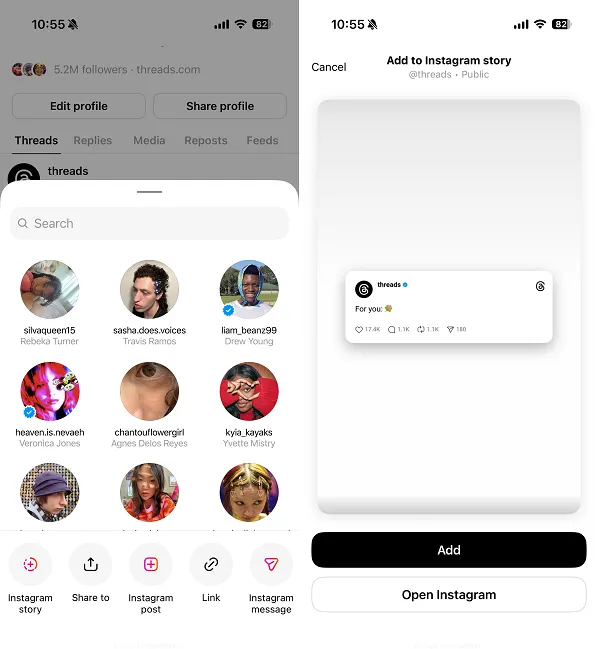
Now, when tapping the share button on a public Thread, users will see an option to immediately add the post to their Instagram Story. The Thread is automatically formatted into a full-screen Story frame, ready to publish in a tap. No app switching. No extra steps. It’s fast, clean, and clearly designed to increase content flow between platforms.
But There’s a Catch
The trade-off for convenience? No editing.
If shared directly from Threads, the post appears in a simple, minimal Stories template, often described by users as looking somewhat “blank” or unfinished. There’s no opportunity to add stickers, effects, GIFs, or overlays unless the user exits Threads and edits the Story natively inside Instagram.
For creators and brands who rely on Stories as a highly visual, layered format, that limitation matters.
Why Meta Is Pushing This
Meta has been actively promoting cross-posting between Threads and Instagram since Threads launched. Many users have seen full-screen prompts encouraging them to share their latest Thread to Stories, often framed around increased reach and engagement.

The logic is clear: More Threads content in Stories = More visibility for Threads = More engagement across Meta’s ecosystem.
From Meta’s perspective, seamless sharing strengthens the network effect between apps. Stories remain one of Instagram’s most engaged surfaces, so piping Threads content into that stream makes strategic sense.
For brands, however, the move requires nuance.
If followers already follow a brand on both Threads and Instagram, reposting the exact same update in both places may feel repetitive. While increased exposure can be valuable, duplication without adaptation can weaken the impact.
There’s also a broader creative question at play.
Threads has evolved into a conversational, text-forward space. Instagram Stories, meanwhile, remains visual, expressive, and interactive.
Blending the two can extend reach, but it can also blur the distinct tone of each platform. The generic Story template reinforces that tension: efficient, yes. Native-feeling? Debatable.
For now, the update lowers friction and encourages experimentation. Whether users embrace the streamlined sharing flow, or continue customizing posts inside Instagram, will likely depend on how much value they see in cross-platform visibility versus creative control.