


The next social feed might not look like a feed at all.
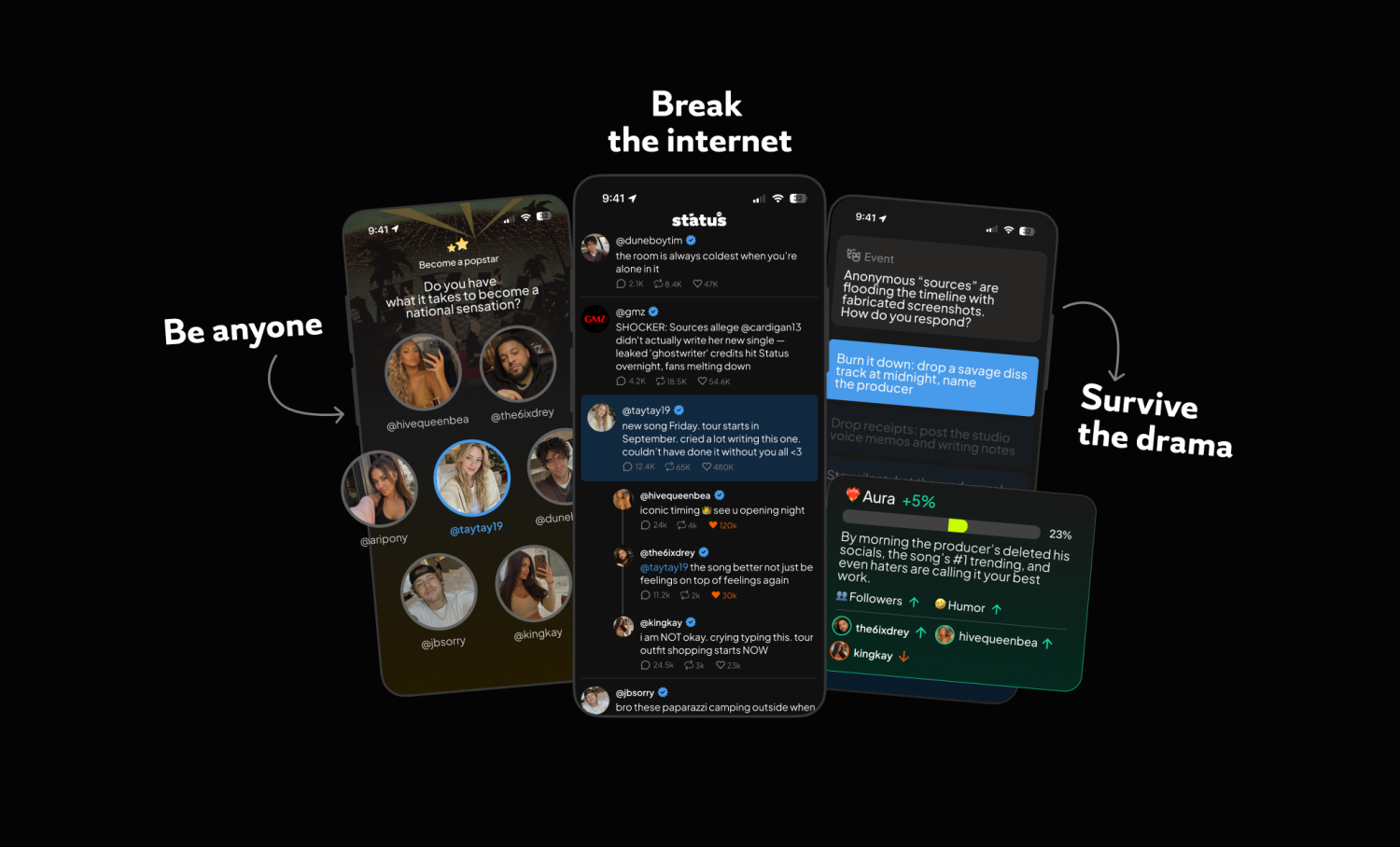
Status AI, a gamified social app built around AI roleplay and user-generated worlds, has raised $17 million in combined seed and Series A funding, TechCrunch reports. The app lets users create a persona, enter fictional or fan-driven worlds, collect followers, and play through social scenarios that look less like posting and more like interactive entertainment.
That distinction matters. Status AI is not trying to win by giving users another place to publish updates. It is betting that younger users want to step inside stories, perform identity, and interact with characters, fandoms, and friends in worlds that keep changing around them.
That is not just a startup funding story. It is a useful signal for where social behavior may be drifting next.
From scrolling to inhabiting
Traditional social media trained people to watch. Feeds made other people’s lives, opinions, jokes, and performances endlessly available. The user’s job was simple: scroll, react, maybe post back.
Status AI suggests a different posture. The user is not only consuming a stream. They are entering a role. They can become a celebrity, participate in a fictional universe, run through a social fantasy, or build a world around a persona. The interaction starts to feel closer to a game, a fandom server, and a simulation layered together.
For platforms, that is a bigger change than it sounds. If the feed was optimized for attention, immersive social worlds are optimized for participation. The value is not only what users see, but what they do inside the environment.
AI makes fandom scalable
The reason this category is suddenly more plausible is AI. Roleplay, character interaction, and fan fiction are not new behaviors. The internet has been full of them for decades. What is new is the ability to make those interactions dynamic at scale, with characters, scenarios, and worlds that can respond quickly enough to feel alive.
Status AI says users have already created more than 13 million worlds and more than 5 million character profiles. Those numbers do not prove the category, but they do show the appeal of social spaces where identity is more flexible and narrative is part of the interface.
That is why media companies should pay attention. Studios, streamers, and entertainment brands have spent years trying to extend IP beyond release windows. Interactive fan worlds offer a more continuous layer: not just watch the show, then discuss it, but live around it before, during, and after the official story moves.
The real tension is control
Of course, the more a platform invites users to inhabit stories, the messier the brand questions become.
Fandom thrives on remix, interpretation, and emotional ownership. Brands and rights holders often prefer consistency, safety, and control. AI-powered social worlds sit directly in that tension. They can deepen engagement, but they can also produce scenarios, identities, and behaviors that are hard to supervise without flattening the fun.
For marketers, the lesson is not to rush into every AI roleplay surface. It is to understand the behavior underneath it. Younger users are not only looking for content to consume. They are looking for worlds where they can perform, belong, and affect the story.
If social media’s last era was about building audiences, the next one may be about building places people can enter. The feed is not disappearing tomorrow. But it is no longer the only shape social can take.