Podcasting has always been built on a simple contract: you know whose voice you are inviting into your ears.
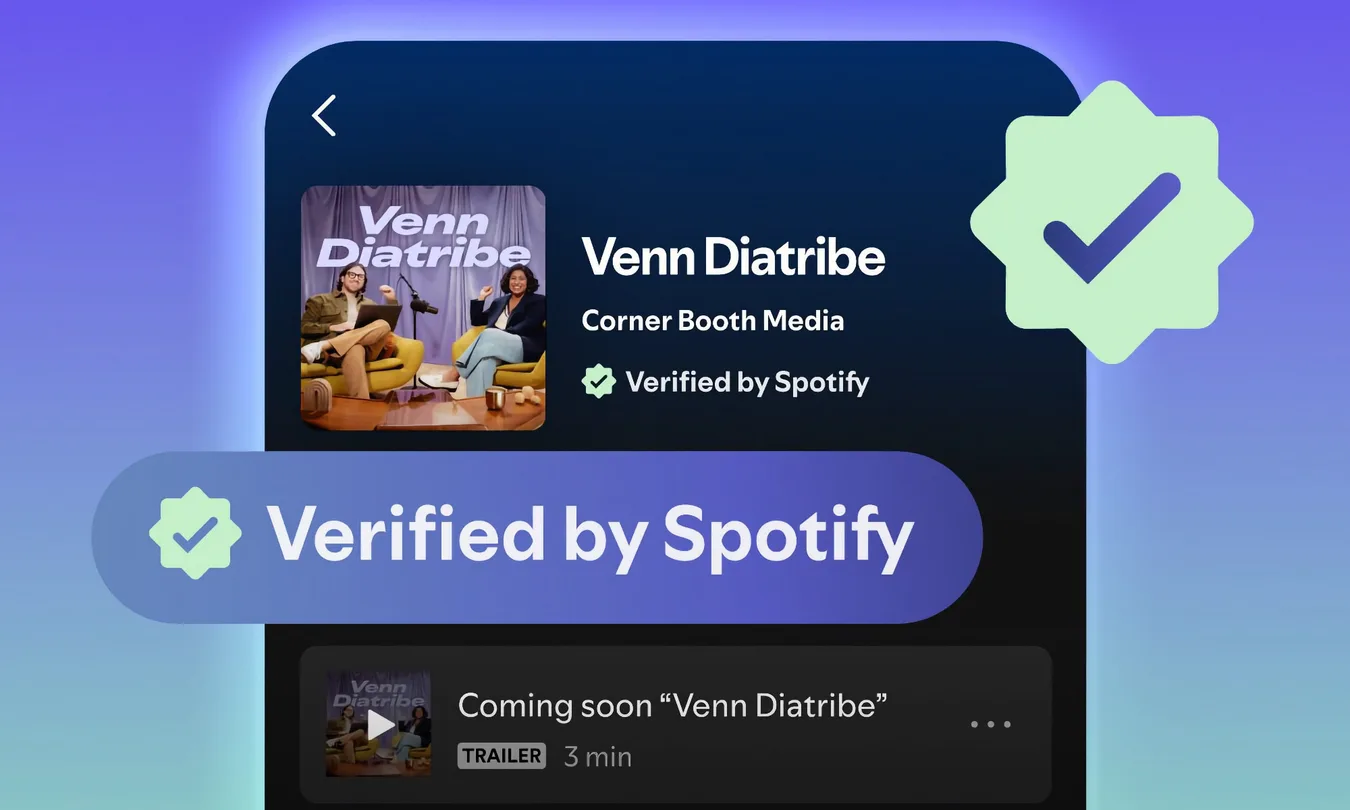
AI voice cloning makes that contract much more fragile. Spotify is responding with verified podcast badges, giving official shows a light green checkmark on show pages and in search results. The rollout starts with select shows and is expected to expand over time.
The badge is not just platform decoration. It is Spotify admitting that audio now needs visible trust signals.
Podcast trust gets a visual layer
Spotify says verified podcast status will depend on sustained listener activity, a clean policy record and verified audience authenticity. The company is also adding protections against bot-driven listenership, which matters because trust can be gamed from both sides: fake voices and fake audiences.
That makes the badge more than a celebrity marker. It is a signal that the show is the official presence it claims to be, and that its audience behavior is not obviously artificial.
For listeners, this is a small interface change. For creators, it is a new layer of identity protection.
AI impersonation moves from edge case to product risk
The timing is the story. AI tools have made podcast creation easier, but they have also made it easier to imitate a creator’s voice without permission. Spotify is updating its impersonation policy to make clear that podcast shows or content using AI voice cloning, or any other method, to impersonate a creator without permission can be removed.
That puts Spotify in the same broader category as platforms adding AI labels, likeness detection and authenticity markers. The question is no longer whether AI content exists. It is whether users can tell when the person behind the content is actually who they think it is.
Audio is especially vulnerable because voice carries intimacy. A fake image may fool the eye. A fake voice can borrow a relationship.
The creator economy needs provenance
For podcast creators, verification could become a competitive necessity. As more synthetic audio enters feeds, the official version of a show has to be easier to identify than the imitation.
That also shifts the meaning of verification. The checkmark used to be social status. Then it became identity infrastructure. Now, in the AI era, it is becoming provenance.
Spotify’s move will not solve every problem around cloned voices or AI-generated media. But it gives listeners a clearer signal, and it gives creators a formal path to defend the one asset podcasting cannot afford to lose: the belief that the voice is real.
Also Read:
Instagram’s AI Creator Label Is A Trust Patch For The Feed
Discord Makes Private Voice A Default Social Feature
YouTube Is Turning Deepfake Detection Into A Personal Safety Tool