


OpenAI is pushing ChatGPT deeper into everyday life with the launch of new personal finance tools for ChatGPT Pro users in the U.S.
The new feature lets users connect bank accounts, investment portfolios, and credit cards directly to the chatbot to ask questions about spending, budgeting, subscriptions, savings, and long-term financial planning.
The company partnered with Plaid to power account connections, giving ChatGPT access to more than 12,000 financial institutions including Charles Schwab, Fidelity Investments, Chase, Robinhood, American Express, and Capital One.
Once connected, users get a dashboard showing portfolio performance, subscriptions, recurring payments, and spending behavior.
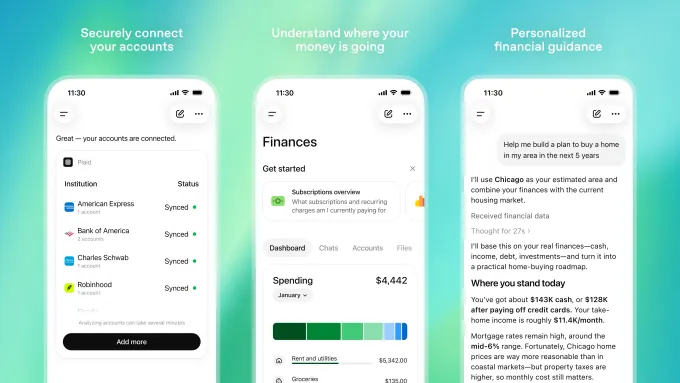
But the real play here is conversational finance. Users can ask questions like:
- “Why have I been spending more lately?”
- “How much am I wasting on subscriptions?”
- “Can I realistically buy a house in five years?”
- “What happens to my taxes if I sell these stocks?”
It’s another sign that AI companies are racing toward highly personal, high-trust categories like health and finance. OpenAI says more than 200 million users already ask financial questions to ChatGPT every month, and it believes GPT-5.5’s improved contextual reasoning makes it more capable of handling nuanced money conversations.
The launch also comes just a month after OpenAI acquired the team behind personal finance startup Hiro, a move that now makes a lot more sense in hindsight.
For now, the feature is only available to ChatGPT Pro users on web and iOS, with broader rollout depending on feedback.
OK, but is it safe?
OpenAI says users can disconnect accounts at any time, and synced financial data will be deleted within 30 days after disconnecting.
The bigger story, though, is what this says about the future of ChatGPT itself. ChatGPT is no longer positioning itself as just an assistant for writing emails or answering questions. It’s becoming an operating layer for personal life, health, finance, productivity, shopping, memory, and decision-making all inside one interface.
And if users become comfortable trusting AI with their bank accounts, that may end up being one of the biggest shifts yet.