


Instagram has just rolled out a long-awaited update that gives creators more control over how their content is presented: the ability to rearrange carousel posts after they’ve gone live.
Until now, once a carousel was published, its order was locked. A small mistake, a better hook buried too deep, or a shift in storytelling meant starting over. That friction is now gone.
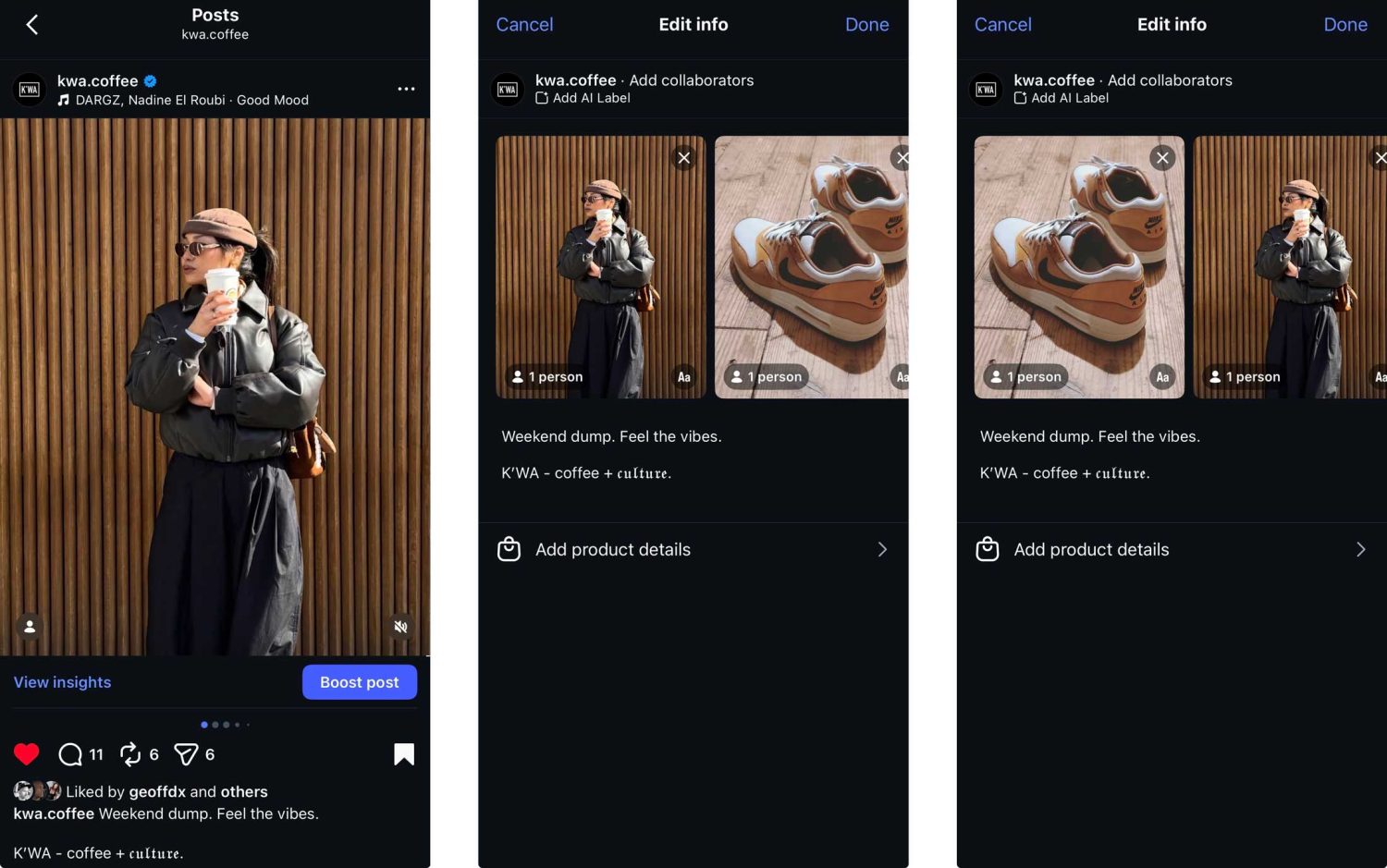
The new feature introduces a straightforward interaction: users can long-press and drag images or videos within a carousel to change their order at any time.
As Instagram puts it:
“You have the flexibility to change the order of your carousel content at any time, ensuring your post always reflects your creative vision.”
It’s a small UX change, but a meaningful one. For creators, it turns carousels into something closer to a living format rather than a fixed asset.
What you still can’t do
While reordering is now possible, editing remains limited in one key way: you still can’t add new media to an existing carousel.
If you want to include an extra image or video, you’ll need to publish a new post.
This update isn’t just about convenience. It quietly shifts how creators can think about performance and storytelling.
Carousels are already one of Instagram’s most effective formats. Back in 2024, Instagram head Adam Mosseri highlighted that carousel posts tend to drive stronger engagement because they create multiple chances to capture attention and increase time spent. More recently, research from Buffer found that carousels generate around 12% more engagement on average than single-image posts.
Now, with the ability to reorder slides, creators can:
- Test different hooks by changing the first slide
- Optimize storytelling flow after seeing audience behavior
- Refresh underperforming posts without reposting
- Experiment more freely without the pressure of getting it perfect on the first try
The ability to reorder carousels may seem like a minor update, but it reflects a broader shift: platforms are slowly giving creators more flexibility post-publishing. And in a landscape where attention is won or lost in seconds, being able to adjust what people see first can make all the difference.