There are debates that never die. Pineapple on pizza. Ranch on everything. And now: fries dipped in ketchup-flavored ice cream.
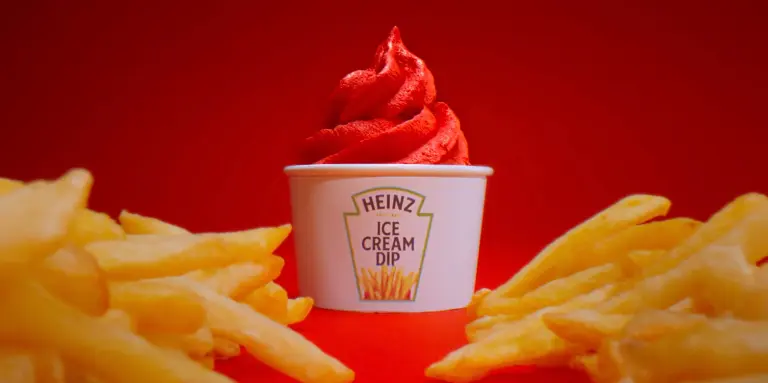
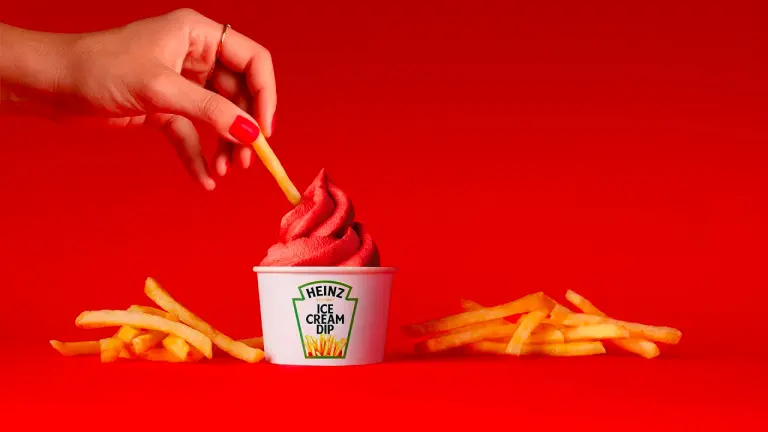
In Chile, Heinz has taken sweet-and-savory to a new level by launching a ketchup-flavored soft serve designed specifically to be paired with crispy fries. Yes, a bright red, tomato-based ice cream infused with the tangy, slightly spiced notes of Heinz’s iconic sauce.
And surprisingly, the idea didn’t come out of nowhere.
A Viral Trend Turned Official Product
On Chilean social media, dipping fries into ice cream has quietly become a thing. Over the past few months, users have shared their own sweet-and-savory combinations, turning the practice into a small but noticeable local trend.
Heinz paid attention. Heinz tested. Heinz made it official.
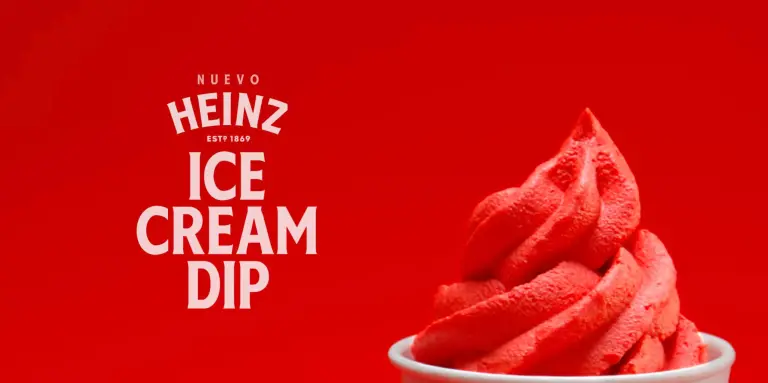
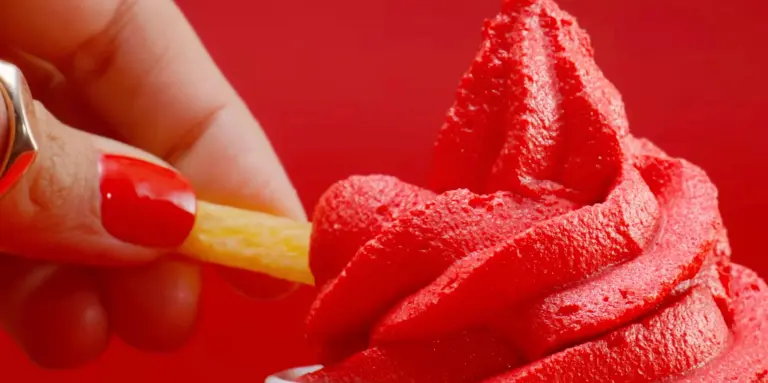
Instead of simply jumping on the moment with a witty post, the brand developed the Heinz Ice Cream Dip, a creamy soft serve that integrates the unmistakable flavor profile of Heinz ketchup into a dessert format. Served like classic soft serve and as red as the sauce itself, it’s visually impossible to ignore.
The message stays true to Heinz’s territory:
If it’s fries, it has to be Heinz.
A Provocation, Carefully Calculated
Beyond the shock factor lies a sharp strategic play.
Heinz isn’t trying to become an ice cream brand. It’s aiming to spark conversation, surprise consumers, and reinforce the near-automatic association between Heinz and fries.
Turning its sauce into a dessert pushes that logic to its limit. It transforms an existing consumer behavior into a branded experience. A subtle way of saying: you were already doing this, we just made it official.
Visually, the bright red ice cream does the heavy lifting. It intrigues. It unsettles. It makes you want to try it at least once. Exactly what a strong brand activation should achieve.
Chile as a Cultural Test Ground
The ketchup ice cream is available in select supermarkets, partner cafés, food trucks, and via online ordering in Chile, a rollout that feels more like a cultural laboratory than a mass-market launch.
Because this isn’t about taking over global freezer aisles.
It’s about generating buzz. Fueling debate. Earning shares. Occupying cultural space rather than shelf space.
The conversation becomes the real objective.
Also Read:
Heinz Introduces 114-ounce KegChup Barrel for the Super Bowl
Heinz Invents a Fries Box With a Built-In Ketchup Compartment
Heinz Turns Its Iconic Ketchup Packet Into a Suitcase With Herschel