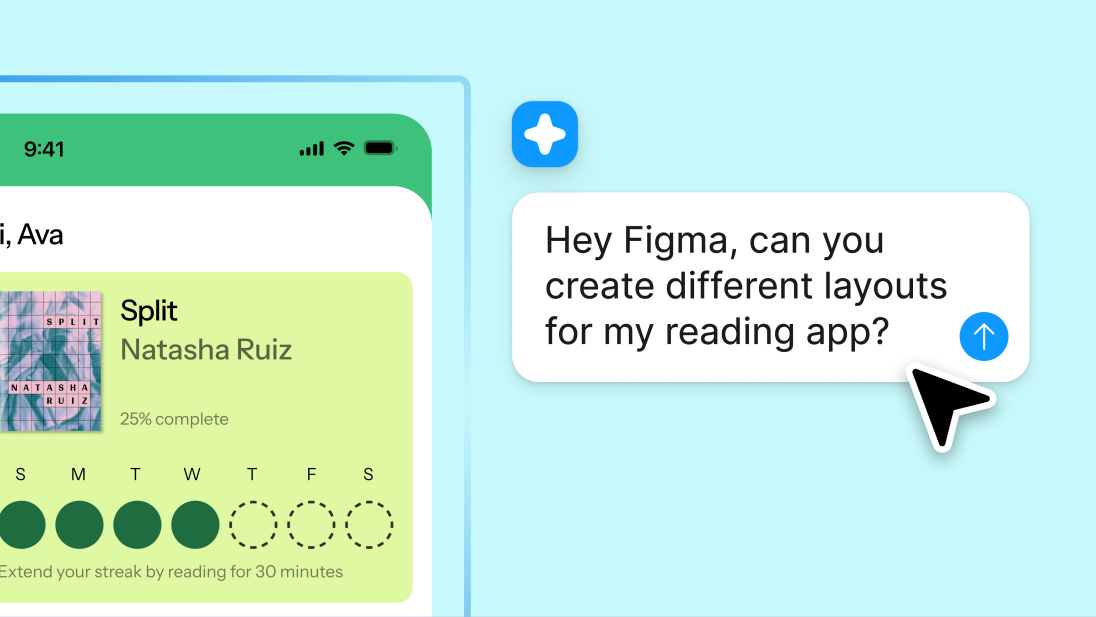
Figma is putting AI where design work actually happens: inside the shared canvas.
According to TechCrunch, the company is adding a new AI assistant to Figma Design that can respond to natural language prompts, generate new designs, edit existing ones, and automate iteration work. Users will also be able to run multiple agents at the same time, turning the canvas into something closer to a live production room than a static design file.
The move follows Figma’s partnerships with OpenAI and Anthropic around AI coding tools, but this is a more native bet. Instead of treating AI as something that sits beside the workflow, Figma is trying to make it part of the workflow itself.
The canvas becomes the interface
The important shift is not that Figma added another chatbot. The interesting part is where the assistant lives.
Design tools have always been collaborative spaces, but AI has often entered them as a side panel, a generator, or a shortcut. Figma’s version puts the agent inside the multiplayer canvas, where teams already debate, revise, test, and make decisions. That changes the role of AI from output machine to working participant.
For designers, the value is not only speed. It is the ability to explore more versions of an idea without pulling the team out of the room. Edge cases, alternate flows, visual directions, and small edits can happen in the same place where the conversation is already happening.
Design is moving closer to direction
Figma’s chief design officer Loredana Crisan framed the shift around direction-setting: deciding what to work on, how it should function, and what the experience should feel like.
That is the real tension in creative AI. As tools get better at producing options, the human job moves further upstream. The premium is no longer simply making the artifact. It is knowing which artifact matters, what problem it solves, and whether it feels right for the product, brand, or audience.
In that sense, Figma is not just adding AI features. It is adapting to a world where design teams are expected to move faster without losing taste. The assistant can generate, but the team still has to choose.
The creative stack keeps collapsing
Figma says the assistant will launch first in Figma Design and eventually expand across its other products. The company also wants to bring design and code closer together inside its apps.
That matters because the line between ideation, prototyping, design, and implementation is getting thinner. Canva, Adobe, Krea, Flora, and other creative tools are all trying to own more of the process. Figma’s advantage is that it already owns the room where product teams collaborate.
The bigger question is whether AI makes design tools feel more powerful or more crowded. Figma is betting that if the agent understands the context of the canvas, it can make collaboration feel lighter, not noisier.
Also Read:
Adobe Launches AI Assistants For Photoshop, Hints At ChatGPT Integration
Adobe Brings Firefly’s Generative AI Tools To Mobile
Firefox Frames AI Browsing As A Choice, Not A Takeover