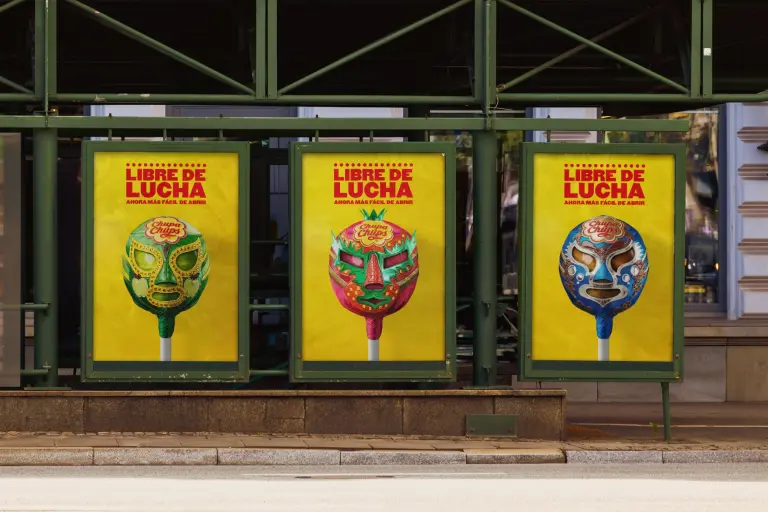
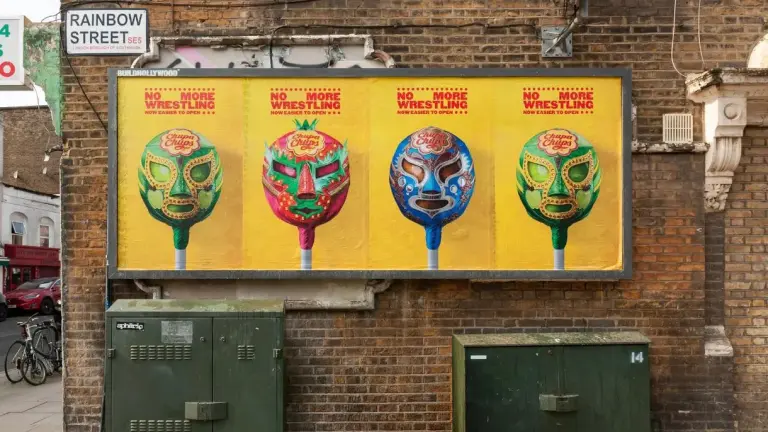
Opening a Chupa Chups has never been as easy as it should be. What’s supposed to be a simple gesture often turns into a small, familiar struggle, twisting, pulling, fighting with stubborn plastic just to get to the candy. Instead of ignoring it, Chupa Chups decided to turn that frustration into the idea itself.
With “No More Wrestling,” created by BBH, the brand reframes this everyday annoyance as something much bigger: a fight.
When opening a lollipop becomes a wrestling match
Rather than presenting its new packaging as a technical improvement, Chupa Chups leans into the shared experience. That moment where opening a lollipop feels like a mini battle.
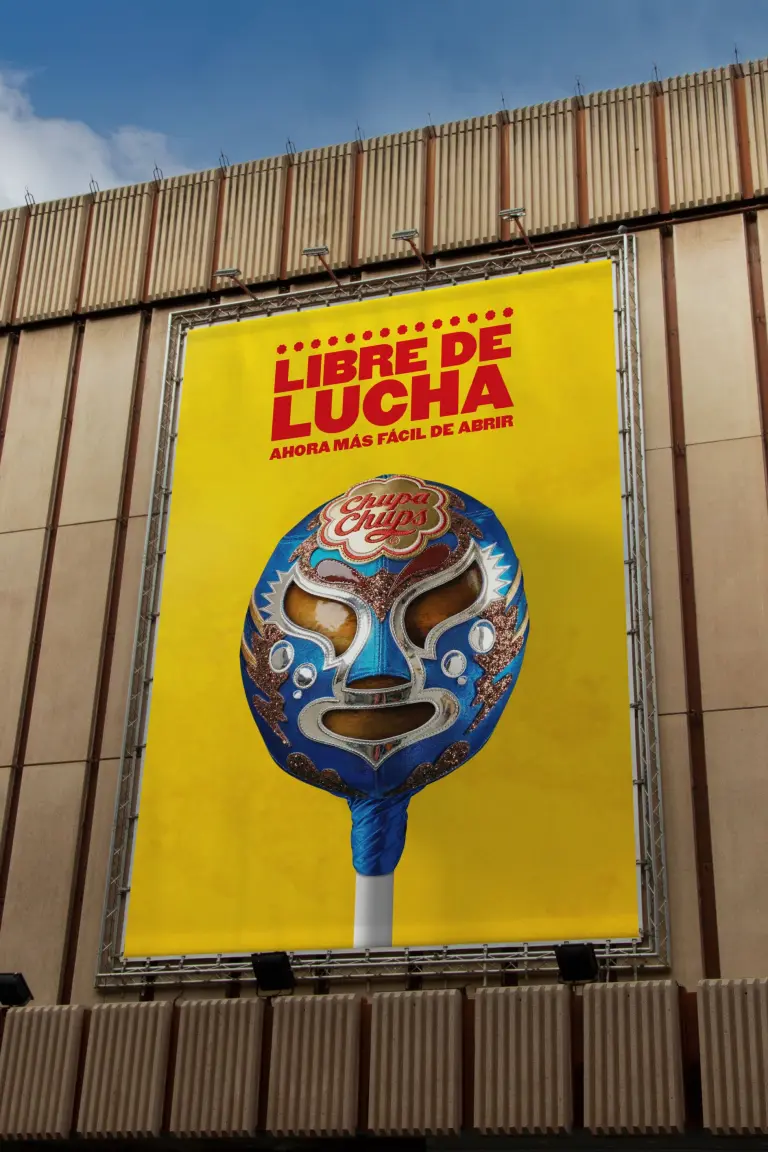
To bring this to life, the campaign taps into the world of Lucha Libre, the iconic Mexican wrestling style known for its dramatic performances and colorful masks.
The metaphor is immediate. If opening a Chupa Chups feels like a fight, then it makes sense to stage it like one.
Packaging turned into real wrestling masks
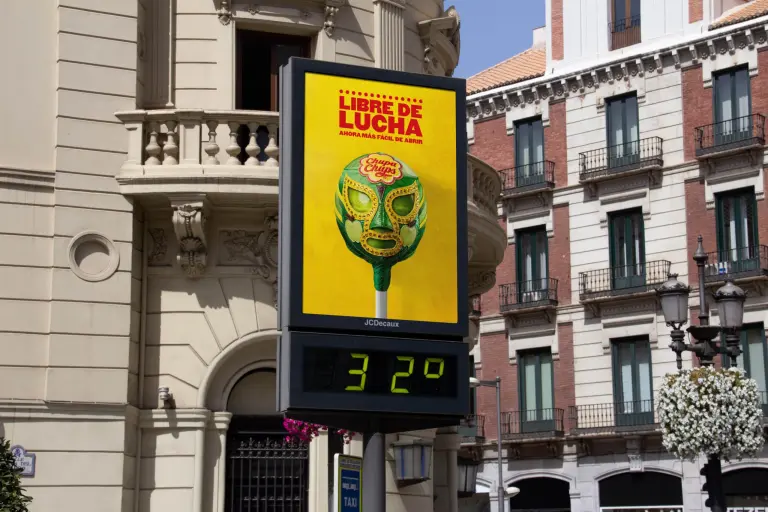
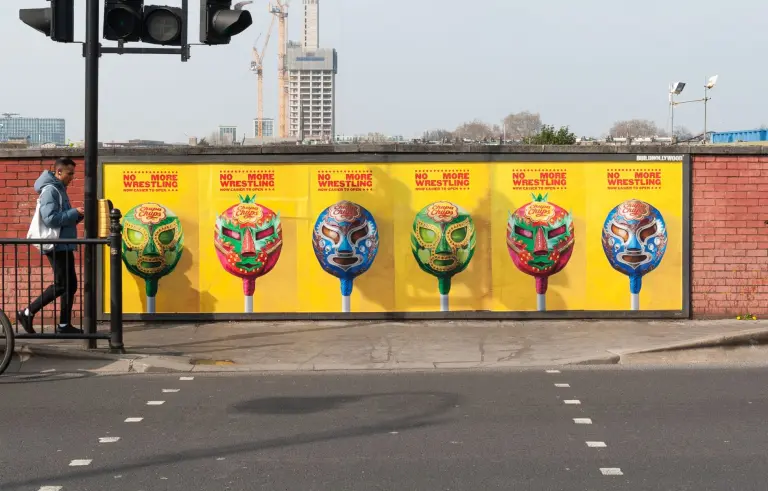
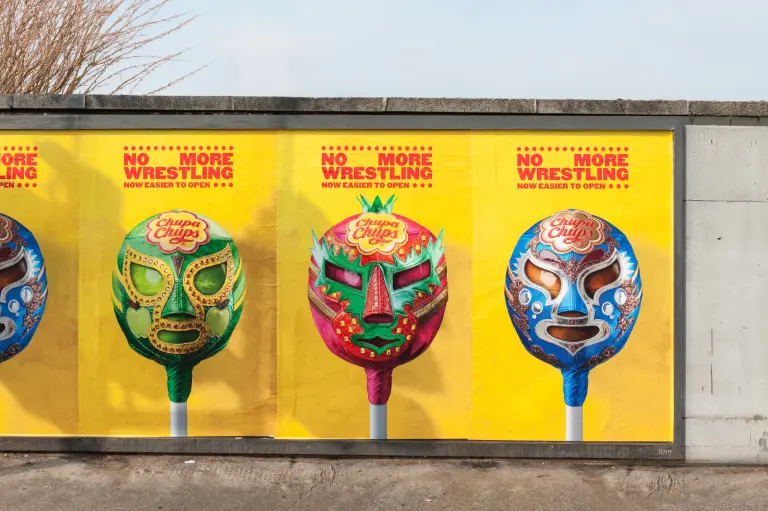
The idea goes beyond visual storytelling. The masks were actually created using the brand’s packaging designs, translating flavors into characters.
Three versions were developed, inspired by apple, strawberry, and cola, each with its own graphic identity rooted in the original wrappers.
To make it authentic, Chupa Chups collaborated with Arturo Bucio, a craftsman known for creating masks for real wrestlers. This detail matters. It elevates the idea from a simple reference to a culturally grounded execution.
Turning a product flaw into a creative platform
What makes this campaign work is its honesty. Instead of pretending the problem never existed, Chupa Chups embraces it, and flips it into something entertaining. The product improvement becomes the punchline, not the headline.
It’s a reminder that great ideas don’t need big innovations. Sometimes, they just need a truth people already recognize.
Deployed across outdoor and social in the UK and Spain, “No More Wrestling” shows how even the smallest friction point can become a cultural hook, if you’re willing to lean into it.
Also Read:
The EggPhone Cover Turns Your Phone Into an Egg Cup
Coca-Cola Turns a Stadium Ban Into a Red Visual Illusion
KFC Turns Its Crispy Coating Into a Wearable Texture