


YouTube search is starting to look less like a search bar and more like a conversation with the world’s largest video archive.
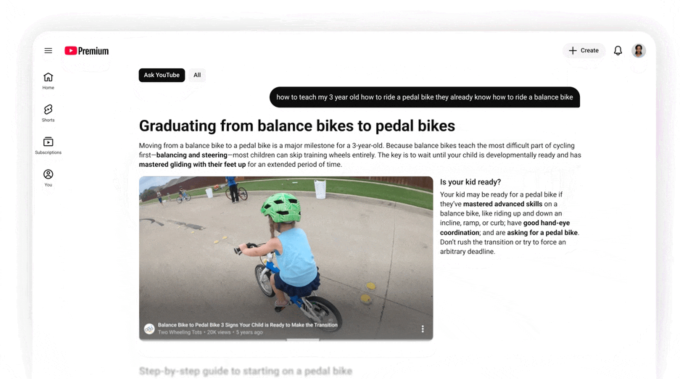
Google is testing Ask YouTube, an AI-powered conversational search feature that lets users ask more complex questions, refine with follow-ups and receive generated responses built from both Shorts and long-form videos. The feature is available to YouTube Premium subscribers in the U.S. on desktop through YouTube’s experimental tools.
At the same time, YouTube is adding Gemini Omni to Shorts Remix and the YouTube Create app, giving creators a new way to generate and remix video with more context around intent, storytelling, audio and visual changes.
Search becomes a guided experience
The most important part of Ask YouTube is not that it uses AI. Everyone is using AI. The shift is that YouTube is turning discovery into a guided experience.
Instead of typing a query and sorting through thumbnails, a user can ask for something specific, then keep narrowing the request. TechCrunch gives examples like finding tips to teach a child to ride a bike, or creator reviews of cozy games to play before bedtime.
That changes the role of search. It is no longer only a retrieval system. It becomes an assistant deciding which videos matter, how to summarize them and what path the user should take next.
Shorts gets the creation layer
Gemini Omni points in the other direction: not finding video, but making it.
By bringing the model into Shorts Remix and YouTube Create, Google is giving creators more AI-native production tools without turning YouTube into a standalone AI video social app. That distinction matters. Sora and other AI-first video experiments have shown how strange the category can feel when synthetic content becomes the entire product.
YouTube’s approach is more integrated. AI becomes a layer inside existing creator workflows, not necessarily the whole stage.
The platform gets more powerful, and more opinionated
The broader pattern is familiar: YouTube is adding AI to every layer of the system. Search, remixing, creation, dubbing, creator partnerships and likeness detection are all becoming part of the same infrastructure story.
That creates obvious upside. Viewers can find better answers. Creators can make more with less friction. YouTube can make its archive feel newly alive.
But it also makes the platform more opinionated. If AI summarizes search results, recommends paths and assists creation, YouTube is shaping not just what users watch, but how they understand the options in front of them. That is the new power of AI search: it does not only answer the query. It edits the journey.